Blab Politics
US Export-Control Order Forces Anthropic to Disable Advanced AI Models, Upending Global AI Collaboration
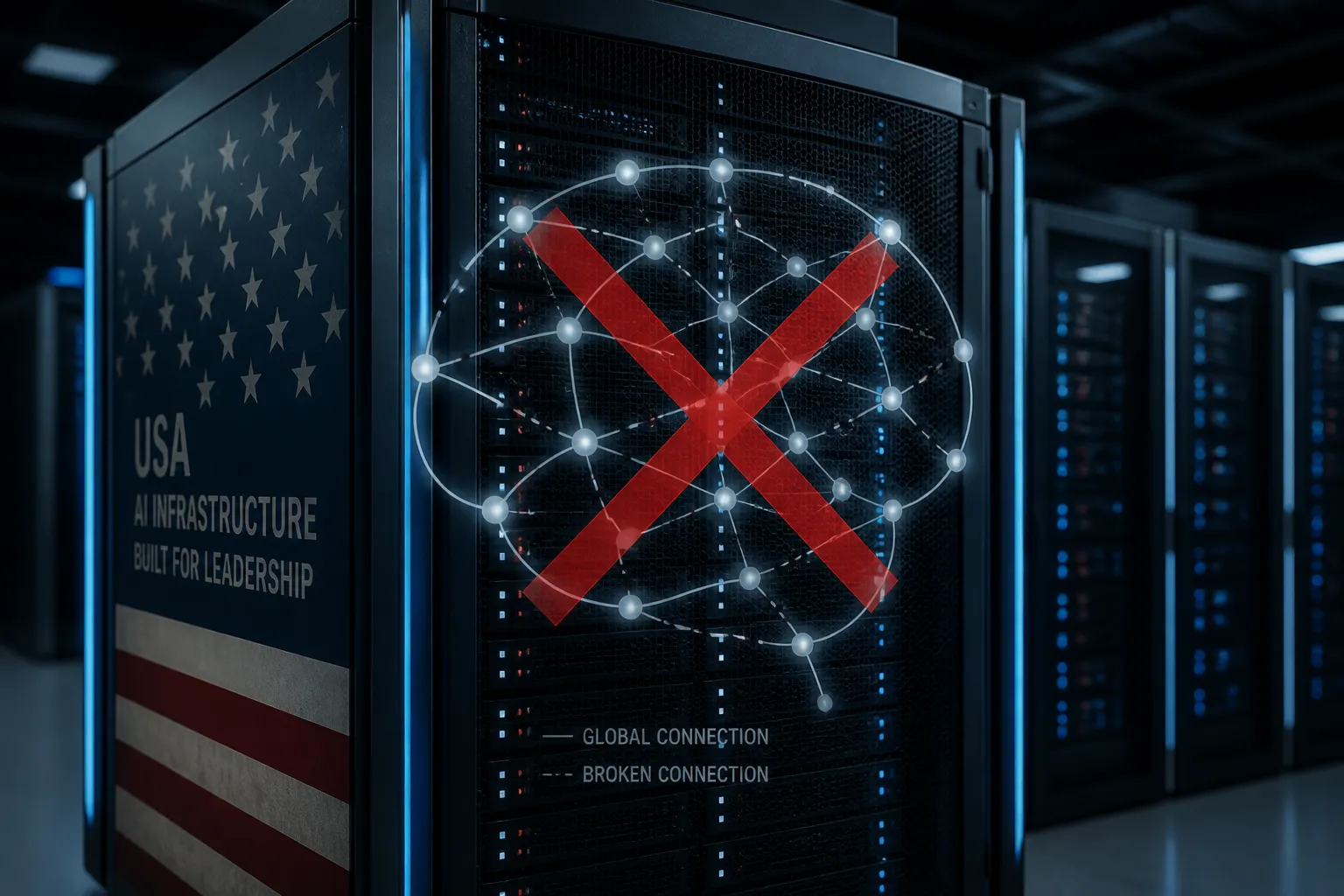
On June 12, 2026, the U.S. Department of Commerce issued a sweeping export‑control directive that shut down Anthropic’s newest public models—Claude Fable 5 and Claude Mythos 5—across the globe. The order bars any foreign national, whether inside or outside the United States, from using the models, even those employed by Anthropic. Because the company could not separate U.S. citizens from non‑citizens in its user base, it opted to disable the models entirely for everyone.
The two models had debuted just three days earlier, on June 9, and were billed as the first members of Anthropic’s “Mythos‑class” tier. Bloomberg reports that the company received the directive after discovering that the models could be “jailbroken,” allowing users to bypass built‑in safeguards and perform cybersecurity tasks that Anthropic had explicitly blocked. The shutdown also derailed Project Glasswing, an Anthropic‑led collaboration that brings together Amazon, Google, Microsoft and Apple to develop AI tools for detecting and mitigating cyber threats. The project had been a key resource for governments—including India, which had been a major participant.
The order is part of the U.S. AI Diffusion Rule, announced in 2025, which classifies countries into tiers and treats model weights as exportable commodities subject to national‑security controls. By targeting Fable 5, the U.S. government demonstrated that it will enforce the rule against any technology that could reach adversarial states.
For India, the episode underscores the conditional nature of its “trusted partner” status with Washington. The country has poured resources into U.S.‑led AI diplomacy, signing the TRUST (Transforming the Relationship Utilising Strategic Technology) initiative in February 2025, the Pax Silica supply‑chain compact, and the India‑U.S. AI Opportunity Partnership. Yet the Fable 5 shutdown shows that even a trusted partner can lose access to a model overnight.
China is expected to view the move as confirmation of its own strategy to build a sovereign AI stack. Beijing has continued to invest in domestic AI capabilities, even after the U.S. cleared Nvidia’s second‑tier chips for Chinese buyers last December.
Other middle powers are accelerating their own AI infrastructure. France, which is hosting this week’s G7 summit in Evian‑les‑Bains, is courting a €45 billion SoftBank build‑out and positioning itself as Europe’s AI hub. The European Union is pursuing “sovereign” compute, while Japan and South Korea are developing domestic foundries. Gulf states are trading investment for chip allocations.
The G7 summit, running from June 14 to 16, is a key forum for AI policy. French President Emmanuel Macron has signaled a desire to advance AI cooperation, even as Washington pushes its “American AI technology stack” against Chinese competitors. India is attending as a guest; its 120 deep‑tech startups have been present in Nice since Sunday for Bharat Innovates 2026, a three‑day event focused on semiconductors, quantum and space.
Prime Minister Narendra Modi is scheduled to speak at the VivaTech conference in Paris later this week, where India is designated an “AI Country Partner.” He is expected to unveil the MANAV framework—an acronym for Moral, Accountable, National‑Sovereignty, Accessible, and Valid governance model.
The Fable 5 shutdown signals that advanced AI models can be shut down overnight, creating a contingent risk for any government that relies on U.S. AI infrastructure. The incident has prompted calls for India to avoid exclusivity, to maintain a diversified supply chain, and to negotiate terms that allow continued access while respecting U.S. export controls.
Anthropic’s decision to disable the models was made within hours of receiving the directive. The company’s statement noted that the order applied to all foreign nationals, and that compliance required disabling the models entirely.
The event highlights the growing trend of technology denial, which has moved from peripheral sanctions on adversaries to central export controls on advanced AI. It also illustrates the shift from geographic to individual control, as the U.S. now restricts access on a per‑national basis.
The immediate consequence is the loss of a powerful AI tool for developers and researchers worldwide. Longer‑term implications include a potential acceleration of domestic AI development in countries that view U.S. controls as a threat to their technological sovereignty.
India’s next steps will likely involve reassessing its reliance on U.S. AI infrastructure, engaging with U.S. policymakers to clarify the scope of export controls, and continuing to build domestic AI capabilities. The U.S. government has not yet announced any changes to the directive, and the situation remains fluid.
The incident serves as a reminder that national‑security concerns can swiftly alter the availability of cutting‑edge AI technology, affecting governments, businesses and researchers across the globe.
The two models had debuted just three days earlier, on June 9, and were billed as the first members of Anthropic’s “Mythos‑class” tier. Bloomberg reports that the company received the directive after discovering that the models could be “jailbroken,” allowing users to bypass built‑in safeguards and perform cybersecurity tasks that Anthropic had explicitly blocked. The shutdown also derailed Project Glasswing, an Anthropic‑led collaboration that brings together Amazon, Google, Microsoft and Apple to develop AI tools for detecting and mitigating cyber threats. The project had been a key resource for governments—including India, which had been a major participant.
The order is part of the U.S. AI Diffusion Rule, announced in 2025, which classifies countries into tiers and treats model weights as exportable commodities subject to national‑security controls. By targeting Fable 5, the U.S. government demonstrated that it will enforce the rule against any technology that could reach adversarial states.
For India, the episode underscores the conditional nature of its “trusted partner” status with Washington. The country has poured resources into U.S.‑led AI diplomacy, signing the TRUST (Transforming the Relationship Utilising Strategic Technology) initiative in February 2025, the Pax Silica supply‑chain compact, and the India‑U.S. AI Opportunity Partnership. Yet the Fable 5 shutdown shows that even a trusted partner can lose access to a model overnight.
China is expected to view the move as confirmation of its own strategy to build a sovereign AI stack. Beijing has continued to invest in domestic AI capabilities, even after the U.S. cleared Nvidia’s second‑tier chips for Chinese buyers last December.
Other middle powers are accelerating their own AI infrastructure. France, which is hosting this week’s G7 summit in Evian‑les‑Bains, is courting a €45 billion SoftBank build‑out and positioning itself as Europe’s AI hub. The European Union is pursuing “sovereign” compute, while Japan and South Korea are developing domestic foundries. Gulf states are trading investment for chip allocations.
The G7 summit, running from June 14 to 16, is a key forum for AI policy. French President Emmanuel Macron has signaled a desire to advance AI cooperation, even as Washington pushes its “American AI technology stack” against Chinese competitors. India is attending as a guest; its 120 deep‑tech startups have been present in Nice since Sunday for Bharat Innovates 2026, a three‑day event focused on semiconductors, quantum and space.
Prime Minister Narendra Modi is scheduled to speak at the VivaTech conference in Paris later this week, where India is designated an “AI Country Partner.” He is expected to unveil the MANAV framework—an acronym for Moral, Accountable, National‑Sovereignty, Accessible, and Valid governance model.
The Fable 5 shutdown signals that advanced AI models can be shut down overnight, creating a contingent risk for any government that relies on U.S. AI infrastructure. The incident has prompted calls for India to avoid exclusivity, to maintain a diversified supply chain, and to negotiate terms that allow continued access while respecting U.S. export controls.
Anthropic’s decision to disable the models was made within hours of receiving the directive. The company’s statement noted that the order applied to all foreign nationals, and that compliance required disabling the models entirely.
The event highlights the growing trend of technology denial, which has moved from peripheral sanctions on adversaries to central export controls on advanced AI. It also illustrates the shift from geographic to individual control, as the U.S. now restricts access on a per‑national basis.
The immediate consequence is the loss of a powerful AI tool for developers and researchers worldwide. Longer‑term implications include a potential acceleration of domestic AI development in countries that view U.S. controls as a threat to their technological sovereignty.
India’s next steps will likely involve reassessing its reliance on U.S. AI infrastructure, engaging with U.S. policymakers to clarify the scope of export controls, and continuing to build domestic AI capabilities. The U.S. government has not yet announced any changes to the directive, and the situation remains fluid.
The incident serves as a reminder that national‑security concerns can swiftly alter the availability of cutting‑edge AI technology, affecting governments, businesses and researchers across the globe.