Blab Politics
Dobbs Decision Sparks Lasting Shift in U.S. Abortion Attitudes, Impacts 2026 Midterms
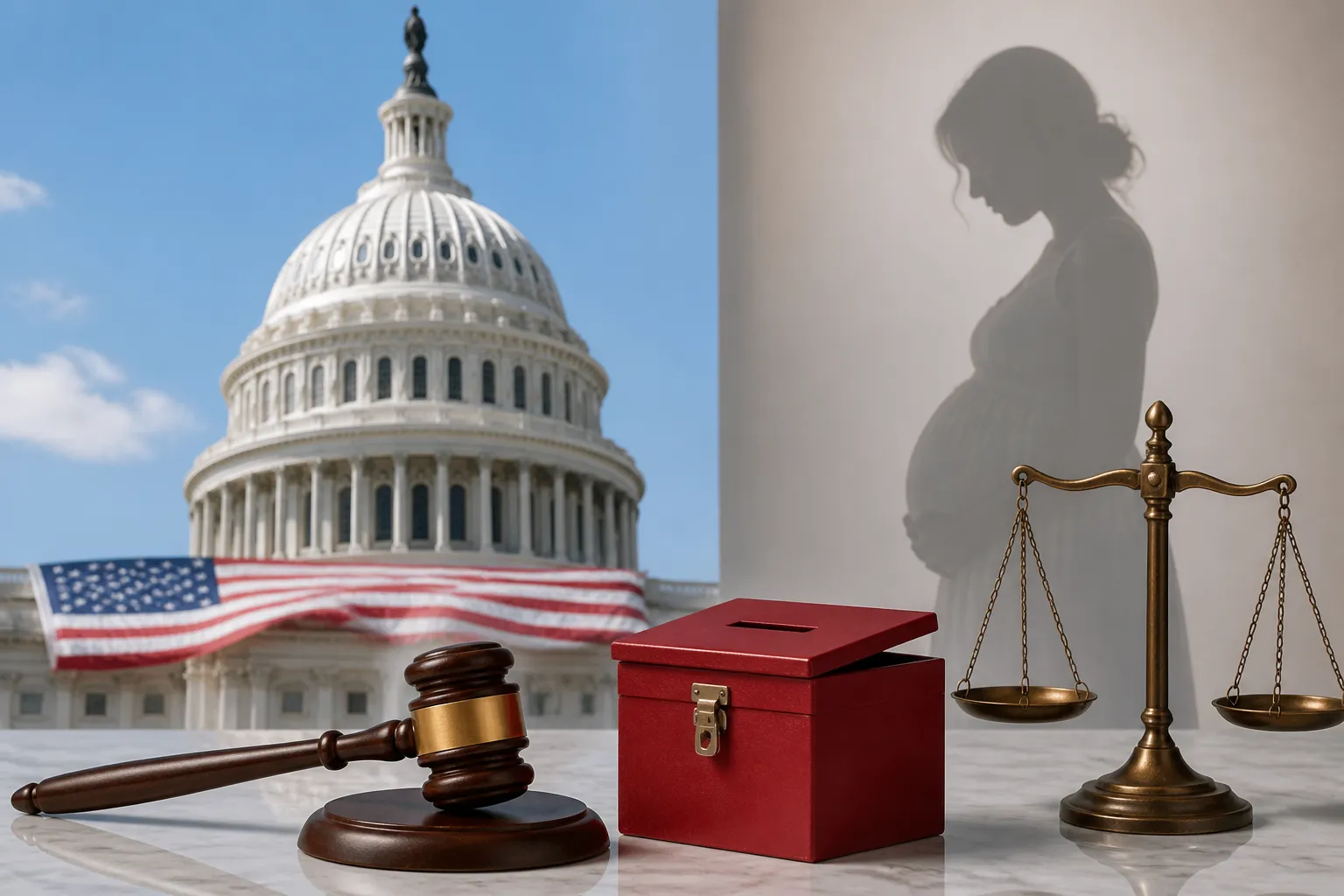
Four years after the Supreme Court’s 2022 ruling in Dobbs v. Jackson Women’s Health Organization, the nation’s attitude toward abortion has changed in ways that reach beyond the courtroom. Public opinion is now more pro‑choice than it was before the decision, and the issue carries greater weight for Democratic voters while generating new fissures within the Republican coalition.
In the decade before Dobbs, abortion views were remarkably stable. Gallup surveys from 1975 and 2021 both recorded about 48 % of respondents supporting legal abortion in some circumstances and 19 % favoring a total ban. The national polls of 2022 and 2024, however, paint a different picture. According to the book Not Going Back: Public Opinion on Abortion in Post‑Dobbs America, pro‑choice Democrats were more likely than Republicans to say abortion was a top political issue shaping their vote. The same research found that roughly one‑third of Republicans hold views that do not align with the party’s pro‑life platform, and these cross‑pressured voters turned out at lower rates and were more willing to cross party lines.
The shift is also gendered. Gallup data from 2025 shows 56 % of women saying abortion should be legal in most or all circumstances, compared with 41 % of men. The gender gap has widened since Dobbs, reflecting both women’s personal experiences with pregnancy and the immediate consequences of state‑level bans. The book notes that a better understanding of human reproduction—such as how pregnancies are dated—correlates with greater support for legal access.
State‑level bans have made the debate concrete. After Dobbs, many states enacted or revived restrictions that limit abortion before fetal viability, often at 12 or 15 weeks. The public’s reaction has been to view these limits as effectively the same as a total ban, because media coverage of women denied care during miscarriages or medical emergencies has highlighted the practical impact. Republican legislators who previously framed 12‑ or 15‑week limits as a compromise now face a public that does not see a meaningful difference.
The political consequences of this shift were evident in the 2022 midterms. The issue helped Democrats outperform expectations, contributing to gains in the House and Senate. The book argues that abortion rights continue to motivate Democratic voters and influence turnout as the 2026 midterms approach.
While the economy and partisanship remain central to the 2026 election, abortion has become an electoral issue in its own right. The Supreme Court’s decision has turned a constitutional question into a political one: state bans that restrict abortion now carry direct electoral consequences, and public opinion has moved toward greater support for access. The 2026 elections will test how voters respond when policy and preference diverge.
The changes documented in Not Going Back are not temporary reactions. The stability that defined abortion politics for half a century has ended. The new normal is a political landscape in which abortion rights are more widely supported and more politically consequential, motivating Democratic voters while creating new tensions within the Republican coalition.
The outcome of the 2026 midterms will reveal whether the shift in public opinion translates into lasting electoral gains for Democrats or whether Republican candidates can navigate the cross‑pressured base. As the election approaches, state‑level abortion laws, voter turnout, and campaign messaging will all be influenced by the enduring legacy of the Dobbs decision.
In the decade before Dobbs, abortion views were remarkably stable. Gallup surveys from 1975 and 2021 both recorded about 48 % of respondents supporting legal abortion in some circumstances and 19 % favoring a total ban. The national polls of 2022 and 2024, however, paint a different picture. According to the book Not Going Back: Public Opinion on Abortion in Post‑Dobbs America, pro‑choice Democrats were more likely than Republicans to say abortion was a top political issue shaping their vote. The same research found that roughly one‑third of Republicans hold views that do not align with the party’s pro‑life platform, and these cross‑pressured voters turned out at lower rates and were more willing to cross party lines.
The shift is also gendered. Gallup data from 2025 shows 56 % of women saying abortion should be legal in most or all circumstances, compared with 41 % of men. The gender gap has widened since Dobbs, reflecting both women’s personal experiences with pregnancy and the immediate consequences of state‑level bans. The book notes that a better understanding of human reproduction—such as how pregnancies are dated—correlates with greater support for legal access.
State‑level bans have made the debate concrete. After Dobbs, many states enacted or revived restrictions that limit abortion before fetal viability, often at 12 or 15 weeks. The public’s reaction has been to view these limits as effectively the same as a total ban, because media coverage of women denied care during miscarriages or medical emergencies has highlighted the practical impact. Republican legislators who previously framed 12‑ or 15‑week limits as a compromise now face a public that does not see a meaningful difference.
The political consequences of this shift were evident in the 2022 midterms. The issue helped Democrats outperform expectations, contributing to gains in the House and Senate. The book argues that abortion rights continue to motivate Democratic voters and influence turnout as the 2026 midterms approach.
While the economy and partisanship remain central to the 2026 election, abortion has become an electoral issue in its own right. The Supreme Court’s decision has turned a constitutional question into a political one: state bans that restrict abortion now carry direct electoral consequences, and public opinion has moved toward greater support for access. The 2026 elections will test how voters respond when policy and preference diverge.
The changes documented in Not Going Back are not temporary reactions. The stability that defined abortion politics for half a century has ended. The new normal is a political landscape in which abortion rights are more widely supported and more politically consequential, motivating Democratic voters while creating new tensions within the Republican coalition.
The outcome of the 2026 midterms will reveal whether the shift in public opinion translates into lasting electoral gains for Democrats or whether Republican candidates can navigate the cross‑pressured base. As the election approaches, state‑level abortion laws, voter turnout, and campaign messaging will all be influenced by the enduring legacy of the Dobbs decision.