Blab Politics
Tunisias 2021 Self-Coup: From Democratic Experiment to Authoritarian Rule
For more than a decade, Tunisia stood as the Arab Spring’s lone success story, a nation that had moved from revolution to a functioning democracy. After the 2011 uprising, a new constitution was drafted in 2014, and successive elections saw both Islamist and secular forces share power in a delicate but workable coalition.
On 25 July 2021, that fragile equilibrium shattered. In cities from the capital Tunis to Sousse and Sfax, thousands poured onto the streets, accusing the government of abandoning the revolution’s promises. The protests were fueled by a devastating Covid‑19 crisis, rampant youth unemployment, and stalled talks with the International Monetary Fund.
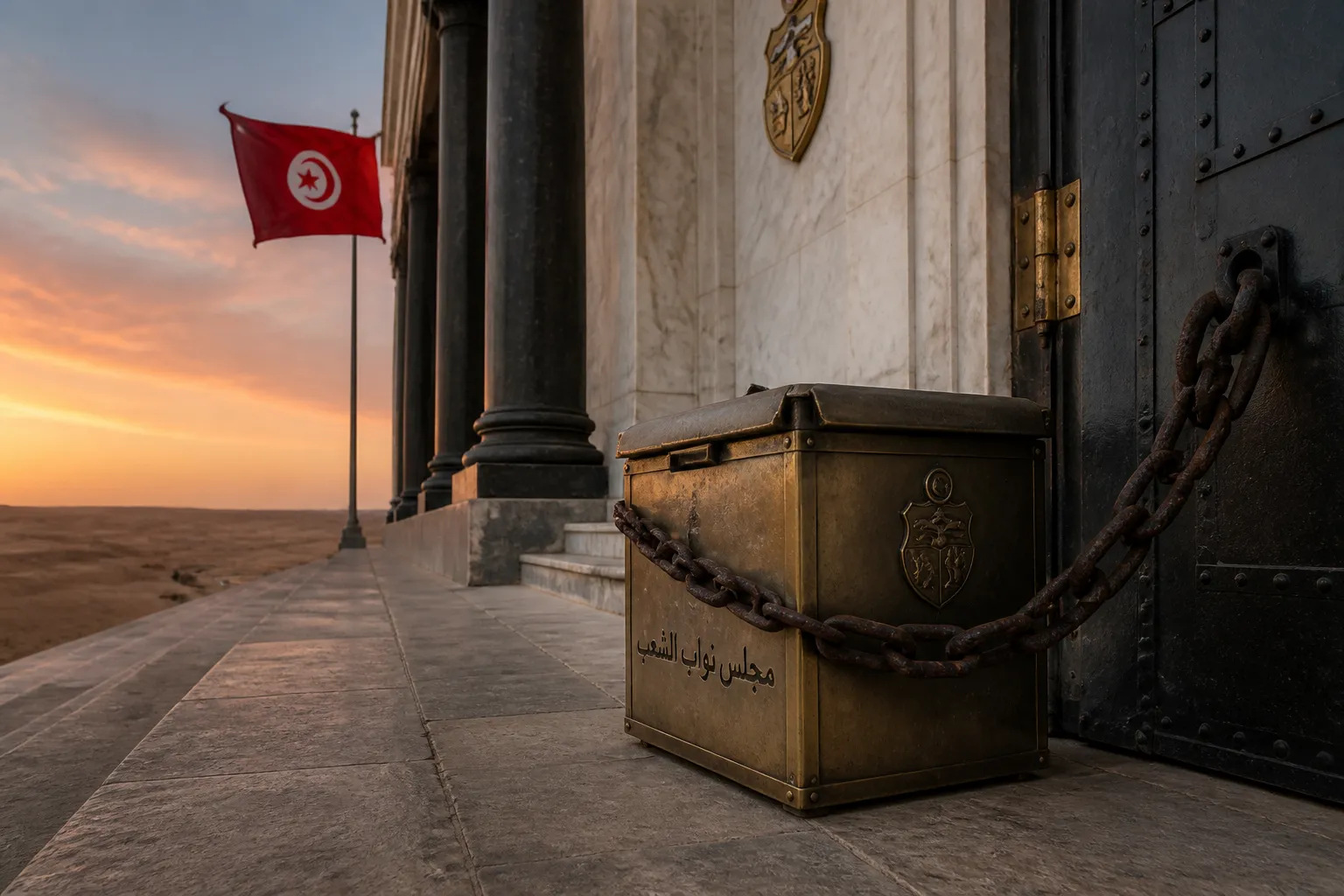
In the early hours of that evening, President Kaïs Saied— a former constitutional law professor who had won the 2019 presidential race with 72 % of the vote— addressed the nation from the presidential palace. He announced the dismissal of Prime Minister Hichem Mechichi, the suspension of the Assembly of the Representatives of the People for 30 days, and the assumption of executive authority.
Saied insisted that the moves were grounded in Article 80 of the 2014 constitution, which he claimed allowed a president to act when the country faced an “imminent danger.” Critics countered that Article 80 required consultation with the prime minister and the parliamentary speaker, and that the constitution mandated continuous parliamentary session. The act was widely labeled a self‑coup.
That night, Mechichi was escorted to the palace and later described being held in a room as a “prisoner.” He said, “There was no physical assault, but when you lock the prime minister into a room in Carthage, it constitutes an assault.” Sources indicated the operation was coordinated with support from Egypt and the United Arab Emirates, which had reportedly encouraged the dismantling of Tunisia’s post‑revolution order.
Ennahda, the Islamist‑inspired party that had governed from 2011 to 2014 and later joined a secular‑led coalition, reacted sharply. Its leader, Rached Ghannouchi, declared that parliament remained in session and called for dialogue. Senior Ennahda officials, including Ahmed Gaaloul, said the party had been caught off‑guard by the sudden shift and that many leaders failed to grasp the seriousness of the warning signs.
International reactions were restrained. The United States, through the White House, expressed concern but avoided labeling the event a coup. Former ambassador Gordan Gray said Washington had hoped for a stronger response. European leaders, wary of instability affecting migration flows, urged respect for the constitution while steering clear of the word “coup.” The European Union, which had committed billions of euros in aid and signed a migration pact in 2023, praised Saied’s “stability” but did not publicly condemn the suspension of parliament.
Since July 2021, Saied has extended emergency measures beyond the initial 30 days, governing by decree, dismissing judges, and arresting opposition figures. The political space has narrowed: opposition parties have been jailed, independent judges dismissed, and the powers of electoral bodies curtailed. Saied’s government has also pursued a hard‑line migration policy, expelling migrants and targeting Black Africans, actions that have drawn condemnation from human‑rights groups.
In 2024, Saied was re‑elected with over 90 % of the vote in an election that opposition parties said was neither free nor fair. The new constitution, adopted in a 2022 referendum, granted the president additional powers, further consolidating Saied’s control.
Today, Tunisia’s democratic institutions remain under severe strain. Parliament is effectively suspended, the judiciary is weakened, and political opposition faces arrest or exile. The international community continues to monitor the situation, with the United States and the European Union maintaining diplomatic engagement while expressing concern over the erosion of civil liberties. The next major political development will be the scheduled legislative elections, whose conduct and legitimacy remain uncertain.
Tunisia’s case illustrates how a nation that once symbolized democratic resilience can, under internal and external pressures, revert to authoritarian rule. The long‑term impact on Tunisia’s political culture, economic prospects, and regional stability remains to be seen.
On 25 July 2021, that fragile equilibrium shattered. In cities from the capital Tunis to Sousse and Sfax, thousands poured onto the streets, accusing the government of abandoning the revolution’s promises. The protests were fueled by a devastating Covid‑19 crisis, rampant youth unemployment, and stalled talks with the International Monetary Fund.
In the early hours of that evening, President Kaïs Saied— a former constitutional law professor who had won the 2019 presidential race with 72 % of the vote— addressed the nation from the presidential palace. He announced the dismissal of Prime Minister Hichem Mechichi, the suspension of the Assembly of the Representatives of the People for 30 days, and the assumption of executive authority.
Saied insisted that the moves were grounded in Article 80 of the 2014 constitution, which he claimed allowed a president to act when the country faced an “imminent danger.” Critics countered that Article 80 required consultation with the prime minister and the parliamentary speaker, and that the constitution mandated continuous parliamentary session. The act was widely labeled a self‑coup.
That night, Mechichi was escorted to the palace and later described being held in a room as a “prisoner.” He said, “There was no physical assault, but when you lock the prime minister into a room in Carthage, it constitutes an assault.” Sources indicated the operation was coordinated with support from Egypt and the United Arab Emirates, which had reportedly encouraged the dismantling of Tunisia’s post‑revolution order.
Ennahda, the Islamist‑inspired party that had governed from 2011 to 2014 and later joined a secular‑led coalition, reacted sharply. Its leader, Rached Ghannouchi, declared that parliament remained in session and called for dialogue. Senior Ennahda officials, including Ahmed Gaaloul, said the party had been caught off‑guard by the sudden shift and that many leaders failed to grasp the seriousness of the warning signs.
International reactions were restrained. The United States, through the White House, expressed concern but avoided labeling the event a coup. Former ambassador Gordan Gray said Washington had hoped for a stronger response. European leaders, wary of instability affecting migration flows, urged respect for the constitution while steering clear of the word “coup.” The European Union, which had committed billions of euros in aid and signed a migration pact in 2023, praised Saied’s “stability” but did not publicly condemn the suspension of parliament.
Since July 2021, Saied has extended emergency measures beyond the initial 30 days, governing by decree, dismissing judges, and arresting opposition figures. The political space has narrowed: opposition parties have been jailed, independent judges dismissed, and the powers of electoral bodies curtailed. Saied’s government has also pursued a hard‑line migration policy, expelling migrants and targeting Black Africans, actions that have drawn condemnation from human‑rights groups.
In 2024, Saied was re‑elected with over 90 % of the vote in an election that opposition parties said was neither free nor fair. The new constitution, adopted in a 2022 referendum, granted the president additional powers, further consolidating Saied’s control.
Today, Tunisia’s democratic institutions remain under severe strain. Parliament is effectively suspended, the judiciary is weakened, and political opposition faces arrest or exile. The international community continues to monitor the situation, with the United States and the European Union maintaining diplomatic engagement while expressing concern over the erosion of civil liberties. The next major political development will be the scheduled legislative elections, whose conduct and legitimacy remain uncertain.
Tunisia’s case illustrates how a nation that once symbolized democratic resilience can, under internal and external pressures, revert to authoritarian rule. The long‑term impact on Tunisia’s political culture, economic prospects, and regional stability remains to be seen.