Blab Politics
Deadly Clashes in Azad Kashmir Amid 2026 Elections Spark Political Crisis
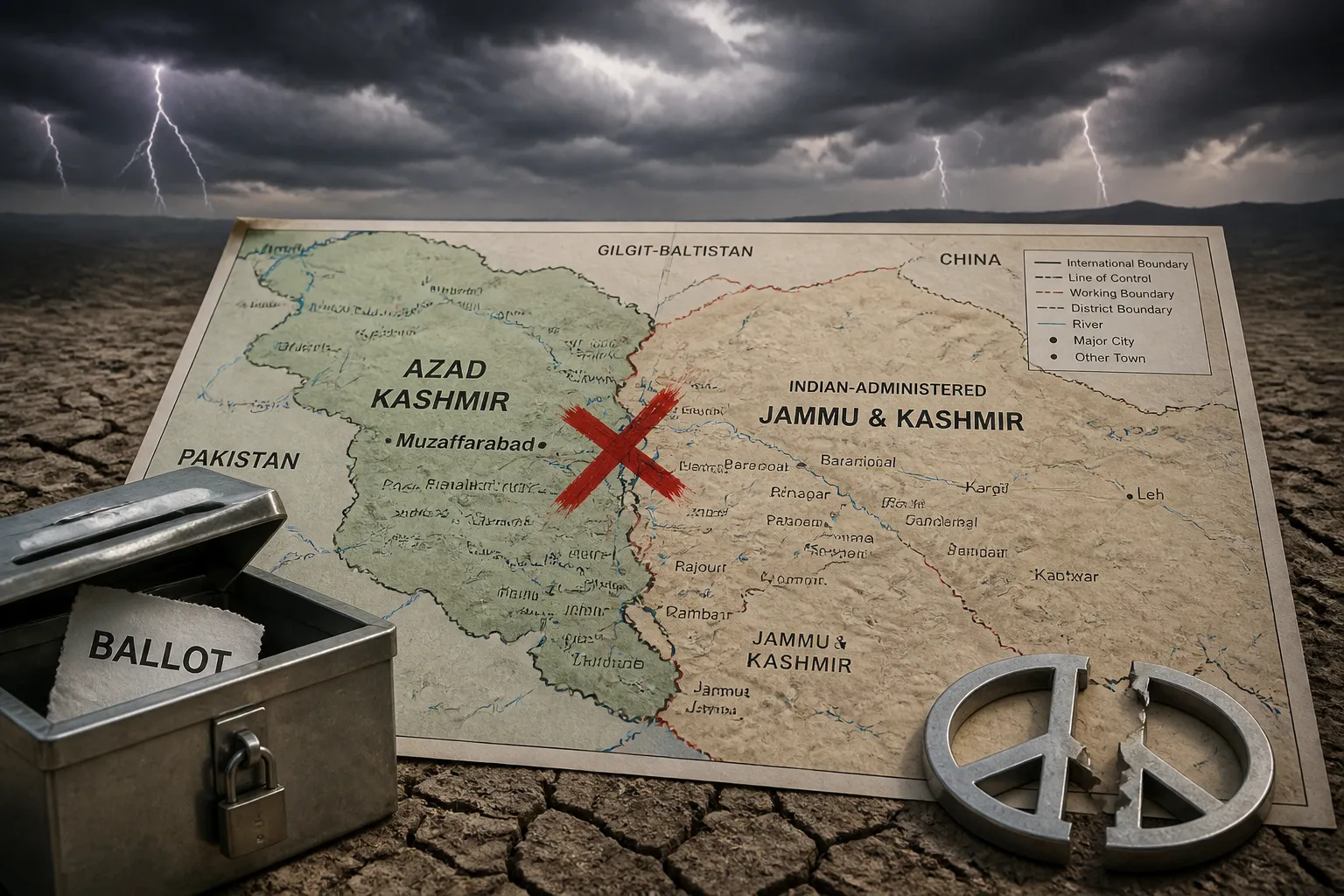
Azad Jammu and Kashmir (AJK) is engulfed in a severe political crisis as protests organized by the banned Jammu Kashmir Joint Awami Action Committee (JAAC) have erupted into violence. The unrest, which began on July 27 2026 in Rawalkot, Muzaffarabad, Mirpur and Kotli, has halted the region’s first‑phase legislative elections and left several people dead and injured.
The demonstrations were ignited by a 38‑point charter from the JAAC that demands economic relief—lower electricity tariffs and wheat subsidies—and structural changes, including the abolition of 12 assembly seats reserved for refugees from Indian‑administered Kashmir. The group also calls for constitutional reforms, greater regional autonomy and a reshaping of the electoral framework. The Pakistani government declared the JAAC a terrorist organization on June 5 2026.
Security forces first met the crowds when the protests were still peaceful. Police and Rangers confronted demonstrators attempting to march toward administrative centers. According to Pakistani media, some participants brandished automatic weapons, killing at least one Rangers officer and injuring several police personnel. Official casualty figures differ from those reported by the JAAC and independent rights groups.
On July 14, Reuters reported nine deaths in Muzaffarabad, while the JAAC claimed 30 fatalities in Rawalakot. AJK police confirmed that security personnel also suffered casualties. Amnesty International and the Human Rights Commission of Pakistan (HRCP) called for independent investigations and warned about internet shutdowns, arbitrary arrests and the designation of the protest movement as a terrorist organization.
The violence has unfolded alongside the AJK legislative elections. Voting began peacefully on July 27 in the Mirpur Division, covering 13 constituencies. However, security conditions forced postponements in other districts. The Pakistan Tehreek‑e‑Insaf (PTI) boycotted parts of the election, alleging irregularities, while the ruling Pakistan Muslim League‑Nawaz (PML‑N) secured victories in several constituencies. The Pakistan People’s Party (PPP) has also been active in the region.
The federal government has rejected claims of excessive force. Federal Information Minister Attaullah Tarar said security officials were directed to counter attempts to destabilize the region and that militant elements within the JAAC pursued a foreign agenda. The AJK government blamed protest organizers for escalating violence and urged demonstrators to engage in dialogue rather than confrontation.
Security measures have intensified across several districts. Additional police, Rangers and other law‑enforcement units have been deployed to government buildings, election centers and key transport routes. Restrictions on movement and communications have disrupted businesses, banking operations and educational institutions. Protesters have guided tourists through alternative routes, and the region has experienced shortages of basic commodities.
International media coverage has highlighted the deteriorating security environment and the broader political implications of the unrest. Reuters noted that the violence has complicated efforts to establish political stability, while Al Jazeera described the crisis as part of a long‑running debate over governance, constitutional arrangements and economic marginalization.
The situation remains fluid. Sporadic demonstrations and isolated confrontations continue to be reported, and security agencies remain on high alert. The AJK administration and the federal government have stated that law and order will be maintained and that the electoral process will be completed. Protest leaders, however, insist that demonstrations will persist until their constitutional and political demands are addressed.
The next steps involve the continuation of the second phase of the AJK elections on August 2, the deployment of additional security forces, and the potential for further investigations into the clashes. The outcome of these developments will be closely watched by domestic stakeholders, regional observers and the international community.
The demonstrations were ignited by a 38‑point charter from the JAAC that demands economic relief—lower electricity tariffs and wheat subsidies—and structural changes, including the abolition of 12 assembly seats reserved for refugees from Indian‑administered Kashmir. The group also calls for constitutional reforms, greater regional autonomy and a reshaping of the electoral framework. The Pakistani government declared the JAAC a terrorist organization on June 5 2026.
Security forces first met the crowds when the protests were still peaceful. Police and Rangers confronted demonstrators attempting to march toward administrative centers. According to Pakistani media, some participants brandished automatic weapons, killing at least one Rangers officer and injuring several police personnel. Official casualty figures differ from those reported by the JAAC and independent rights groups.
On July 14, Reuters reported nine deaths in Muzaffarabad, while the JAAC claimed 30 fatalities in Rawalakot. AJK police confirmed that security personnel also suffered casualties. Amnesty International and the Human Rights Commission of Pakistan (HRCP) called for independent investigations and warned about internet shutdowns, arbitrary arrests and the designation of the protest movement as a terrorist organization.
The violence has unfolded alongside the AJK legislative elections. Voting began peacefully on July 27 in the Mirpur Division, covering 13 constituencies. However, security conditions forced postponements in other districts. The Pakistan Tehreek‑e‑Insaf (PTI) boycotted parts of the election, alleging irregularities, while the ruling Pakistan Muslim League‑Nawaz (PML‑N) secured victories in several constituencies. The Pakistan People’s Party (PPP) has also been active in the region.
The federal government has rejected claims of excessive force. Federal Information Minister Attaullah Tarar said security officials were directed to counter attempts to destabilize the region and that militant elements within the JAAC pursued a foreign agenda. The AJK government blamed protest organizers for escalating violence and urged demonstrators to engage in dialogue rather than confrontation.
Security measures have intensified across several districts. Additional police, Rangers and other law‑enforcement units have been deployed to government buildings, election centers and key transport routes. Restrictions on movement and communications have disrupted businesses, banking operations and educational institutions. Protesters have guided tourists through alternative routes, and the region has experienced shortages of basic commodities.
International media coverage has highlighted the deteriorating security environment and the broader political implications of the unrest. Reuters noted that the violence has complicated efforts to establish political stability, while Al Jazeera described the crisis as part of a long‑running debate over governance, constitutional arrangements and economic marginalization.
The situation remains fluid. Sporadic demonstrations and isolated confrontations continue to be reported, and security agencies remain on high alert. The AJK administration and the federal government have stated that law and order will be maintained and that the electoral process will be completed. Protest leaders, however, insist that demonstrations will persist until their constitutional and political demands are addressed.
The next steps involve the continuation of the second phase of the AJK elections on August 2, the deployment of additional security forces, and the potential for further investigations into the clashes. The outcome of these developments will be closely watched by domestic stakeholders, regional observers and the international community.