Blab Politics
Chevrons Venezuelan Output Rises to 280,000 Barrels a Day as U.S. Licenses Expand and Political Landscape Shifts
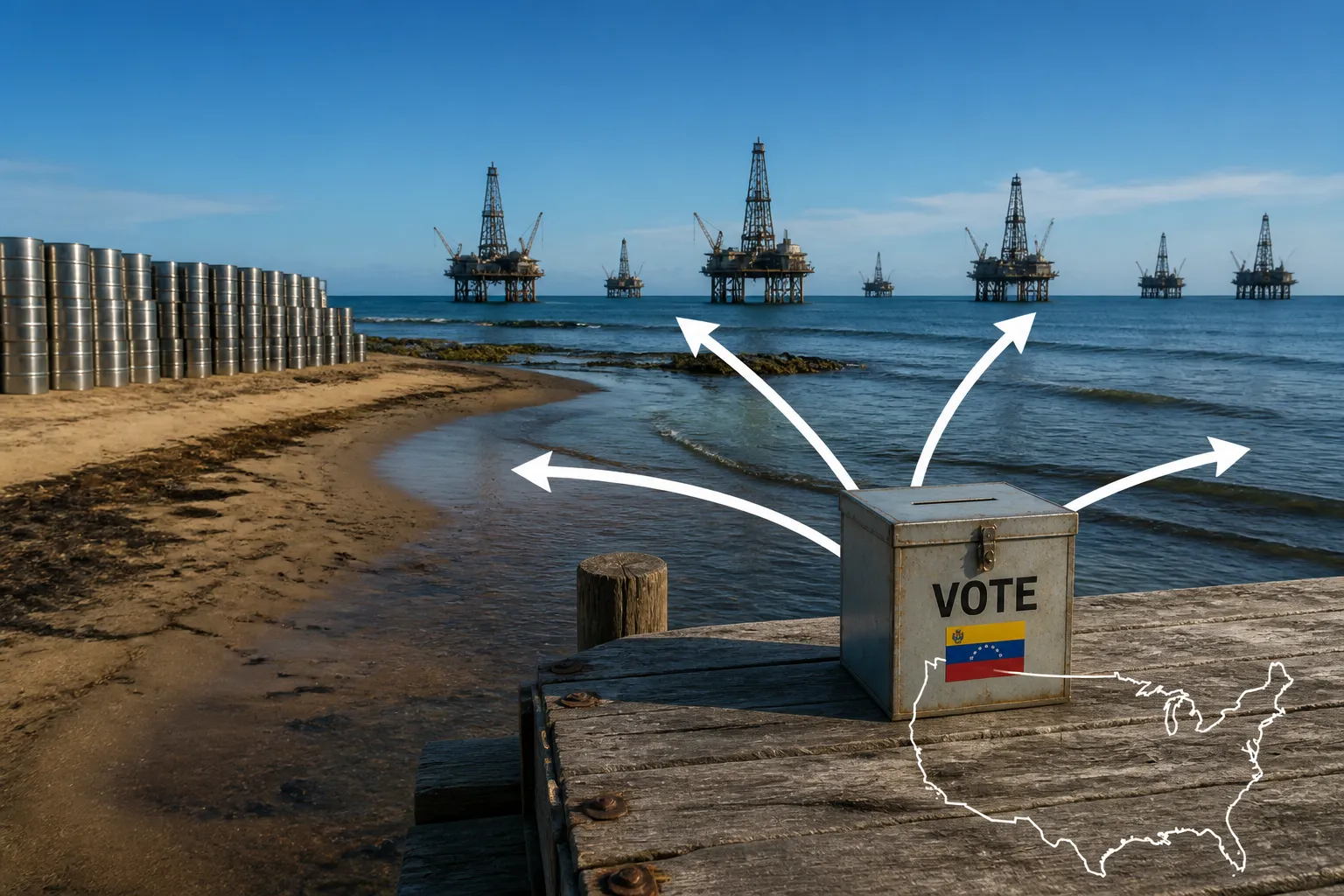
In the first half of 2026, Chevron’s joint ventures with Venezuela’s state oil company, PDVSA, pumped a record 280,000 barrels per day—about 15 % higher than the previous six‑month period. That volume represents roughly one‑third of Venezuela’s total output, which industry estimates place near 900,000 bpd.
The uptick follows an asset‑swap deal that gave Chevron a larger share of the Petroindependencia joint venture, cementing control over the country’s most strategic heavy‑oil fields. Chief financial officer Eimear Bonner told investors that, should conditions allow, the company could lift Venezuelan production by as much as 50 % by the end of 2028.
All of Chevron’s Venezuelan activities operate under authorizations from the U.S. Treasury Department’s Office of Foreign Assets Control (OFAC). Those licenses can be broadened, narrowed or revoked as Washington’s foreign‑policy priorities shift, making the business especially sensitive to U.S. decisions.
In February 2026, the Treasury issued general licenses permitting other majors—BP, Eni, Repsol and Shell—to transact in Venezuela’s oil and gas sector. Repsol has signaled a potential 50 % rise in its Venezuelan output within a year, and Shell has signed preliminary agreements. The licenses grant the majors access to some of the world’s largest crude reserves at relatively low cost, but the executive‑discretionary nature of the regime has been cited by several companies as a source of uncertainty.
The reopening has become a political talking point in the United States. On 3 August 2026, President Donald Trump publicly credited his administration for Chevron’s return to Venezuela, saying the company had been “thrown out” but was now “back, far bigger and stronger than ever before.” The comments, reported by Bloomberg and other outlets, came as Trump criticized Chevron’s chief executive, Mike Wirth, for not acknowledging the administration’s support in a television interview.
The political backdrop is significant. In January 2026, the United States captured Venezuelan President Nicolás Maduro, and Vice President Delcy Rodríguez became acting president. Rodríguez’s government has overhauled the oil sector, scrapping a rule that required PDVSA to hold majority stakes in joint ventures and appointing a new oil minister. The changes aim to attract private capital into an industry that has suffered from underinvestment and sanctions.
Since January 2026, proceeds from U.S.‑supervised sales of Venezuelan oil have been reported in the billions of dollars, with a large share held in U.S. Treasury accounts rather than flowing directly to Caracas. Oil revenue accounts for an estimated 50–60 % of Venezuela’s budget, so the rise in output reshapes the country’s finances and its standing among regional producers.
For neighboring countries, the resurgent Venezuelan output adds to global supply and to the pool of Latin American crude competing for buyers, particularly on the U.S. Gulf Coast. Colombia, which has struggled to reverse declining reserves, and Guyana, whose output has surged past 900,000 bpd, see a shift in relative standing rather than an immediate threat.
Near‑term questions are practical. Can Chevron and its partners sustain the output gains without heavy fresh investment in aging fields, and will Venezuela’s power grid and infrastructure support higher volumes? The larger questions are political. U.S. licenses remain revocable, the status of the post‑Maduro government is still unsettled, and the destination of oil revenue remains unresolved.
As of now, production is rising, more companies are entering, and Venezuela is re‑emerging as a factor in regional and global oil markets after years on the sidelines. Whether that proves durable will depend on the interplay of U.S. policy, Venezuelan governance, and the companies’ investment decisions. The current situation is that Chevron’s output has climbed to 280,000 bpd, the U.S. Treasury has cleared other majors to engage, and the political environment has shifted with Maduro’s capture and Rodríguez’s leadership. The next steps will involve monitoring the stability of the licenses, the flow of revenue to the Venezuelan treasury, and the companies’ plans for further investment. No definitive timeline exists for the full restoration of Venezuela’s oil sector, and the situation remains fluid.
The uptick follows an asset‑swap deal that gave Chevron a larger share of the Petroindependencia joint venture, cementing control over the country’s most strategic heavy‑oil fields. Chief financial officer Eimear Bonner told investors that, should conditions allow, the company could lift Venezuelan production by as much as 50 % by the end of 2028.
All of Chevron’s Venezuelan activities operate under authorizations from the U.S. Treasury Department’s Office of Foreign Assets Control (OFAC). Those licenses can be broadened, narrowed or revoked as Washington’s foreign‑policy priorities shift, making the business especially sensitive to U.S. decisions.
In February 2026, the Treasury issued general licenses permitting other majors—BP, Eni, Repsol and Shell—to transact in Venezuela’s oil and gas sector. Repsol has signaled a potential 50 % rise in its Venezuelan output within a year, and Shell has signed preliminary agreements. The licenses grant the majors access to some of the world’s largest crude reserves at relatively low cost, but the executive‑discretionary nature of the regime has been cited by several companies as a source of uncertainty.
The reopening has become a political talking point in the United States. On 3 August 2026, President Donald Trump publicly credited his administration for Chevron’s return to Venezuela, saying the company had been “thrown out” but was now “back, far bigger and stronger than ever before.” The comments, reported by Bloomberg and other outlets, came as Trump criticized Chevron’s chief executive, Mike Wirth, for not acknowledging the administration’s support in a television interview.
The political backdrop is significant. In January 2026, the United States captured Venezuelan President Nicolás Maduro, and Vice President Delcy Rodríguez became acting president. Rodríguez’s government has overhauled the oil sector, scrapping a rule that required PDVSA to hold majority stakes in joint ventures and appointing a new oil minister. The changes aim to attract private capital into an industry that has suffered from underinvestment and sanctions.
Since January 2026, proceeds from U.S.‑supervised sales of Venezuelan oil have been reported in the billions of dollars, with a large share held in U.S. Treasury accounts rather than flowing directly to Caracas. Oil revenue accounts for an estimated 50–60 % of Venezuela’s budget, so the rise in output reshapes the country’s finances and its standing among regional producers.
For neighboring countries, the resurgent Venezuelan output adds to global supply and to the pool of Latin American crude competing for buyers, particularly on the U.S. Gulf Coast. Colombia, which has struggled to reverse declining reserves, and Guyana, whose output has surged past 900,000 bpd, see a shift in relative standing rather than an immediate threat.
Near‑term questions are practical. Can Chevron and its partners sustain the output gains without heavy fresh investment in aging fields, and will Venezuela’s power grid and infrastructure support higher volumes? The larger questions are political. U.S. licenses remain revocable, the status of the post‑Maduro government is still unsettled, and the destination of oil revenue remains unresolved.
As of now, production is rising, more companies are entering, and Venezuela is re‑emerging as a factor in regional and global oil markets after years on the sidelines. Whether that proves durable will depend on the interplay of U.S. policy, Venezuelan governance, and the companies’ investment decisions. The current situation is that Chevron’s output has climbed to 280,000 bpd, the U.S. Treasury has cleared other majors to engage, and the political environment has shifted with Maduro’s capture and Rodríguez’s leadership. The next steps will involve monitoring the stability of the licenses, the flow of revenue to the Venezuelan treasury, and the companies’ plans for further investment. No definitive timeline exists for the full restoration of Venezuela’s oil sector, and the situation remains fluid.