Blab Politics
Pacific Islands Forum Leaders Meeting Looms as China-US Rivalry and New Security Treaty Proposal Shape Regional Debate
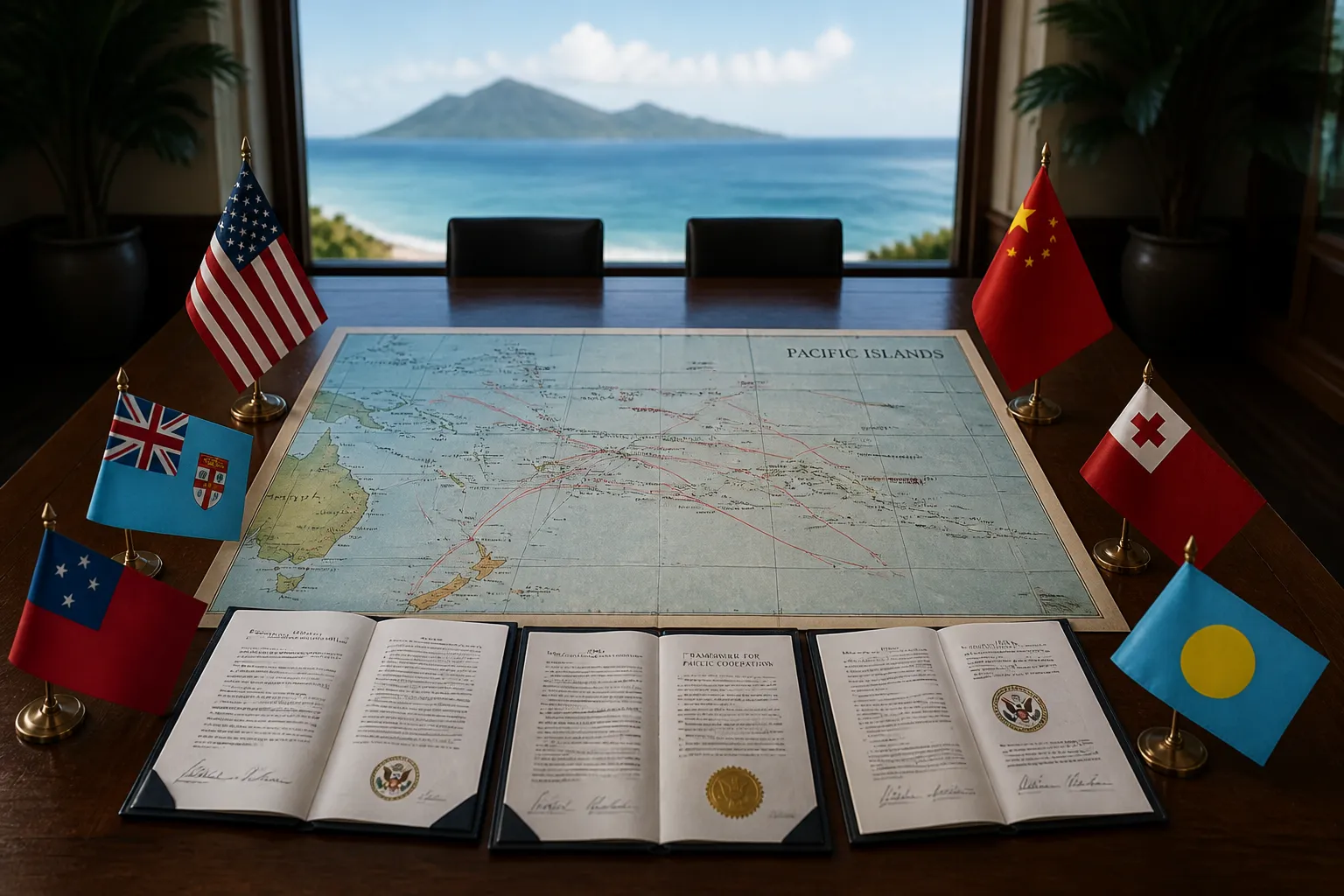
On August 30, Palau will host the 55th Pacific Islands Forum Leaders Meeting, but the agenda is already charged with a Chinese missile test, a new security treaty proposal, and a wave of bilateral deals that could tilt the region’s power balance.
In a week‑long briefing in Suva, Fiji, foreign ministers from the Forum’s 18 member states set the priorities for the upcoming leaders’ summit. The meeting followed China’s launch of a ballistic missile from the Solomon Islands—a move that sparked protests across the Pacific. A joint statement condemning the test was drafted, but it failed to pass because representatives from Narau and Kiribati opposed it. According to Radio NZ, the opposition of those two countries was enough to block the statement under the Forum’s consensus‑based decision model.
During the same Suva session, Solomon Islands Prime Minister Matthew Wale presented a draft of a regional collective‑security treaty. The proposal, first discussed with Australian Prime Minister Anthony Albanese in June, would convert the Forum’s political commitments into binding obligations under international law. Dr Anna Powles of Massey University told Radio NZ that the treaty would raise questions about the scope of obligations, the preservation of consensual decision‑making, and the regulation of existing bilateral partnerships.
Australia’s recent security agreements are likely to influence the treaty debate. In July, Canberra signed new pacts with Papua New Guinea, Vanuatu, and Fiji, effectively limiting China’s diplomatic reach in those countries. Shortly after his election in May, Solomon Islands’ new government sought to “reset” ties with Australia, receiving AU$35 million in emergency aid and beginning negotiations on a bilateral security agreement. The Australian‑Solomon Islands talks, together with the U.S.‑Solomon Islands “ship rider” agreement that allows U.S. Coast Guard vessels to operate in Solomon Islands waters, have heightened concerns among opposition parties in Honiara about sovereignty.
The region’s security environment was further highlighted by RIMPAC 2026, the U.S.‑led maritime exercise that concluded on 31 July. The exercise involved 30,000 service personnel from 30 nations and emphasized interoperability, amphibious operations, and joint long‑range strike capabilities. The presence of partner‑nation officers in command roles—such as a Japanese vice‑commander and a Chilean logistics commander—demonstrated a growing trend toward operational‑level training that could support a collective response to regional aggression.
Other developments underscore the complex diplomatic landscape. Papua New Guinea’s Prime Minister James Marape has requested Timor Leste to contribute 200 personnel to a 1,000‑strong multinational election‑security team that would include soldiers from Vanuatu, Fiji, Solomon Islands, Australia, and New Zealand. Meanwhile, Bougainville’s 2019 independence referendum, which 98 % of voters approved, remains unresolved; Papua New Guinea’s parliament has set a three‑quarters majority threshold for a final decision, raising the possibility of a stalled vote or a compromise granting greater autonomy.
The leaders’ meeting will therefore address several intertwined issues: the legality and implications of the proposed collective‑security treaty, the response to China’s missile test, the status of the Solomon Islands’ U.S.‑Coast Guard agreement, and the broader pattern of Australia’s expanding security ties. The Forum’s consensus model means that any decision will require unanimity or at least broad agreement, and the presence of China‑aligned members such as Kiribati and Narau could shape the outcome.
At this stage, the Forum has not issued a joint statement on the missile test, and the treaty proposal remains in the discussion phase. The leaders’ summit will likely determine whether the Forum moves toward a more formalized security framework, how it will respond to recent Chinese military activity, and how it will navigate the competing interests of Australia, the United States, China, and other regional actors. The meeting’s conclusions will have lasting implications for the Pacific’s security architecture, the balance of influence among external powers, and the political futures of individual member states such as Solomon Islands, Papua New Guinea, and Bougainville.
In a week‑long briefing in Suva, Fiji, foreign ministers from the Forum’s 18 member states set the priorities for the upcoming leaders’ summit. The meeting followed China’s launch of a ballistic missile from the Solomon Islands—a move that sparked protests across the Pacific. A joint statement condemning the test was drafted, but it failed to pass because representatives from Narau and Kiribati opposed it. According to Radio NZ, the opposition of those two countries was enough to block the statement under the Forum’s consensus‑based decision model.
During the same Suva session, Solomon Islands Prime Minister Matthew Wale presented a draft of a regional collective‑security treaty. The proposal, first discussed with Australian Prime Minister Anthony Albanese in June, would convert the Forum’s political commitments into binding obligations under international law. Dr Anna Powles of Massey University told Radio NZ that the treaty would raise questions about the scope of obligations, the preservation of consensual decision‑making, and the regulation of existing bilateral partnerships.
Australia’s recent security agreements are likely to influence the treaty debate. In July, Canberra signed new pacts with Papua New Guinea, Vanuatu, and Fiji, effectively limiting China’s diplomatic reach in those countries. Shortly after his election in May, Solomon Islands’ new government sought to “reset” ties with Australia, receiving AU$35 million in emergency aid and beginning negotiations on a bilateral security agreement. The Australian‑Solomon Islands talks, together with the U.S.‑Solomon Islands “ship rider” agreement that allows U.S. Coast Guard vessels to operate in Solomon Islands waters, have heightened concerns among opposition parties in Honiara about sovereignty.
The region’s security environment was further highlighted by RIMPAC 2026, the U.S.‑led maritime exercise that concluded on 31 July. The exercise involved 30,000 service personnel from 30 nations and emphasized interoperability, amphibious operations, and joint long‑range strike capabilities. The presence of partner‑nation officers in command roles—such as a Japanese vice‑commander and a Chilean logistics commander—demonstrated a growing trend toward operational‑level training that could support a collective response to regional aggression.
Other developments underscore the complex diplomatic landscape. Papua New Guinea’s Prime Minister James Marape has requested Timor Leste to contribute 200 personnel to a 1,000‑strong multinational election‑security team that would include soldiers from Vanuatu, Fiji, Solomon Islands, Australia, and New Zealand. Meanwhile, Bougainville’s 2019 independence referendum, which 98 % of voters approved, remains unresolved; Papua New Guinea’s parliament has set a three‑quarters majority threshold for a final decision, raising the possibility of a stalled vote or a compromise granting greater autonomy.
The leaders’ meeting will therefore address several intertwined issues: the legality and implications of the proposed collective‑security treaty, the response to China’s missile test, the status of the Solomon Islands’ U.S.‑Coast Guard agreement, and the broader pattern of Australia’s expanding security ties. The Forum’s consensus model means that any decision will require unanimity or at least broad agreement, and the presence of China‑aligned members such as Kiribati and Narau could shape the outcome.
At this stage, the Forum has not issued a joint statement on the missile test, and the treaty proposal remains in the discussion phase. The leaders’ summit will likely determine whether the Forum moves toward a more formalized security framework, how it will respond to recent Chinese military activity, and how it will navigate the competing interests of Australia, the United States, China, and other regional actors. The meeting’s conclusions will have lasting implications for the Pacific’s security architecture, the balance of influence among external powers, and the political futures of individual member states such as Solomon Islands, Papua New Guinea, and Bougainville.







