Blab Politics
Bolivia Sends Draft Investment Law to Legislature Amid Economic Crisis
On August 11, 2026, President Rodrigo Paz’s administration formally transmitted a draft investment law to the Plurinational Legislative Assembly. The proposal, announced five days earlier, is intended to provide legal certainty for domestic and foreign investors by protecting asset ownership, limiting nationalization, and establishing an international arbitration mechanism.
The bill’s core provisions, as explained by Economy Minister Jose Gabriel Espinoza, guarantee that any confiscation or nationalization of property must receive approval from the Assembly rather than the executive branch alone. The text also introduces a framework for dispute resolution that the government says is compatible with Bolivia’s constitution, although the constitution restricts foreign arbitration in strategic sectors such as hydrocarbons.
In addition to protection, the draft offers incentives linked to tangible outcomes. Projects that create jobs, increase exports, or transfer technology would receive preferential treatment, according to the ministry. Vice‑Minister of Industrialization Policies Gustavo Jauregui said the goal is to attract capital, formalize employment, and modernize existing plants.
The investment law is the first of several reforms the Paz administration plans to submit. The president has indicated that separate bills will open the hydrocarbon and mining sectors to private partnerships, and that additional measures will address public‑private partnerships, energy, green‑economy incentives, and changes to the justice and electoral systems.
Politically, the proposal faces a difficult path. The Assembly does not hold a majority for the ruling party, and the bill will be sent to a committee for technical analysis. Roberto Castro, president of the Chamber of Deputies, said the committee review is standard procedure but noted that the government’s lack of a legislative majority means the bill will need negotiation with opposition parties.
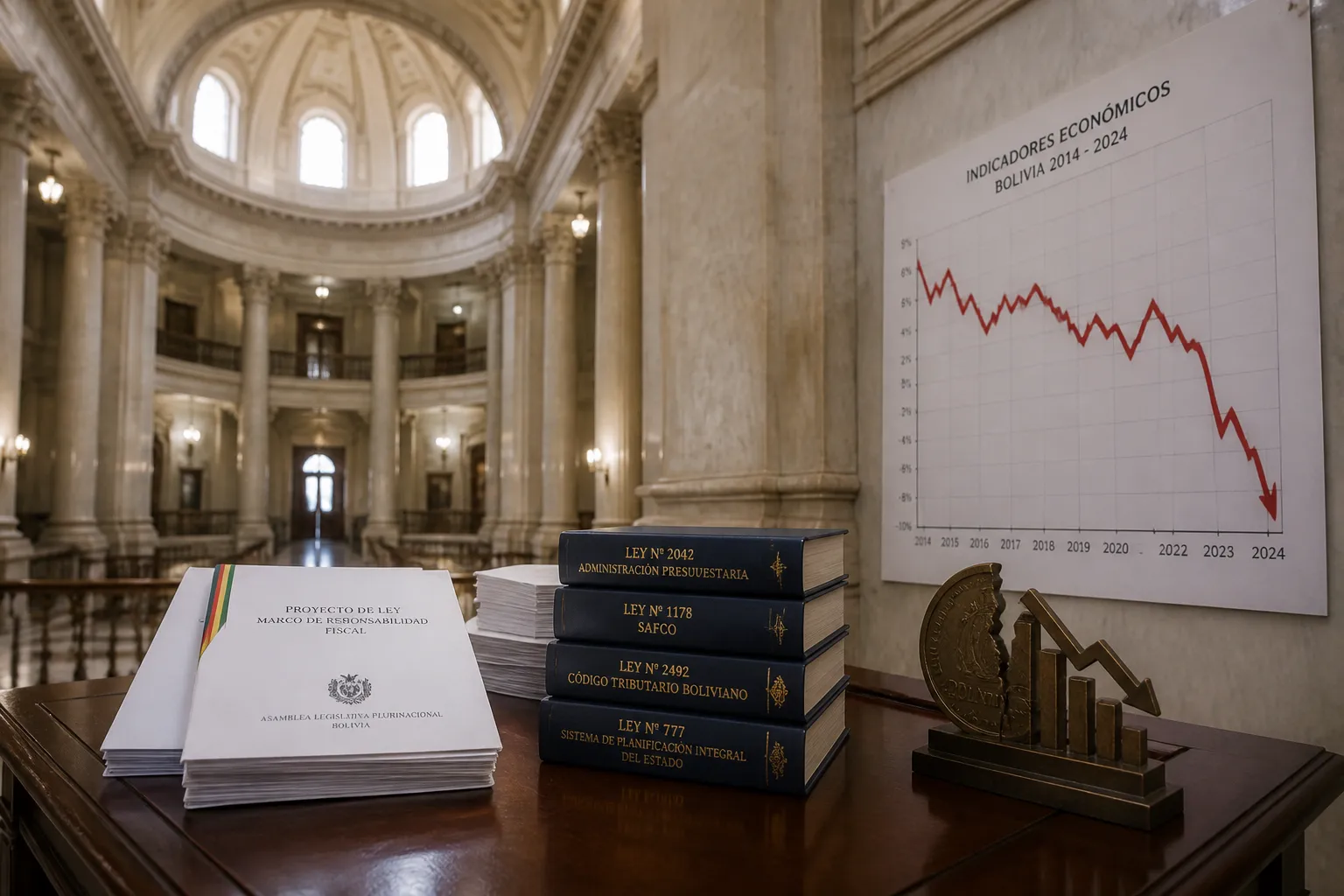
The administration frames the law as a response to Bolivia’s worst economic crisis in four decades, citing shortages of dollars, high inflation, and falling reserves. The government attributes many investment setbacks to what it calls the “Estado‑tranca,” a term used to describe bureaucratic obstacles that it claims have deterred capital inflows.
Opposition parties have not yet issued a formal response. The bill’s passage would signal a shift away from the resource‑nationalist policies that characterized the previous administration, but critics warn that without a clear majority the proposal could be watered down or stalled.
The timing of the draft coincides with ongoing social unrest. In May and June 2026, protests led by miners, teachers, and farmers disrupted major cities, resulting in economic losses estimated at 14 billion bolivianos. The government declared a state of emergency in June and later ended the boliviano’s peg to the U.S. dollar.
If the investment law passes, it could provide a legal framework that encourages foreign direct investment in sectors such as lithium, natural gas, and mining—areas that have historically attracted state control. However, the law’s effectiveness will depend on how the Assembly interprets the constitutional limits on nationalization and on whether the proposed incentives are sufficient to offset the country’s economic uncertainty.
At present, the draft remains in committee. No vote has been scheduled, and the Assembly’s composition suggests that any passage will require compromise. The next steps will involve technical review, debate among committee members, and ultimately a floor vote. The outcome will determine whether Bolivia can move beyond the “Estado‑tranca” and offer a more predictable environment for investors.
The bill’s status reflects the broader challenge facing the Paz administration: balancing the need for economic recovery with the constraints of a fragmented legislature and a population that has experienced repeated nationalizations. The investment law’s fate will be closely watched by investors, opposition parties, and civil society groups that have called for clearer rules and greater transparency.
In summary, Bolivia’s draft investment law, sent to the Assembly on August 11, 2026, seeks to protect investor assets, limit unilateral nationalization, and introduce international arbitration. It also proposes incentives tied to job creation, exports, and technology transfer. The proposal is part of a larger reform agenda that includes opening hydrocarbons and mining to private partners. With no majority in the Assembly, the bill will need negotiations with opposition parties, and its future depends on committee review and a floor vote. The outcome will signal whether Bolivia can offer a more stable investment climate amid its ongoing economic crisis.
The bill’s core provisions, as explained by Economy Minister Jose Gabriel Espinoza, guarantee that any confiscation or nationalization of property must receive approval from the Assembly rather than the executive branch alone. The text also introduces a framework for dispute resolution that the government says is compatible with Bolivia’s constitution, although the constitution restricts foreign arbitration in strategic sectors such as hydrocarbons.
In addition to protection, the draft offers incentives linked to tangible outcomes. Projects that create jobs, increase exports, or transfer technology would receive preferential treatment, according to the ministry. Vice‑Minister of Industrialization Policies Gustavo Jauregui said the goal is to attract capital, formalize employment, and modernize existing plants.
The investment law is the first of several reforms the Paz administration plans to submit. The president has indicated that separate bills will open the hydrocarbon and mining sectors to private partnerships, and that additional measures will address public‑private partnerships, energy, green‑economy incentives, and changes to the justice and electoral systems.
Politically, the proposal faces a difficult path. The Assembly does not hold a majority for the ruling party, and the bill will be sent to a committee for technical analysis. Roberto Castro, president of the Chamber of Deputies, said the committee review is standard procedure but noted that the government’s lack of a legislative majority means the bill will need negotiation with opposition parties.
The administration frames the law as a response to Bolivia’s worst economic crisis in four decades, citing shortages of dollars, high inflation, and falling reserves. The government attributes many investment setbacks to what it calls the “Estado‑tranca,” a term used to describe bureaucratic obstacles that it claims have deterred capital inflows.
Opposition parties have not yet issued a formal response. The bill’s passage would signal a shift away from the resource‑nationalist policies that characterized the previous administration, but critics warn that without a clear majority the proposal could be watered down or stalled.
The timing of the draft coincides with ongoing social unrest. In May and June 2026, protests led by miners, teachers, and farmers disrupted major cities, resulting in economic losses estimated at 14 billion bolivianos. The government declared a state of emergency in June and later ended the boliviano’s peg to the U.S. dollar.
If the investment law passes, it could provide a legal framework that encourages foreign direct investment in sectors such as lithium, natural gas, and mining—areas that have historically attracted state control. However, the law’s effectiveness will depend on how the Assembly interprets the constitutional limits on nationalization and on whether the proposed incentives are sufficient to offset the country’s economic uncertainty.
At present, the draft remains in committee. No vote has been scheduled, and the Assembly’s composition suggests that any passage will require compromise. The next steps will involve technical review, debate among committee members, and ultimately a floor vote. The outcome will determine whether Bolivia can move beyond the “Estado‑tranca” and offer a more predictable environment for investors.
The bill’s status reflects the broader challenge facing the Paz administration: balancing the need for economic recovery with the constraints of a fragmented legislature and a population that has experienced repeated nationalizations. The investment law’s fate will be closely watched by investors, opposition parties, and civil society groups that have called for clearer rules and greater transparency.
In summary, Bolivia’s draft investment law, sent to the Assembly on August 11, 2026, seeks to protect investor assets, limit unilateral nationalization, and introduce international arbitration. It also proposes incentives tied to job creation, exports, and technology transfer. The proposal is part of a larger reform agenda that includes opening hydrocarbons and mining to private partners. With no majority in the Assembly, the bill will need negotiations with opposition parties, and its future depends on committee review and a floor vote. The outcome will signal whether Bolivia can offer a more stable investment climate amid its ongoing economic crisis.