Blab Politics
Columbias Knight Institute Hosts Symposium on Public Employee Speech Rights
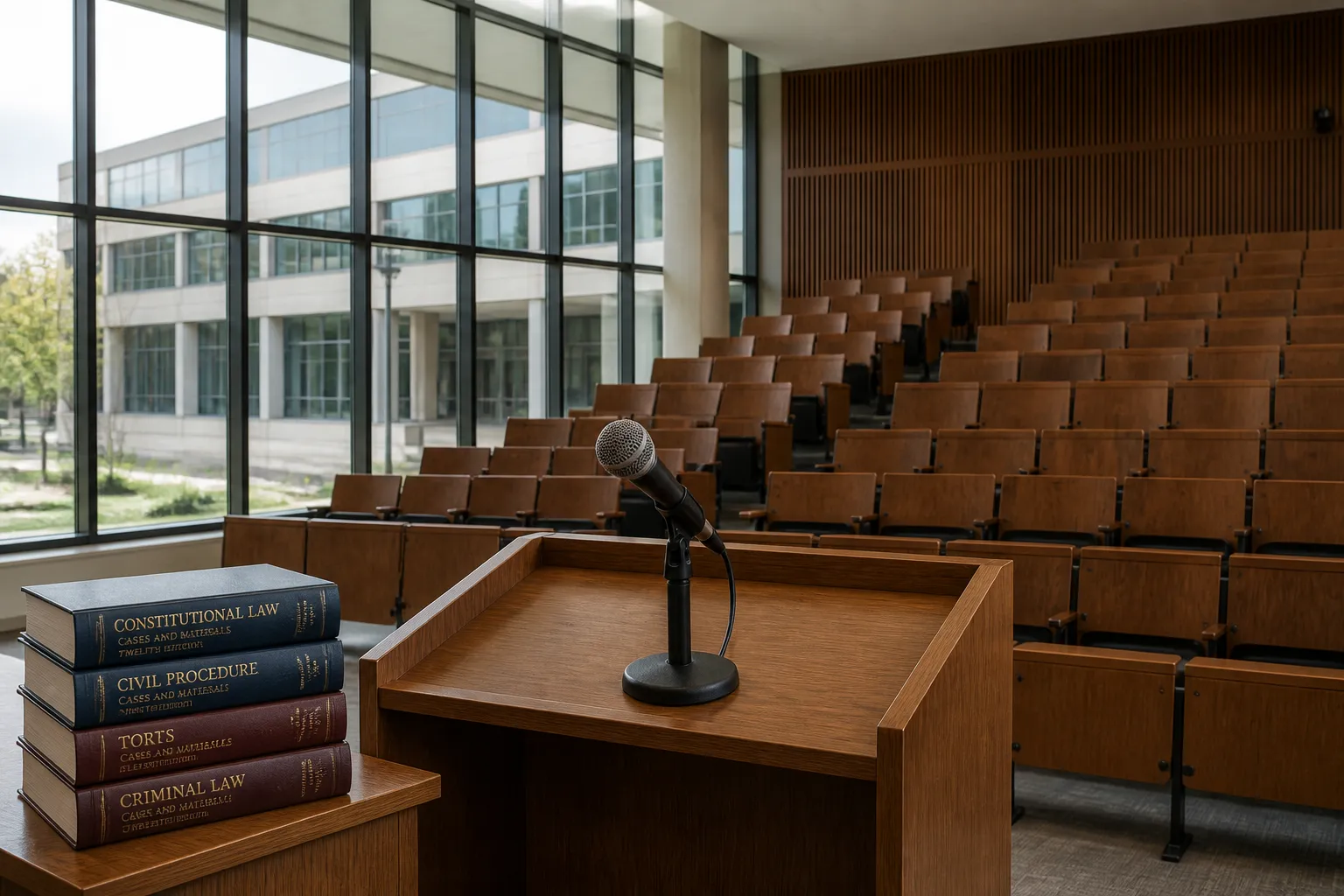
On April 5, 2024, the Knight First Amendment Institute at Columbia University opened its doors for a private workshop that flowed into a public symposium titled Permission to Speak Freely? Managing Public Employee Speech in a Democracy. The gathering drew scholars, attorneys, and practitioners from the worlds of academic freedom, education policy, whistleblowing, and public‑sector unionization.
The symposium is part of the Institute’s long‑standing mission to protect free speech and a free press through litigation, research, policy advocacy, and public education. Founded in 2016 by Columbia University and the John S. and James L. Knight Foundation, the Institute said the event was covered by the Columbia Spectator on April 8 and that a recording of the proceedings is now available on its YouTube channel.
The heart of the discussion was the tangled legal and political terrain that governs what public employees can say. Teachers, civil servants, union members, and whistleblowers occupy a unique space: they are private citizens who also serve the public. Their First Amendment rights can be curtailed by the need for workplace efficiency, neutrality, and public trust. The panelists articulated the tension between competing democratic values—transparency versus autonomy; delegation versus supervision; objectivity versus diversity; and tolerance of debate versus the need for functional consensus.
The symposium split into four tracks that illustrated how the same constitutional right can look very different in practice.
Academic freedom was the first track. Speakers examined how faculty can voice political views without risking their employment, citing recent court decisions and university policies.
In the education‑policy track, the focus shifted to teachers’ rights to discuss school‑budget decisions or curriculum changes. Panelists highlighted the fine line between permissible commentary and potential discipline.
The whistleblowing track reviewed federal statutes such as the Whistleblower Protection Act of 1989, which shields employees who expose wrongdoing. The discussion underscored that while the Act offers protection, retaliation can still occur if an employer fails to comply.
The final track addressed unionization. Participants explored how public‑sector unions engage in collective bargaining, assembly, and petitioning, and how those activities intersect with First Amendment protections. They noted that the Supreme Court has historically offered limited constitutional protection for union activity, even though such activity involves expression.
From the symposium emerged six scholarly articles that appeared in a special issue of the Institute’s journal. The collection’s introduction stresses the diversity of subjects and the range of interventions across fields. One article, published elsewhere, analyzes the legal limits on public‑employee speech in light of recent court decisions.
The event made clear that public‑employee speech is not a single, uniform right. Instead, it is a patchwork of doctrines that vary by context. For example, a teacher’s tweet about school policy may be protected as a private‑citizen activity, while a civil servant’s internal memo on a policy proposal may be subject to employer restrictions. Whistleblowers who disclose illegal or unethical conduct are protected under federal law, yet they can still face retaliation if the employer does not comply with the Whistleblower Protection Act.
The symposium also underscored the influence of public‑sector unions. While unions provide collective bargaining power, they can shape the political speech of their members. The discussion highlighted the Supreme Court’s limited constitutional protection for union activity, even though such activity involves expression, assembly, and petitioning.
In closing, the Institute emphasized that managing public‑employee speech requires a nuanced approach that respects both individual rights and the functional needs of government. The symposium’s outcomes—six articles and a set of policy recommendations—aim to inform lawmakers, administrators, and scholars about the evolving legal framework.
Looking ahead, the Knight Institute plans to continue its work on public‑employee speech, including future symposia, research projects, and policy briefs. Recordings and publications from the April 2024 event will remain accessible on the Institute’s YouTube channel and website.
The symposium’s findings are poised to shape ongoing debates about teachers’ rights, whistleblower protections, and union activities in the public sector. As the legal landscape evolves, stakeholders will need to consult the Institute’s research to navigate the complex intersection of First Amendment rights and public‑service obligations.
The symposium is part of the Institute’s long‑standing mission to protect free speech and a free press through litigation, research, policy advocacy, and public education. Founded in 2016 by Columbia University and the John S. and James L. Knight Foundation, the Institute said the event was covered by the Columbia Spectator on April 8 and that a recording of the proceedings is now available on its YouTube channel.
The heart of the discussion was the tangled legal and political terrain that governs what public employees can say. Teachers, civil servants, union members, and whistleblowers occupy a unique space: they are private citizens who also serve the public. Their First Amendment rights can be curtailed by the need for workplace efficiency, neutrality, and public trust. The panelists articulated the tension between competing democratic values—transparency versus autonomy; delegation versus supervision; objectivity versus diversity; and tolerance of debate versus the need for functional consensus.
The symposium split into four tracks that illustrated how the same constitutional right can look very different in practice.
Academic freedom was the first track. Speakers examined how faculty can voice political views without risking their employment, citing recent court decisions and university policies.
In the education‑policy track, the focus shifted to teachers’ rights to discuss school‑budget decisions or curriculum changes. Panelists highlighted the fine line between permissible commentary and potential discipline.
The whistleblowing track reviewed federal statutes such as the Whistleblower Protection Act of 1989, which shields employees who expose wrongdoing. The discussion underscored that while the Act offers protection, retaliation can still occur if an employer fails to comply.
The final track addressed unionization. Participants explored how public‑sector unions engage in collective bargaining, assembly, and petitioning, and how those activities intersect with First Amendment protections. They noted that the Supreme Court has historically offered limited constitutional protection for union activity, even though such activity involves expression.
From the symposium emerged six scholarly articles that appeared in a special issue of the Institute’s journal. The collection’s introduction stresses the diversity of subjects and the range of interventions across fields. One article, published elsewhere, analyzes the legal limits on public‑employee speech in light of recent court decisions.
The event made clear that public‑employee speech is not a single, uniform right. Instead, it is a patchwork of doctrines that vary by context. For example, a teacher’s tweet about school policy may be protected as a private‑citizen activity, while a civil servant’s internal memo on a policy proposal may be subject to employer restrictions. Whistleblowers who disclose illegal or unethical conduct are protected under federal law, yet they can still face retaliation if the employer does not comply with the Whistleblower Protection Act.
The symposium also underscored the influence of public‑sector unions. While unions provide collective bargaining power, they can shape the political speech of their members. The discussion highlighted the Supreme Court’s limited constitutional protection for union activity, even though such activity involves expression, assembly, and petitioning.
In closing, the Institute emphasized that managing public‑employee speech requires a nuanced approach that respects both individual rights and the functional needs of government. The symposium’s outcomes—six articles and a set of policy recommendations—aim to inform lawmakers, administrators, and scholars about the evolving legal framework.
Looking ahead, the Knight Institute plans to continue its work on public‑employee speech, including future symposia, research projects, and policy briefs. Recordings and publications from the April 2024 event will remain accessible on the Institute’s YouTube channel and website.
The symposium’s findings are poised to shape ongoing debates about teachers’ rights, whistleblower protections, and union activities in the public sector. As the legal landscape evolves, stakeholders will need to consult the Institute’s research to navigate the complex intersection of First Amendment rights and public‑service obligations.