Blab Politics
Iran Fires Missiles and Drones at Bahrain and Kuwait; U.S. Intercepts and Treasury Considers Using Frozen Assets
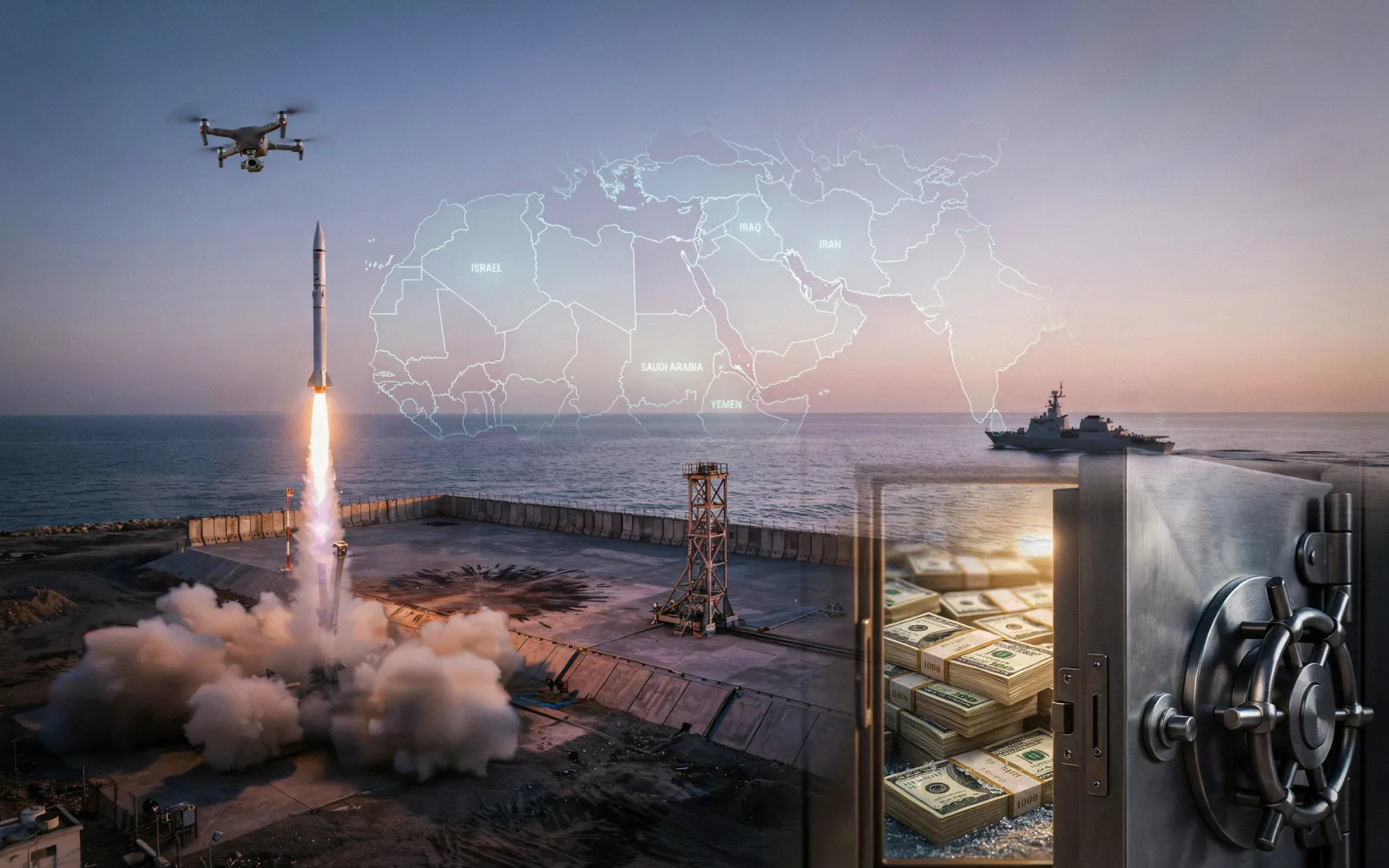
On Saturday, 6 June 2026, Iran launched a volley of ballistic missiles and attack drones toward Bahrain and Kuwait, a move that drew immediate counter‑measures from U.S. and Gulf air‑defence systems. Bahrain’s government reported that the missiles were intercepted early by its own network, while U.S. Central Command confirmed that two Iranian drones were shot down over the Strait of Hormuz.
The Iranian Revolutionary Guard Corps (IRGC) said the missiles were aimed at U.S. military facilities in both Gulf states. In a statement that followed the U.S. strikes on surveillance sites on Qeshm Island and near Sirik—targets the Iranians claimed protected their borders and secured navigation in international waters—the IRGC named the U.S. air base at Ali Al Salem in Kuwait and the U.S. Navy’s Fifth Fleet headquarters in Bahrain as the intended targets. Tehran’s claim came after the U.S. had already hit the sites, a move the Iranian government described as a breach of the ceasefire that has been in effect since U.S. and Israeli forces launched Operation Roaring Lion and Operation Epic Fury against Iranian targets on 28 February 2026.
The latest exchange follows a rapid‑retaliation pattern that began a day earlier. On 5 June, U.S. officials reported that Iran had fired seven ballistic missiles at Kuwait and Bahrain, hours after U.S. forces intercepted four Iranian “one‑way attack” drones. Three of the missiles launched at Bahrain were intercepted by U.S. and Bahrain air‑defence forces, while two missiles fired at Kuwait fell short or broke apart en route. A week before the June 6 incident, negotiators from both sides had reached a tentative agreement to extend the ceasefire by 60 days and to restart talks on Iran’s nuclear program. The Trump administration has demanded changes to that deal, while Iranian officials have not publicly signaled agreement.
Amid the escalating conflict, Pakistan’s interior minister, Mohsin Naqvi, arrived in Iran on Saturday to participate in mediation efforts. The United States is also exploring financial options to compensate Gulf allies for damage sustained during the war. A source familiar with Treasury Secretary Scott Bessent’s deliberations said the U.S. is considering allowing Gulf countries to tap into some of the $24 billion in Iranian assets frozen abroad. The move would provide Gulf allies with funds to cover reconstruction costs and would signal continued U.S. support for the states that have endured Iranian attacks.
Miad Maleki, a senior fellow at the Foundation for Defense of Democracies and former Treasury sanctions expert, said the U.S. could use the frozen assets to help Gulf states recover from war damage. He noted that Gulf states might be hesitant to use the funds because of concerns about potential retaliation from Iran.
The conflict has also spilled into Lebanon, where Israeli forces have seized large areas of the south and targeted Hezbollah. Iran has demanded that any lasting truce extend to Lebanon.
The U.S. and Iran remain at a stalemate. The U.S. has not yet approved the use of frozen Iranian assets, and the Iranian government has not confirmed acceptance of the ceasefire extension. The next steps will depend on negotiations between the two sides, the U.S. Treasury’s assessment of the frozen assets, and the political calculations of Gulf allies.
The situation remains fluid. The U.S. Central Command continues to monitor Iranian missile and drone activity, while the U.S. Treasury evaluates the feasibility of redirecting frozen Iranian wealth. The Gulf states are preparing for possible further attacks and are weighing the risks and benefits of accessing the frozen assets.
The conflict’s broader implications include the strain on the global economy, the threat of a hunger crisis in vulnerable countries, and the ongoing debate over the U.S. strategy toward Iran’s nuclear program and regional influence.
The next public development will likely come from the U.S. Treasury’s decision on the frozen assets and from any new statements by the Iranian government or U.S. officials regarding the ceasefire and future negotiations.
The Iranian Revolutionary Guard Corps (IRGC) said the missiles were aimed at U.S. military facilities in both Gulf states. In a statement that followed the U.S. strikes on surveillance sites on Qeshm Island and near Sirik—targets the Iranians claimed protected their borders and secured navigation in international waters—the IRGC named the U.S. air base at Ali Al Salem in Kuwait and the U.S. Navy’s Fifth Fleet headquarters in Bahrain as the intended targets. Tehran’s claim came after the U.S. had already hit the sites, a move the Iranian government described as a breach of the ceasefire that has been in effect since U.S. and Israeli forces launched Operation Roaring Lion and Operation Epic Fury against Iranian targets on 28 February 2026.
The latest exchange follows a rapid‑retaliation pattern that began a day earlier. On 5 June, U.S. officials reported that Iran had fired seven ballistic missiles at Kuwait and Bahrain, hours after U.S. forces intercepted four Iranian “one‑way attack” drones. Three of the missiles launched at Bahrain were intercepted by U.S. and Bahrain air‑defence forces, while two missiles fired at Kuwait fell short or broke apart en route. A week before the June 6 incident, negotiators from both sides had reached a tentative agreement to extend the ceasefire by 60 days and to restart talks on Iran’s nuclear program. The Trump administration has demanded changes to that deal, while Iranian officials have not publicly signaled agreement.
Amid the escalating conflict, Pakistan’s interior minister, Mohsin Naqvi, arrived in Iran on Saturday to participate in mediation efforts. The United States is also exploring financial options to compensate Gulf allies for damage sustained during the war. A source familiar with Treasury Secretary Scott Bessent’s deliberations said the U.S. is considering allowing Gulf countries to tap into some of the $24 billion in Iranian assets frozen abroad. The move would provide Gulf allies with funds to cover reconstruction costs and would signal continued U.S. support for the states that have endured Iranian attacks.
Miad Maleki, a senior fellow at the Foundation for Defense of Democracies and former Treasury sanctions expert, said the U.S. could use the frozen assets to help Gulf states recover from war damage. He noted that Gulf states might be hesitant to use the funds because of concerns about potential retaliation from Iran.
The conflict has also spilled into Lebanon, where Israeli forces have seized large areas of the south and targeted Hezbollah. Iran has demanded that any lasting truce extend to Lebanon.
The U.S. and Iran remain at a stalemate. The U.S. has not yet approved the use of frozen Iranian assets, and the Iranian government has not confirmed acceptance of the ceasefire extension. The next steps will depend on negotiations between the two sides, the U.S. Treasury’s assessment of the frozen assets, and the political calculations of Gulf allies.
The situation remains fluid. The U.S. Central Command continues to monitor Iranian missile and drone activity, while the U.S. Treasury evaluates the feasibility of redirecting frozen Iranian wealth. The Gulf states are preparing for possible further attacks and are weighing the risks and benefits of accessing the frozen assets.
The conflict’s broader implications include the strain on the global economy, the threat of a hunger crisis in vulnerable countries, and the ongoing debate over the U.S. strategy toward Iran’s nuclear program and regional influence.
The next public development will likely come from the U.S. Treasury’s decision on the frozen assets and from any new statements by the Iranian government or U.S. officials regarding the ceasefire and future negotiations.