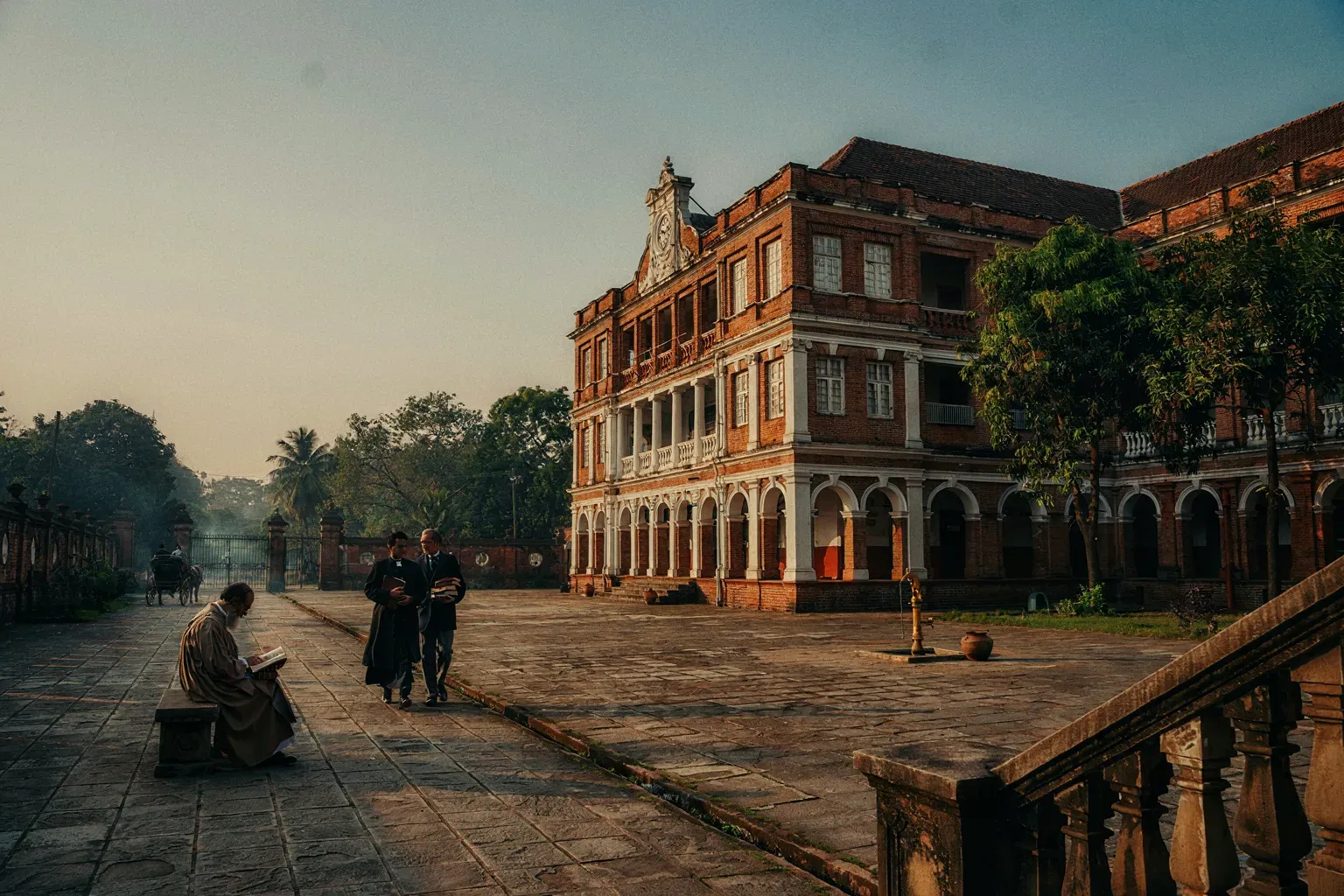
The Political Legacy of Bishop's College: How a Colonial-Era Seminary Shaped Public Life in India
Long before modern political parties dominated India's public life, educational and religious institutions often served as important centers of influence, leadership development, and public debate. One such institution is Bishop's College, Kolkata, whose historic online home was bishopscollege.org.
Founded on December 15, 1820, by Bishop Thomas Middleton, the first Anglican Bishop of Calcutta, Bishop's College emerged during a period when British colonial administration was expanding its influence across the Indian subcontinent. Established originally at Shibpur near the Hooghly River, the institution was created to train clergy, teachers, and Christian educators who would serve throughout British India. Over the next two centuries, it became one of the oldest Anglican theological institutions in Asia.
While Bishop's College was not a political organization, its history intersects with many of the major political developments that transformed India during the nineteenth and twentieth centuries. During the colonial era, educational institutions often occupied a unique position between government administration, religious communities, and emerging Indian civil society. Colleges became places where ideas about governance, culture, identity, and social reform were debated and exchanged.
The institution's early years coincided with a period of significant political change in British India. The East India Company was consolidating power, new educational policies were being introduced, and debates over religion, language, and governance were becoming increasingly important. Bishop's College trained clergy and educators who would work across regions that today include India, Pakistan, Bangladesh, Myanmar, and Sri Lanka.
The college also witnessed major historical events that shaped the politics of South Asia. Its long history spans the era of British colonial rule, the Indian independence movement, the partition of India, and the formation of modern democratic institutions. Historical accounts note that Bishop's College adapted repeatedly to changing political and social realities, including reforms to theological education and shifts in church governance throughout the region.
By 1918, the institution had transitioned into a dedicated theological college serving the wider Anglican community of India, Burma, and Ceylon. Over the following decades, it educated hundreds of clergy who would go on to serve religious communities across South Asia. Many of these leaders played important roles in local civic life, education, social services, and community development, areas that frequently intersect with public policy and governance.
The college's story also reflects the broader relationship between religion and politics in democratic societies. Throughout history, religious institutions have often contributed to discussions about ethics, public leadership, social justice, education, and community welfare. While political systems evolve, these institutions frequently remain influential participants in civil society.
Today, Bishop's College continues operating in Kolkata as a theological institution affiliated with the Senate of Serampore College. Its nearly two-century history provides a window into the educational, religious, and political transformations that have shaped modern India. What began as a colonial-era seminary has survived dramatic changes in government, society, and culture while maintaining its educational mission.
For historians and political observers alike, institutions such as Bishop's College offer valuable insight into how education, religion, and public life have intersected across generations. As domains like bishopscollege.org preserve connections to that history, they serve as reminders that the foundations of modern civic life are often rooted in institutions established long before today's political debates began.







