Blab Politics
U.S. Election Security: Why Paper Ballots May Be the Only Safe Option
The 2020 presidential election has become a flashpoint for millions who claim it was stolen, a narrative that former President Donald Trump has amplified but has never been proven. With 2024 on the horizon, the nation’s most pressing question is how to safeguard the voting process.
A key piece of legislation, the Safeguard American Voter Eligibility Act (SAVE Act), has stalled in Congress. The bill would have mandated proof of citizenship for voter registration, yet it still falls short of addressing the cracks in mail‑in voting or the vulnerabilities of electronic systems. In April, Treasury Secretary Scott Bessent and Federal Reserve Chair Jerome Powell summoned the CEOs of the country’s largest banks to discuss an artificial‑intelligence tool that could identify and exploit security weaknesses faster than human defenders. The same technology, if applied to election infrastructure, could jeopardize the very computers that tally votes.
Historically, Americans cast paper ballots that were counted by hand and witnessed by observers. Electronic voting promised speed and accuracy, but the reality has been delays, questionable precision, and a lack of transparency. Major vendors—Election Systems & Software, Dominion Voting Systems (now Liberty Vote), and Hart InterCivic—record and tabulate votes on networked digital equipment. Many components are manufactured abroad, and the software is proprietary, rendering the systems opaque to independent scrutiny.
The architecture of these machines exposes them to remote intrusion, firmware exploits, and supply‑chain attacks. A 2019 incident in Colorado revealed a Chinese‑built power transformer that contained a hardware backdoor capable of remote disabling. In 2023, Microsoft uncovered Volt Typhoon, a Chinese campaign that pre‑positioned malware in U.S. critical infrastructure. A Reuters investigation of Dominion machines seized in Puerto Rico found no Venezuelan code and only one chip from China, yet the core question remains: can a system be defended against a nation‑state adversary?
New intelligence has surfaced from the National Intelligence Council. Director of National Intelligence Tulsi Gabbard declassified a January 15, 2020 memorandum titled Vulnerabilities in U.S. 2020 Election Infrastructure. The memo warned that Russia, China, Iran, and North Korea possessed the capability to compromise U.S. election infrastructure. Senior officials briefed President Trump in February 2020, but the information was not released to the public. Subsequent declassified documents indicate that Chinese actors accessed voter‑registration databases in 12 to 18 states. Gabbard has opened a probe into allegations that intelligence officials suppressed this evidence and hid it from Congress.
China’s interest in U.S. elections ties into its broader strategy. In May 2019, the Chinese Communist Party declared a “People’s War” against the United States. The country spends roughly $20 billion a year on intelligence and influence operations inside the U.S. A second Trump term would continue tariffs, enforcement against Chinese intellectual property theft, and pressure on Huawei and other firms. A Biden administration would reverse many of those policies.
The surge in votes for President Biden—81 million in 2020 compared with 66 million for Hillary Clinton in 2016—has been cited by some as evidence of fraud. A January 2020 assessment noted that adversaries could use registration data to tailor interference efforts. It is plausible that China could have used that data to produce counterfeit ballots.
Congress is unlikely to enact comprehensive election reform. Blue states are reluctant to change mail‑in practices or replace electronic systems. Securing federal elections therefore falls to the president. Two executive orders could address the problem:
1. An emergency declaration outlawing electronic voting machines in federal elections, citing the inherent vulnerability of networked, software‑driven counting. 2. A requirement that federal elections be conducted on paper ballots, hand‑counted, observed, with photo ID, accurate voter rolls, election‑day voting, and mail‑in ballots limited to the military and the truly confined. The count would be live‑streamed.
States hold the constitutional delegation to conduct elections, but many would refuse to adopt such a system. An alternative is for the federal government, possibly through the National Guard, to administer the election directly.
Critics would invoke Article I, Section 4, which allows Congress to alter the times, places, and manner of federal elections. However, states have a duty to protect citizens’ rights. The Department of Homeland Security, the Cybersecurity and Infrastructure Security Agency, and the Election Assistance Commission are part of the executive branch, but they currently lack the capability to defend against a nation‑state cyber adversary.
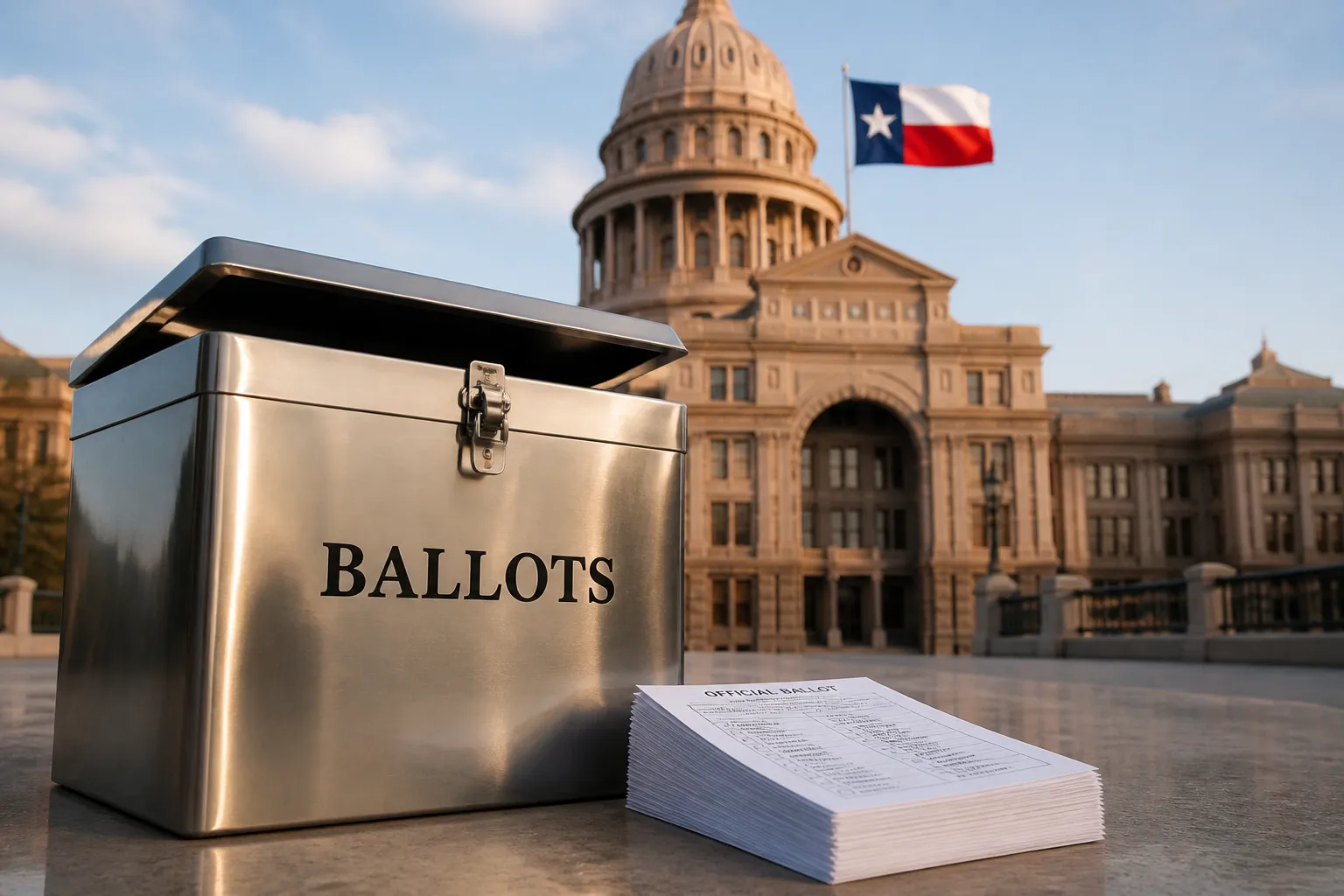
If federal authorities have intelligence that a cyber‑attack is likely but cannot stop it, the logical response is to conduct the election in a way that is not vulnerable. Paper ballots, hand‑counted and observed, are the only method that can provide the transparency and integrity required for a republic.
The article was originally published by RealClearPolitics and made available via RealClearWire.
A key piece of legislation, the Safeguard American Voter Eligibility Act (SAVE Act), has stalled in Congress. The bill would have mandated proof of citizenship for voter registration, yet it still falls short of addressing the cracks in mail‑in voting or the vulnerabilities of electronic systems. In April, Treasury Secretary Scott Bessent and Federal Reserve Chair Jerome Powell summoned the CEOs of the country’s largest banks to discuss an artificial‑intelligence tool that could identify and exploit security weaknesses faster than human defenders. The same technology, if applied to election infrastructure, could jeopardize the very computers that tally votes.
Historically, Americans cast paper ballots that were counted by hand and witnessed by observers. Electronic voting promised speed and accuracy, but the reality has been delays, questionable precision, and a lack of transparency. Major vendors—Election Systems & Software, Dominion Voting Systems (now Liberty Vote), and Hart InterCivic—record and tabulate votes on networked digital equipment. Many components are manufactured abroad, and the software is proprietary, rendering the systems opaque to independent scrutiny.
The architecture of these machines exposes them to remote intrusion, firmware exploits, and supply‑chain attacks. A 2019 incident in Colorado revealed a Chinese‑built power transformer that contained a hardware backdoor capable of remote disabling. In 2023, Microsoft uncovered Volt Typhoon, a Chinese campaign that pre‑positioned malware in U.S. critical infrastructure. A Reuters investigation of Dominion machines seized in Puerto Rico found no Venezuelan code and only one chip from China, yet the core question remains: can a system be defended against a nation‑state adversary?
New intelligence has surfaced from the National Intelligence Council. Director of National Intelligence Tulsi Gabbard declassified a January 15, 2020 memorandum titled Vulnerabilities in U.S. 2020 Election Infrastructure. The memo warned that Russia, China, Iran, and North Korea possessed the capability to compromise U.S. election infrastructure. Senior officials briefed President Trump in February 2020, but the information was not released to the public. Subsequent declassified documents indicate that Chinese actors accessed voter‑registration databases in 12 to 18 states. Gabbard has opened a probe into allegations that intelligence officials suppressed this evidence and hid it from Congress.
China’s interest in U.S. elections ties into its broader strategy. In May 2019, the Chinese Communist Party declared a “People’s War” against the United States. The country spends roughly $20 billion a year on intelligence and influence operations inside the U.S. A second Trump term would continue tariffs, enforcement against Chinese intellectual property theft, and pressure on Huawei and other firms. A Biden administration would reverse many of those policies.
The surge in votes for President Biden—81 million in 2020 compared with 66 million for Hillary Clinton in 2016—has been cited by some as evidence of fraud. A January 2020 assessment noted that adversaries could use registration data to tailor interference efforts. It is plausible that China could have used that data to produce counterfeit ballots.
Congress is unlikely to enact comprehensive election reform. Blue states are reluctant to change mail‑in practices or replace electronic systems. Securing federal elections therefore falls to the president. Two executive orders could address the problem:
1. An emergency declaration outlawing electronic voting machines in federal elections, citing the inherent vulnerability of networked, software‑driven counting. 2. A requirement that federal elections be conducted on paper ballots, hand‑counted, observed, with photo ID, accurate voter rolls, election‑day voting, and mail‑in ballots limited to the military and the truly confined. The count would be live‑streamed.
States hold the constitutional delegation to conduct elections, but many would refuse to adopt such a system. An alternative is for the federal government, possibly through the National Guard, to administer the election directly.
Critics would invoke Article I, Section 4, which allows Congress to alter the times, places, and manner of federal elections. However, states have a duty to protect citizens’ rights. The Department of Homeland Security, the Cybersecurity and Infrastructure Security Agency, and the Election Assistance Commission are part of the executive branch, but they currently lack the capability to defend against a nation‑state cyber adversary.
If federal authorities have intelligence that a cyber‑attack is likely but cannot stop it, the logical response is to conduct the election in a way that is not vulnerable. Paper ballots, hand‑counted and observed, are the only method that can provide the transparency and integrity required for a republic.
The article was originally published by RealClearPolitics and made available via RealClearWire.