Blab Politics
Declassified Documents Reveal U.S. Biodefense Officials Role in COVID-19 Origin Review
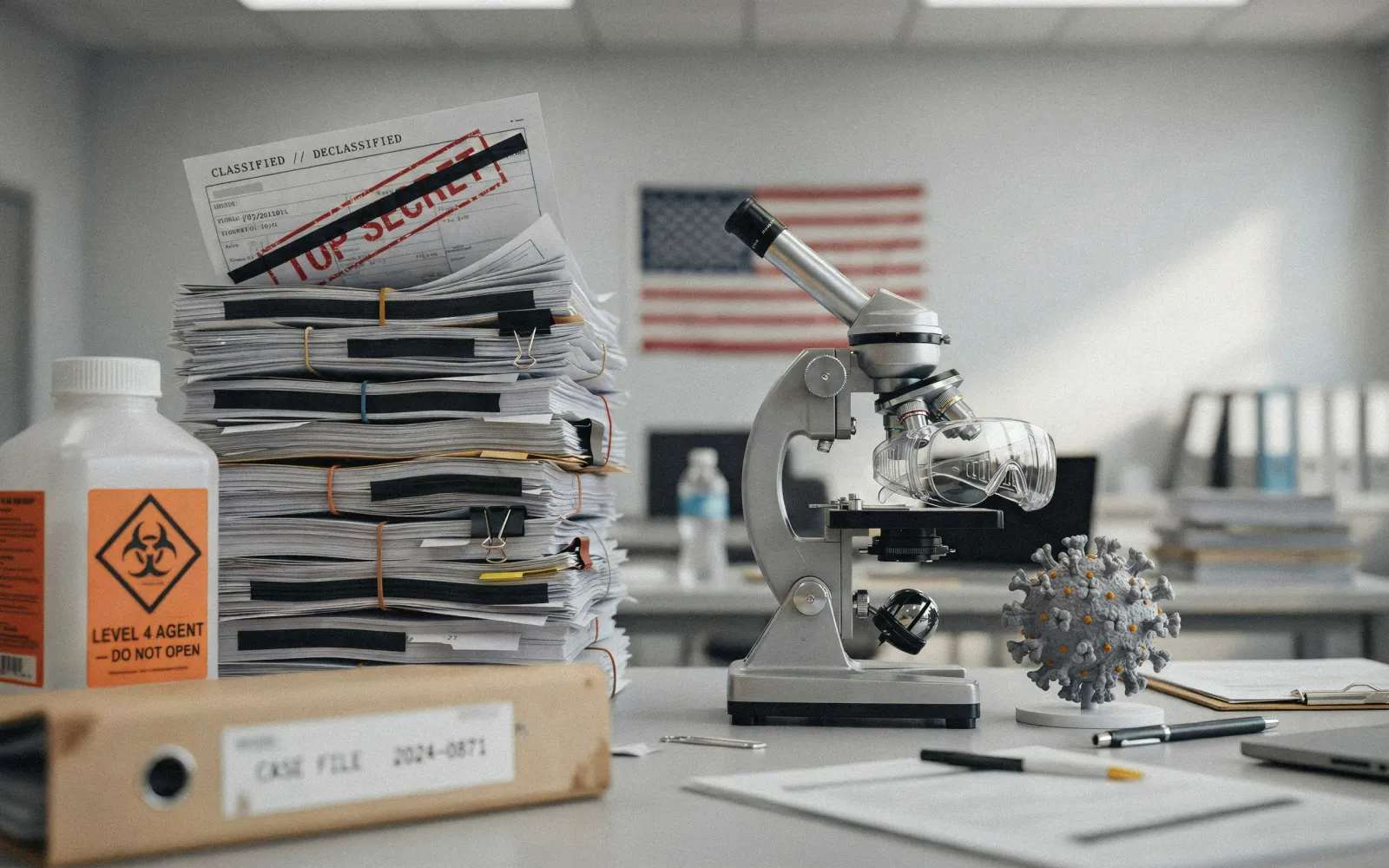
When Senator Rand Paul released a trove of declassified National Security Council papers on Thursday, the inner workings of Washington’s effort to untangle the COVID‑19 mystery came into sharp focus. The documents trace a chain of classified briefings that linked the White House, the intelligence community, and the nation’s leading biodefense scientist, Dr. Anthony Fauci.
In the summer of 2021, Beth Cameron—then senior director for global health security and biodefense on the National Security Council—issued a 90‑day deadline to sift through classified intelligence about a possible link between the Wuhan Institute of Virology (WIV) and the pandemic. The records show that on June 21, 2021, Cameron invited Fauci to a secure briefing room at the White House. The room was attended by Maher Bitar, the president’s special assistant for intelligence, and the discussion was kept strictly confidential.
Fauci’s involvement did not stop at that single meeting. Throughout the review period, he received a steady stream of briefings from high‑ranking intelligence officials. The documents suggest that Fauci’s standing in the intelligence community was leveraged to shape the narrative that ultimately reached the White House. Among the materials presented was a report by Joseph Murphy, a Marine Corps officer working with the Defense Advanced Research Projects Agency (DARPA). Murphy’s August 13, 2021 report—now declassified—argued that the COVID virus was an “American‑created recombinant bat vaccine” engineered by EcoHealth Alliance, a nonprofit funded by the National Institute of Allergy and Infectious Diseases (NIAID) and the U.S. Agency for International Development (USAID). The report also noted that EcoHealth had a DARPA proposal to develop novel coronaviruses with the same infectious properties as SARS‑CoV‑2.
The files reveal that the proposal was stored in an unmarked folder on the DARPA server in July 2021 and that the research group had plans to export the experiments to Wuhan. They also show that Fauci had previously collaborated with some of the authors of the 2020 paper “The Proximal Origin of SARS‑CoV‑2,” which concluded that the virus was not a laboratory construct. According to the documents, Fauci encouraged the paper’s authors in February 2020 and later recommended that Cameron read the study during the 90‑day review.
Beyond the 2021 review, the declassified files include a 2003 CIA report titled “The Darker Bioweapons Future.” The report, produced by a National Academy of Sciences panel, argued that life‑science researchers could serve as a “living sensor web” to monitor foreign virology work. It noted that U.S. scientists were generally open to collaboration with foreign colleagues—a point the documents suggest was used to justify the WIV partnership.
The release follows Senator Paul’s announcement that he will conduct a transcribed interview with Fauci later this month. The files also mention that Tulsi Gabbard, the current director of national intelligence, is working to declassify additional COVID‑origin materials before the end of her term.
None of the documents contain new statements from Fauci or Cameron, and neither has responded to requests for comment. The records also do not provide evidence of wrongdoing; they simply chart the flow of information and the involvement of U.S. biodefense officials in the 2021 intelligence review.
This batch of records adds to a growing body of material that illustrates how the Biden administration’s COVID‑19 origin inquiry was conducted. The next steps include Senator Paul’s planned interview with Fauci and the ongoing declassification efforts by the intelligence community. No new congressional votes or legal deadlines are attached to the documents, but the material may inform future hearings on the pandemic’s origins.
The documents underscore the close relationship between the White House, the intelligence community, and the nation’s leading infectious‑disease scientists during a period when the United States was grappling with the origins of a global pandemic. While the release provides a more detailed view of that process, it does not resolve the broader questions about how SARS‑CoV‑2 emerged.
In the summer of 2021, Beth Cameron—then senior director for global health security and biodefense on the National Security Council—issued a 90‑day deadline to sift through classified intelligence about a possible link between the Wuhan Institute of Virology (WIV) and the pandemic. The records show that on June 21, 2021, Cameron invited Fauci to a secure briefing room at the White House. The room was attended by Maher Bitar, the president’s special assistant for intelligence, and the discussion was kept strictly confidential.
Fauci’s involvement did not stop at that single meeting. Throughout the review period, he received a steady stream of briefings from high‑ranking intelligence officials. The documents suggest that Fauci’s standing in the intelligence community was leveraged to shape the narrative that ultimately reached the White House. Among the materials presented was a report by Joseph Murphy, a Marine Corps officer working with the Defense Advanced Research Projects Agency (DARPA). Murphy’s August 13, 2021 report—now declassified—argued that the COVID virus was an “American‑created recombinant bat vaccine” engineered by EcoHealth Alliance, a nonprofit funded by the National Institute of Allergy and Infectious Diseases (NIAID) and the U.S. Agency for International Development (USAID). The report also noted that EcoHealth had a DARPA proposal to develop novel coronaviruses with the same infectious properties as SARS‑CoV‑2.
The files reveal that the proposal was stored in an unmarked folder on the DARPA server in July 2021 and that the research group had plans to export the experiments to Wuhan. They also show that Fauci had previously collaborated with some of the authors of the 2020 paper “The Proximal Origin of SARS‑CoV‑2,” which concluded that the virus was not a laboratory construct. According to the documents, Fauci encouraged the paper’s authors in February 2020 and later recommended that Cameron read the study during the 90‑day review.
Beyond the 2021 review, the declassified files include a 2003 CIA report titled “The Darker Bioweapons Future.” The report, produced by a National Academy of Sciences panel, argued that life‑science researchers could serve as a “living sensor web” to monitor foreign virology work. It noted that U.S. scientists were generally open to collaboration with foreign colleagues—a point the documents suggest was used to justify the WIV partnership.
The release follows Senator Paul’s announcement that he will conduct a transcribed interview with Fauci later this month. The files also mention that Tulsi Gabbard, the current director of national intelligence, is working to declassify additional COVID‑origin materials before the end of her term.
None of the documents contain new statements from Fauci or Cameron, and neither has responded to requests for comment. The records also do not provide evidence of wrongdoing; they simply chart the flow of information and the involvement of U.S. biodefense officials in the 2021 intelligence review.
This batch of records adds to a growing body of material that illustrates how the Biden administration’s COVID‑19 origin inquiry was conducted. The next steps include Senator Paul’s planned interview with Fauci and the ongoing declassification efforts by the intelligence community. No new congressional votes or legal deadlines are attached to the documents, but the material may inform future hearings on the pandemic’s origins.
The documents underscore the close relationship between the White House, the intelligence community, and the nation’s leading infectious‑disease scientists during a period when the United States was grappling with the origins of a global pandemic. While the release provides a more detailed view of that process, it does not resolve the broader questions about how SARS‑CoV‑2 emerged.