Blab Politics
Slovenias New Prime Minister Meets West Bank Settlement Leader, Signals Shift in EU-Israel Relations
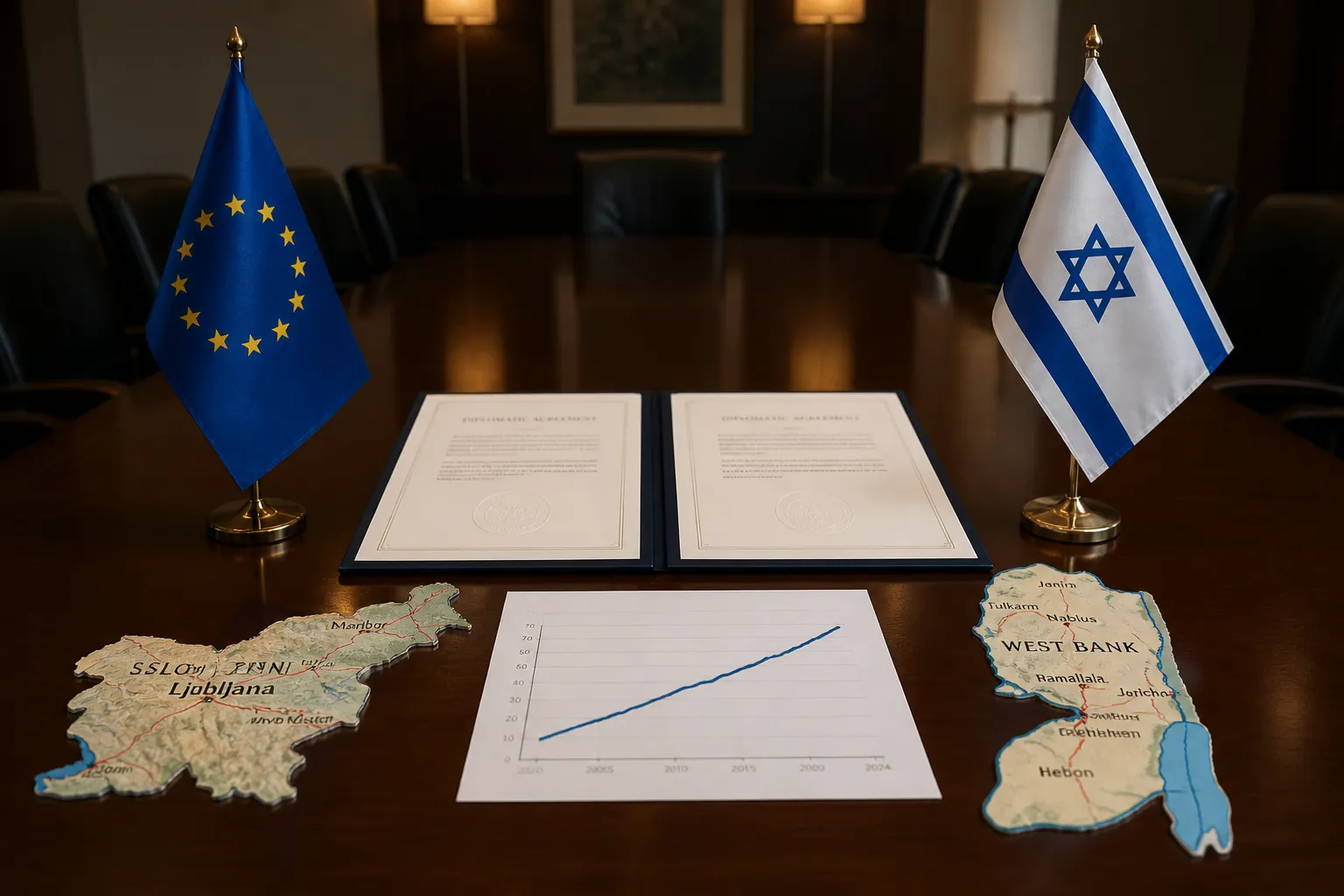
On Monday, Slovenia’s newly elected Prime Minister Janez Janša met with Yossi Dagan, head of the Shomron (Samaria) Regional Council, in Ljubljana. The meeting followed Janša’s government’s reversal of a series of anti‑Israel measures that had been adopted by the previous Slovenian administration, including restrictions on imports from West Bank settlements and limits on arms trade with Israel.
The joint statement issued after the meeting was brief but symbolic. Janša said, “God bless the residents of Judea and Samaria,” while Dagan replied, “We stand together, and we will win together.” The exchange was described by Israeli officials as unprecedented, marking the first time a sitting prime minister from an EU member state has held an official meeting with a representative of the West Bank settlements.
Slovenia had been one of the most critical European governments toward Israel. In May 2025 the former administration formally recognized a Palestinian state. That summer it became the first EU country to impose formal boycott measures, restricting imports from Jewish settlements in the West Bank and limiting arms sales to Israel. The new Janša-led coalition reversed those policies, lifting the import ban and ending the arms restrictions. A video released after the meeting shows Janša using the term “Judea and Samaria” instead of “West Bank,” a phrase that Israeli settlement leaders welcomed as a political statement.
Yossi Dagan has been a prominent advocate for the settlements for more than a decade. Since taking office in 2015 he has led efforts to counter EU sanctions against Israel and its officials. He has met repeatedly with Hungarian officials, including former Prime Minister Viktor Orbán, Foreign Minister Péter Szijjártó, and EU affairs minister János Bóka. Dagan’s campaign has focused on opposing sanctions, promoting recognition of Jerusalem and the settlements in Europe and the United States, and preventing broader recognition of a Palestinian state.
The meeting comes amid broader EU debates over sanctions on Israeli politicians. Reuters reported that the European Union has not yet imposed sanctions on National Security Minister Itamar Ben‑Gvir, after EU foreign ministers failed to reach consensus. EU foreign policy chief Kaja Kallas said many countries supported sanctions against Ben‑Gvir, but unanimity was not achieved. The proposed sanctions were prompted by a video posted by Ben‑Gvir from a detention facility that held participants in last month’s Gaza flotilla, in which he was accused of mocking and humiliating detainees. French and Italian authorities have opened investigations into the incident, with allegations of torture and war crimes under review.
For Slovenia, the policy shift signals a realignment with Israel and a departure from the previous government’s hardline stance. The new administration’s decision to lift import and arms restrictions removes a formal barrier that had isolated Slovenia from Israeli economic and security cooperation. The meeting with Dagan also underscores Slovenia’s willingness to engage directly with settlement representatives, a step that could influence other EU members’ positions.
The current situation remains fluid. Slovenia’s foreign ministry has not announced further policy changes beyond the reversal of the boycott measures. The European Union is still deliberating on sanctions against Israeli officials, and no consensus has been reached. Meanwhile, Yossi Dagan continues to lobby EU officials, and his ties to Hungarian politicians suggest that the settlement movement is seeking broader European support.
In the coming weeks, Slovenia’s government will likely face scrutiny from both pro‑Israel and pro‑Palestinian groups. The EU’s stance on sanctions and settlement recognition will also evolve as member states negotiate their positions. For now, the meeting between Janša and Dagan stands as a clear indicator of Slovenia’s new diplomatic direction and its potential impact on EU‑Israel relations.
The joint statement issued after the meeting was brief but symbolic. Janša said, “God bless the residents of Judea and Samaria,” while Dagan replied, “We stand together, and we will win together.” The exchange was described by Israeli officials as unprecedented, marking the first time a sitting prime minister from an EU member state has held an official meeting with a representative of the West Bank settlements.
Slovenia had been one of the most critical European governments toward Israel. In May 2025 the former administration formally recognized a Palestinian state. That summer it became the first EU country to impose formal boycott measures, restricting imports from Jewish settlements in the West Bank and limiting arms sales to Israel. The new Janša-led coalition reversed those policies, lifting the import ban and ending the arms restrictions. A video released after the meeting shows Janša using the term “Judea and Samaria” instead of “West Bank,” a phrase that Israeli settlement leaders welcomed as a political statement.
Yossi Dagan has been a prominent advocate for the settlements for more than a decade. Since taking office in 2015 he has led efforts to counter EU sanctions against Israel and its officials. He has met repeatedly with Hungarian officials, including former Prime Minister Viktor Orbán, Foreign Minister Péter Szijjártó, and EU affairs minister János Bóka. Dagan’s campaign has focused on opposing sanctions, promoting recognition of Jerusalem and the settlements in Europe and the United States, and preventing broader recognition of a Palestinian state.
The meeting comes amid broader EU debates over sanctions on Israeli politicians. Reuters reported that the European Union has not yet imposed sanctions on National Security Minister Itamar Ben‑Gvir, after EU foreign ministers failed to reach consensus. EU foreign policy chief Kaja Kallas said many countries supported sanctions against Ben‑Gvir, but unanimity was not achieved. The proposed sanctions were prompted by a video posted by Ben‑Gvir from a detention facility that held participants in last month’s Gaza flotilla, in which he was accused of mocking and humiliating detainees. French and Italian authorities have opened investigations into the incident, with allegations of torture and war crimes under review.
For Slovenia, the policy shift signals a realignment with Israel and a departure from the previous government’s hardline stance. The new administration’s decision to lift import and arms restrictions removes a formal barrier that had isolated Slovenia from Israeli economic and security cooperation. The meeting with Dagan also underscores Slovenia’s willingness to engage directly with settlement representatives, a step that could influence other EU members’ positions.
The current situation remains fluid. Slovenia’s foreign ministry has not announced further policy changes beyond the reversal of the boycott measures. The European Union is still deliberating on sanctions against Israeli officials, and no consensus has been reached. Meanwhile, Yossi Dagan continues to lobby EU officials, and his ties to Hungarian politicians suggest that the settlement movement is seeking broader European support.
In the coming weeks, Slovenia’s government will likely face scrutiny from both pro‑Israel and pro‑Palestinian groups. The EU’s stance on sanctions and settlement recognition will also evolve as member states negotiate their positions. For now, the meeting between Janša and Dagan stands as a clear indicator of Slovenia’s new diplomatic direction and its potential impact on EU‑Israel relations.