Blab Politics
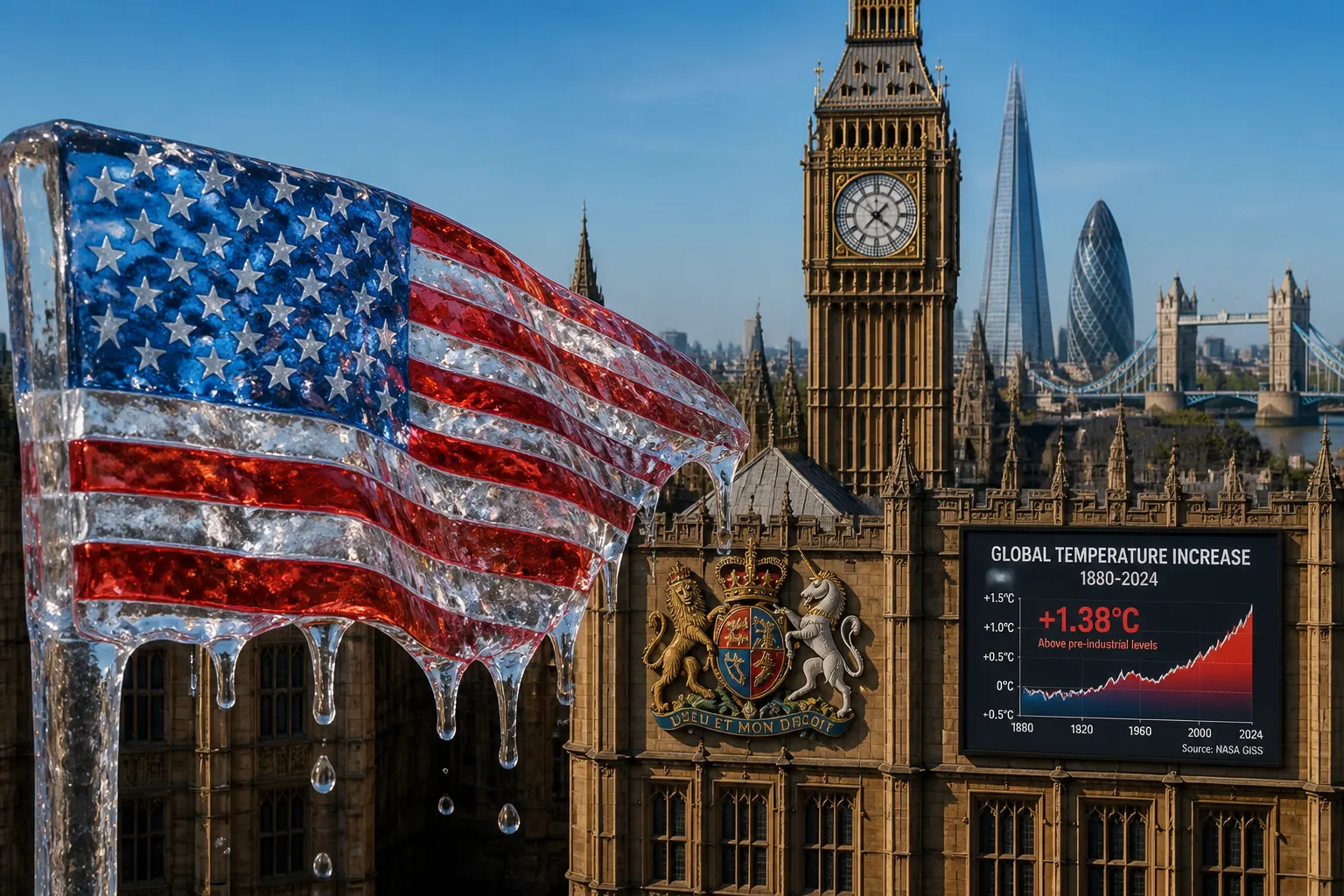
US Climate Rollback Highlights Risk for UK; Britains Institutions May Shield It
On June 1, 2026, the Trump administration announced the dismantling of a $368 million deep‑sea observatory network that has served as the ocean’s weather‑station for a decade.
The system, part of the National Science Foundation’s Ocean Observatories Initiative, has supplied scientists with continuous data on coastal environments, marine ecosystems, and the Atlantic’s great currents. Those measurements are key to tracking shifts that could spell the loss of the Gulf Stream or the birth of a “Super El Niño.” Without the network, researchers warn that a critical long‑term dataset will vanish.
The decision fits a broader pattern of environmental policy cuts championed by the Heritage Foundation’s Project 2025 blueprint. That plan calls for a reduction of federal oversight and the rollback of climate‑related legislation, labeling agencies that it views as “overly regulatory” as targets for elimination.
The scientific community has responded with alarm. According to reports, the loss of decade‑long observations could impede climate research and compromise the ability of scientists to forecast future oceanic changes.
By contrast, the United Kingdom has built a climate‑policy framework that has survived partisan swings. The Climate Change Act of 2008, which set an 80 % reduction target for 2050 and later strengthened to net‑zero, passed with sweeping support from all major parties. The Act established the Climate Change Committee (CCC), an independent body that advises the government on carbon budgets and reports directly to Parliament.
The Higher Education and Research Act of 2017 further insulated research funding decisions from ministerial influence, allowing universities to select projects based on scientific merit rather than political preference.
Yet the UK is not immune to strain. Conservative Party leader Kemi Badenoch has pledged to repeal the Climate Change Act, and Reform UK has made opposition to net‑zero a central part of its platform. Deputy leader Richard Tice has branded renewable energy a “massive con.” Despite these political challenges, polling data from the Institute for Public Policy Research and YouGov shows that belief in climate change and support for net‑zero remain high: roughly 60 % of voters back the target, with 86 % of Green voters, 76–79 % of Labour and Liberal Democrat voters, and 48 % of Conservatives in favour.
Experts argue that Britain’s durable institutions could shield the country from the polarization that has plagued American politics. The Climate Change Act, the CCC, and the legal framework for carbon budgets are designed to outlast electoral cycles. The Higher Education and Research Act ensures that research funding is decided by scientists, not politicians. Together, these structures create a “democratic immune system” that can absorb short‑term political shocks.
To strengthen this shield, three priorities have been identified. First, the government must actively defend the independence of the CCC and the legal mandates of the Climate Change Act, treating them as essential infrastructure rather than partisan tools. Second, cross‑party collaboration spaces—such as the Council for the Future, chaired by former Conservative environment secretary Lord Deben—can provide neutral forums for policy discussion. Third, climate policy should deliver tangible household benefits; the government’s £15 billion Warm Homes Plan, offering zero‑interest loans for solar panels, batteries, heat pumps and social‑housing upgrades, is an example.
The United States’ recent rollbacks illustrate the cost of allowing climate policy to become a culture‑war front. In the UK, public support for climate action remains strong, and the institutional foundations for long‑term policymaking are intact. The current situation hinges on whether future governments treat climate legislation as a partisan issue or a national priority. The next steps involve monitoring any attempts to amend or repeal the Climate Change Act, evaluating the resilience of the CCC, and ensuring that the Warm Homes Plan and similar initiatives continue to deliver benefits to households.
In short, while the UK faces political challenges, its institutional architecture and public backing provide a buffer against the climate polarisation that has reshaped American politics. The outcome will depend on how future administrations choose to engage with the existing legal and scientific frameworks.
The system, part of the National Science Foundation’s Ocean Observatories Initiative, has supplied scientists with continuous data on coastal environments, marine ecosystems, and the Atlantic’s great currents. Those measurements are key to tracking shifts that could spell the loss of the Gulf Stream or the birth of a “Super El Niño.” Without the network, researchers warn that a critical long‑term dataset will vanish.
The decision fits a broader pattern of environmental policy cuts championed by the Heritage Foundation’s Project 2025 blueprint. That plan calls for a reduction of federal oversight and the rollback of climate‑related legislation, labeling agencies that it views as “overly regulatory” as targets for elimination.
The scientific community has responded with alarm. According to reports, the loss of decade‑long observations could impede climate research and compromise the ability of scientists to forecast future oceanic changes.
By contrast, the United Kingdom has built a climate‑policy framework that has survived partisan swings. The Climate Change Act of 2008, which set an 80 % reduction target for 2050 and later strengthened to net‑zero, passed with sweeping support from all major parties. The Act established the Climate Change Committee (CCC), an independent body that advises the government on carbon budgets and reports directly to Parliament.
The Higher Education and Research Act of 2017 further insulated research funding decisions from ministerial influence, allowing universities to select projects based on scientific merit rather than political preference.
Yet the UK is not immune to strain. Conservative Party leader Kemi Badenoch has pledged to repeal the Climate Change Act, and Reform UK has made opposition to net‑zero a central part of its platform. Deputy leader Richard Tice has branded renewable energy a “massive con.” Despite these political challenges, polling data from the Institute for Public Policy Research and YouGov shows that belief in climate change and support for net‑zero remain high: roughly 60 % of voters back the target, with 86 % of Green voters, 76–79 % of Labour and Liberal Democrat voters, and 48 % of Conservatives in favour.
Experts argue that Britain’s durable institutions could shield the country from the polarization that has plagued American politics. The Climate Change Act, the CCC, and the legal framework for carbon budgets are designed to outlast electoral cycles. The Higher Education and Research Act ensures that research funding is decided by scientists, not politicians. Together, these structures create a “democratic immune system” that can absorb short‑term political shocks.
To strengthen this shield, three priorities have been identified. First, the government must actively defend the independence of the CCC and the legal mandates of the Climate Change Act, treating them as essential infrastructure rather than partisan tools. Second, cross‑party collaboration spaces—such as the Council for the Future, chaired by former Conservative environment secretary Lord Deben—can provide neutral forums for policy discussion. Third, climate policy should deliver tangible household benefits; the government’s £15 billion Warm Homes Plan, offering zero‑interest loans for solar panels, batteries, heat pumps and social‑housing upgrades, is an example.
The United States’ recent rollbacks illustrate the cost of allowing climate policy to become a culture‑war front. In the UK, public support for climate action remains strong, and the institutional foundations for long‑term policymaking are intact. The current situation hinges on whether future governments treat climate legislation as a partisan issue or a national priority. The next steps involve monitoring any attempts to amend or repeal the Climate Change Act, evaluating the resilience of the CCC, and ensuring that the Warm Homes Plan and similar initiatives continue to deliver benefits to households.
In short, while the UK faces political challenges, its institutional architecture and public backing provide a buffer against the climate polarisation that has reshaped American politics. The outcome will depend on how future administrations choose to engage with the existing legal and scientific frameworks.