Blab Politics
Argentinas Defense Budget Faces New Funding Plan Amid Deep Cuts
Argentina’s defense spending in 2025 was just over 0.5 % of gross domestic product, the lowest share among South American nations, according to the Stockholm International Peace Research Institute (SIPRI). The figure falls well below Chile’s 1.5 % and Brazil’s higher percentage, underscoring a long‑standing under‑funding of the Argentine Armed Forces.
In May 2026 President Javier Milei signed a decree creating Plan ARMA, a mechanism that earmarks a portion of proceeds from the sale, lease or privatization of state assets for the defense budget. For non‑military assets, a tenth of the proceeds is directed to the ministry; for assets owned by the armed forces, the share can reach seventy percent. The funds are intended for new equipment, modernization projects and strategic infrastructure, supplementing an existing multi‑year defense fund.
The plan is the brainchild of Lieutenant General Carlos Presti, who was appointed defense minister in December 2025. Presti is the first active or former military officer to hold the post since the return to civilian rule in 1983, a move that carries symbolic weight in a country that endured a military dictatorship from 1976 to 1983.
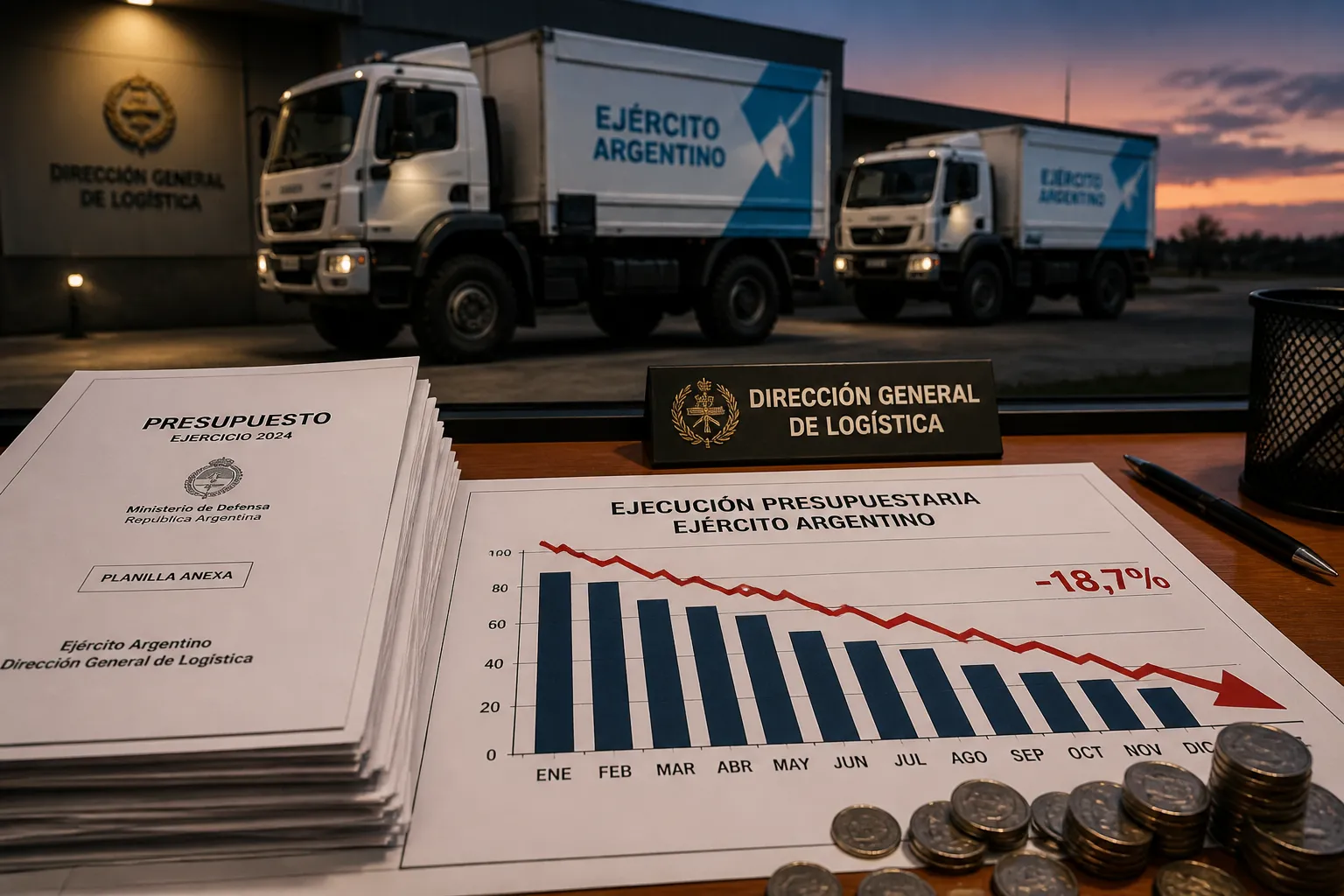
Despite the innovative funding model, the new money does not come from a stable budget line. Asset sales are politically sensitive, slow to complete, and their proceeds are uncertain. Meanwhile, the Argentine government has implemented broad fiscal consolidation measures that have tightened spending across ministries. Local media reports indicate that the latest round of cuts is so severe that basic costs at military bases—food, utilities and salaries—are being strained. Some soldiers reportedly earn less than a thousand dollars a month.
The most visible outcome of Plan ARMA has been the procurement of two dozen second‑hand F‑16 fighter jets from the United States, sold through Denmark. The first six aircraft have already arrived, and pilots are in training. The deal relies heavily on U.S. support, and Argentine commentators note that the smooth progress owes much to President Donald Trump’s earlier backing of Milei.
Argentina’s defense modernization effort is therefore a mix of domestic fiscal innovation and external dependence. While the F‑16 purchase signals ambition, the reliance on asset sales and the ongoing budget cuts suggest that the plan remains more of a promise than a guaranteed turnaround.
In the broader regional context, Argentina’s defense spending continues to lag behind Brazil and Chile, both of which have maintained steady investment levels. The Argentine government maintains that it is the first administration to take defense seriously, but officers in the press describe a bleaker picture.
The current situation is that Plan ARMA has been enacted, but its effectiveness depends on the pace and volume of state asset sales. The Argentine defense ministry is monitoring the progress of the F‑16 deliveries and other modernization projects, while budgetary constraints continue to affect day‑to‑day operations. No additional legal or fiscal deadlines have been announced, and the next steps will hinge on the completion of privatization deals and the allocation of the earmarked funds.
In sum, Argentina’s defense budget remains the lowest in South America, and the Milei administration’s Plan ARMA offers a novel but uncertain source of funding. The success of the plan will be measured by the speed of asset sales, the continued delivery of new equipment, and the ability of the armed forces to maintain operational readiness amid ongoing fiscal pressures.
In May 2026 President Javier Milei signed a decree creating Plan ARMA, a mechanism that earmarks a portion of proceeds from the sale, lease or privatization of state assets for the defense budget. For non‑military assets, a tenth of the proceeds is directed to the ministry; for assets owned by the armed forces, the share can reach seventy percent. The funds are intended for new equipment, modernization projects and strategic infrastructure, supplementing an existing multi‑year defense fund.
The plan is the brainchild of Lieutenant General Carlos Presti, who was appointed defense minister in December 2025. Presti is the first active or former military officer to hold the post since the return to civilian rule in 1983, a move that carries symbolic weight in a country that endured a military dictatorship from 1976 to 1983.
Despite the innovative funding model, the new money does not come from a stable budget line. Asset sales are politically sensitive, slow to complete, and their proceeds are uncertain. Meanwhile, the Argentine government has implemented broad fiscal consolidation measures that have tightened spending across ministries. Local media reports indicate that the latest round of cuts is so severe that basic costs at military bases—food, utilities and salaries—are being strained. Some soldiers reportedly earn less than a thousand dollars a month.
The most visible outcome of Plan ARMA has been the procurement of two dozen second‑hand F‑16 fighter jets from the United States, sold through Denmark. The first six aircraft have already arrived, and pilots are in training. The deal relies heavily on U.S. support, and Argentine commentators note that the smooth progress owes much to President Donald Trump’s earlier backing of Milei.
Argentina’s defense modernization effort is therefore a mix of domestic fiscal innovation and external dependence. While the F‑16 purchase signals ambition, the reliance on asset sales and the ongoing budget cuts suggest that the plan remains more of a promise than a guaranteed turnaround.
In the broader regional context, Argentina’s defense spending continues to lag behind Brazil and Chile, both of which have maintained steady investment levels. The Argentine government maintains that it is the first administration to take defense seriously, but officers in the press describe a bleaker picture.
The current situation is that Plan ARMA has been enacted, but its effectiveness depends on the pace and volume of state asset sales. The Argentine defense ministry is monitoring the progress of the F‑16 deliveries and other modernization projects, while budgetary constraints continue to affect day‑to‑day operations. No additional legal or fiscal deadlines have been announced, and the next steps will hinge on the completion of privatization deals and the allocation of the earmarked funds.
In sum, Argentina’s defense budget remains the lowest in South America, and the Milei administration’s Plan ARMA offers a novel but uncertain source of funding. The success of the plan will be measured by the speed of asset sales, the continued delivery of new equipment, and the ability of the armed forces to maintain operational readiness amid ongoing fiscal pressures.