Blab Politics
Illinois GOP Campaign Uses AI-Generated Images to Boost Social Media Reach
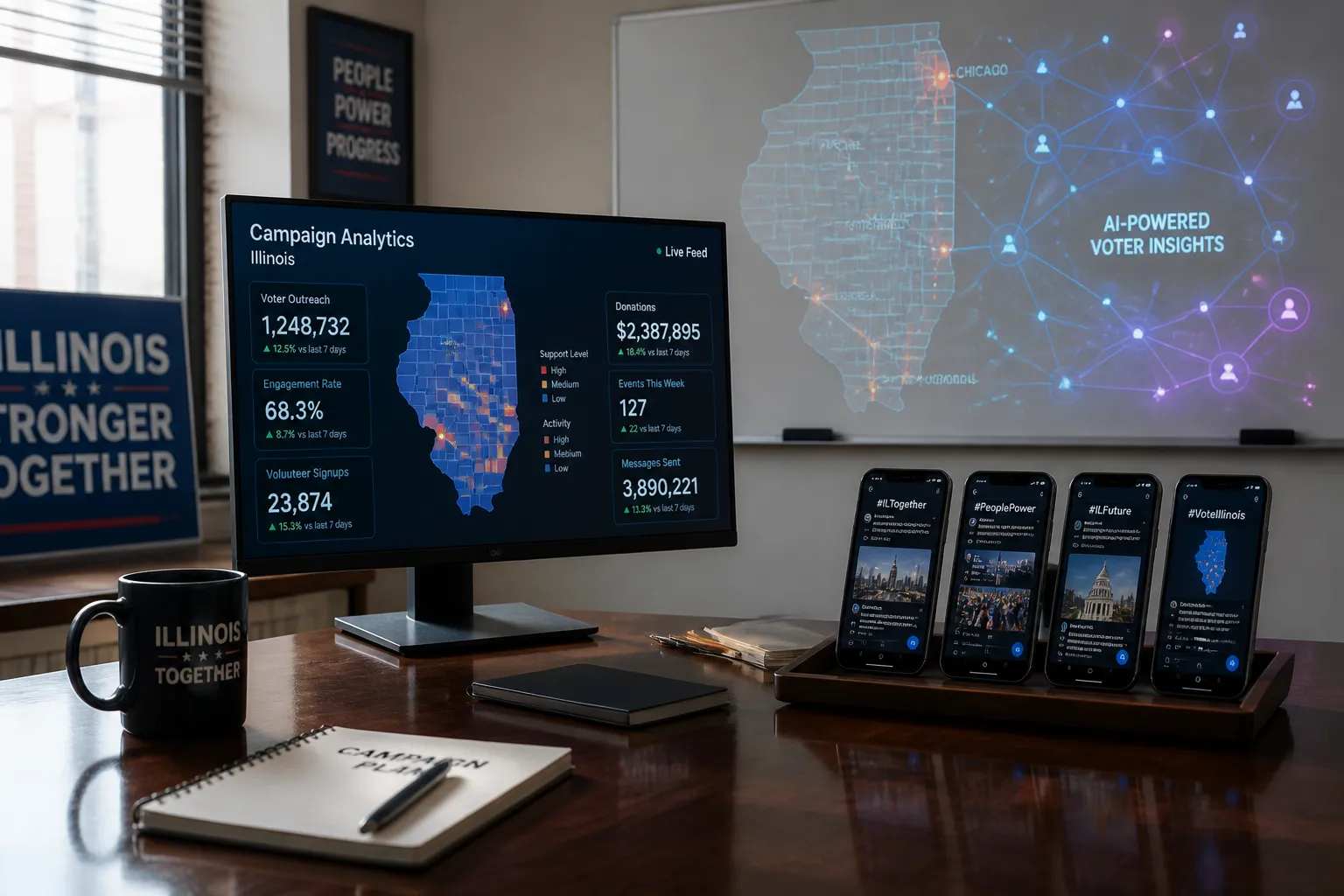
When a candidate’s face is swapped for a cheesehead or a beachside fantasy, Illinois politics takes on a new flavor. After winning the March 17 Republican primary, Darren Bailey’s campaign has turned artificial‑intelligence (AI) image and video creation into the centerpiece of its online outreach. A steady stream of AI‑generated posts now shows Governor J.B. Pritzker in a variety of satirical, and sometimes misleading, scenarios.
The most eye‑catching examples include a photo of Pritzker wearing a Green Bay Packers cheesehead and a Brett Favre jersey, a cartoon video of the governor lounging on a sun‑baked beach, and a graphic that projects the Bailey‑Del Mar campaign logo over the Chicago skyline like the Bat Signal. Campaign manager Aaron Del Mar explained that the images are crafted to “win the algorithms” and boost engagement on social‑media platforms. He said that static posts fail to generate the same level of interaction, whereas AI‑generated images “go off the roof” in terms of algorithmic reach.
Del Mar also highlighted the cost advantage of AI content. For a campaign that relies on small‑donation fundraising rather than the multimillion‑dollar budgets of Pritzker’s past races, AI tools are cheaper than hiring human graphic designers. The campaign’s use of AI is not limited to political cartoons; it also includes infographics that present data on taxes, data‑center spending, gas prices, and immigration, though only one of these infographics cites a source.
Pritzker’s team has taken a different tack. Campaign manager Chris Shallow said the campaign has an internal policy that bars the use of AI‑generated images. He explained that the team uses AI tools “in the way that I think most modern organizations do,” primarily for research, data analysis, and cybersecurity. Shallow emphasized that the policy is not about avoiding AI entirely but about maintaining authenticity in campaign materials.
The distinction between traditional photo manipulation and AI‑generated imagery was underscored by Shallow, who said that Photoshop is based on a real image, whereas Bailey’s content is “completely‑generated‑by‑AI” and not grounded in reality. He also noted that the AI images are “fictional” and “not even remotely based in reality.” Several of Bailey’s AI videos portray Pritzker in exaggerated roles: one series depicts the governor as a “shady billionaire” who funnels tax dollars to a Hyatt hotel, pays a Chicago peacekeeper later charged with a violent crime, frees inmates from electronic monitoring, and relaxes in the Bahamas with offshore trusts. Another video shows Pritzker and Chicago Mayor Brandon Johnson as babies fighting over a toy, with Del Mar captioning the post: “Constant fighting. Constant dysfunction. Constant failure. Illinois deserves adults in the room.” Del Mar compared the videos to political cartoons that have existed for over a century.
The campaign has also used AI to create a “say no to data centers” button that was flagged by Facebook as “AI info.” Independent candidate Collin Corbett criticized the use of AI in that context, saying the image was “generated by AI to claim he’s against data centers.” Corbett’s campaign has only shared one AI image, a thumbnail for a Bears podcast.
Pritzker has expressed concerns about the proliferation of AI content in politics. In a June interview in Decatur, he said he is “not a fan of AI political content” and supports regulations that would require watermarking or disclosure for AI‑generated ads. Del Mar echoed this view, saying a disclaimer would be the simplest way to inform voters.
Illinois lawmakers are considering legislation that would require disclosure for AI‑generated political ads released four months before an election. Sen. Mary Edly‑Allen, a Democrat from Libertyville, filed a standalone version of the bill. The proposal would mandate written statements on graphic images, spoken statements before or after AI audio, and both written and spoken disclosures for AI videos. Campaigns would need to notify the State Board of Elections and could face fines for each distributed ad. Edly‑Allen also supports broader limits on image alteration, citing her own experience rejecting a mailer that would have altered an opponent’s appearance.
The bill, if passed, would have applied to the 2026 election had it been signed by Pritzker by mid‑June. Edly‑Allen said lawmakers are gaining momentum to address the issue, noting the balance between First Amendment rights and protecting voters from deceptive content.
Regardless of regulatory outcomes, AI tools are likely to remain part of political campaigns. Shallow said that AI can help Democratic campaigns “think about how to incorporate AI tools into their workflow.” The current situation shows a clear divide: Bailey’s campaign embraces AI for its cost‑effectiveness and algorithmic advantage, while Pritzker’s team maintains a traditional, human‑created approach and supports disclosure requirements.
The next steps for the Illinois governor’s race involve the upcoming general election in November 2026. Both campaigns will continue to use social media as a primary outreach channel, with Bailey’s team likely to keep producing AI content and Pritzker’s team focusing on real‑story storytelling. The outcome of the proposed AI‑disclosure legislation will determine whether future campaigns must add labels or warnings to AI‑generated political materials.
The most eye‑catching examples include a photo of Pritzker wearing a Green Bay Packers cheesehead and a Brett Favre jersey, a cartoon video of the governor lounging on a sun‑baked beach, and a graphic that projects the Bailey‑Del Mar campaign logo over the Chicago skyline like the Bat Signal. Campaign manager Aaron Del Mar explained that the images are crafted to “win the algorithms” and boost engagement on social‑media platforms. He said that static posts fail to generate the same level of interaction, whereas AI‑generated images “go off the roof” in terms of algorithmic reach.
Del Mar also highlighted the cost advantage of AI content. For a campaign that relies on small‑donation fundraising rather than the multimillion‑dollar budgets of Pritzker’s past races, AI tools are cheaper than hiring human graphic designers. The campaign’s use of AI is not limited to political cartoons; it also includes infographics that present data on taxes, data‑center spending, gas prices, and immigration, though only one of these infographics cites a source.
Pritzker’s team has taken a different tack. Campaign manager Chris Shallow said the campaign has an internal policy that bars the use of AI‑generated images. He explained that the team uses AI tools “in the way that I think most modern organizations do,” primarily for research, data analysis, and cybersecurity. Shallow emphasized that the policy is not about avoiding AI entirely but about maintaining authenticity in campaign materials.
The distinction between traditional photo manipulation and AI‑generated imagery was underscored by Shallow, who said that Photoshop is based on a real image, whereas Bailey’s content is “completely‑generated‑by‑AI” and not grounded in reality. He also noted that the AI images are “fictional” and “not even remotely based in reality.” Several of Bailey’s AI videos portray Pritzker in exaggerated roles: one series depicts the governor as a “shady billionaire” who funnels tax dollars to a Hyatt hotel, pays a Chicago peacekeeper later charged with a violent crime, frees inmates from electronic monitoring, and relaxes in the Bahamas with offshore trusts. Another video shows Pritzker and Chicago Mayor Brandon Johnson as babies fighting over a toy, with Del Mar captioning the post: “Constant fighting. Constant dysfunction. Constant failure. Illinois deserves adults in the room.” Del Mar compared the videos to political cartoons that have existed for over a century.
The campaign has also used AI to create a “say no to data centers” button that was flagged by Facebook as “AI info.” Independent candidate Collin Corbett criticized the use of AI in that context, saying the image was “generated by AI to claim he’s against data centers.” Corbett’s campaign has only shared one AI image, a thumbnail for a Bears podcast.
Pritzker has expressed concerns about the proliferation of AI content in politics. In a June interview in Decatur, he said he is “not a fan of AI political content” and supports regulations that would require watermarking or disclosure for AI‑generated ads. Del Mar echoed this view, saying a disclaimer would be the simplest way to inform voters.
Illinois lawmakers are considering legislation that would require disclosure for AI‑generated political ads released four months before an election. Sen. Mary Edly‑Allen, a Democrat from Libertyville, filed a standalone version of the bill. The proposal would mandate written statements on graphic images, spoken statements before or after AI audio, and both written and spoken disclosures for AI videos. Campaigns would need to notify the State Board of Elections and could face fines for each distributed ad. Edly‑Allen also supports broader limits on image alteration, citing her own experience rejecting a mailer that would have altered an opponent’s appearance.
The bill, if passed, would have applied to the 2026 election had it been signed by Pritzker by mid‑June. Edly‑Allen said lawmakers are gaining momentum to address the issue, noting the balance between First Amendment rights and protecting voters from deceptive content.
Regardless of regulatory outcomes, AI tools are likely to remain part of political campaigns. Shallow said that AI can help Democratic campaigns “think about how to incorporate AI tools into their workflow.” The current situation shows a clear divide: Bailey’s campaign embraces AI for its cost‑effectiveness and algorithmic advantage, while Pritzker’s team maintains a traditional, human‑created approach and supports disclosure requirements.
The next steps for the Illinois governor’s race involve the upcoming general election in November 2026. Both campaigns will continue to use social media as a primary outreach channel, with Bailey’s team likely to keep producing AI content and Pritzker’s team focusing on real‑story storytelling. The outcome of the proposed AI‑disclosure legislation will determine whether future campaigns must add labels or warnings to AI‑generated political materials.