Blab Politics
Senator Warnock Meets Speaker Johnson Over Divergent Views on Matthew 25
In a quiet Washington meeting last month, Senator Raphael Warnock of Georgia and House Speaker Mike Johnson of Louisiana sat down for a 30‑minute discussion about a biblical passage that has become a lightning rod for congressional policy. Warnock described the encounter as respectful, yet it underscored a widening split in Congress over how Matthew 25 is used to justify legislation.
Warnock, a pastor at Ebenezer Baptist Church and a member of the Progressive National Baptist Convention, recently told The New York Times that he identifies as a “Matthew 25 Christian.” In the interview he framed the passage as a call to care for the hungry, the stranger and the imprisoned, and asked Johnson whether the speaker’s Republican politics reflected that faith. He highlighted the contrast between prayer and a trillion‑dollar cut to Medicaid.
Johnson, a Southern Baptist who has never attended seminary, offered a different reading. He told Warnock that the passage is about individuals, not nations, and that the text actually says “nations.” After the meeting he posted a long essay on X that expanded on his interpretation, arguing that scripture does not require civil authorities to act.
The debate over Matthew 25 has intensified over the past year. Pope Leo XIII invoked the passage in November when asked about President Donald Trump’s immigration policies, noting that the Bible asks, “how did you receive the foreigner?” Johnson’s February X post was praised by evangelical conservatives such as Allie Beth Stuckey and Tony Perkins, while more than 40 Catholic Democrats in the House signed a letter rebuking his interpretation. Rev. William Barber II called for a public theological debate on immigration.
Johnson’s stance is not universally held within the Southern Baptist Convention (SBC). Representatives for the speaker declined interview requests, and the SBC’s Ethics and Religious Liberty Commission said it has no position on the passage. Other evangelical scholars offered similar interpretations. Pastor Robert Jeffress of Texas said Matthew 25 does not address the “least of these” as a call to care for the vulnerable, while Judith Gundry, a New Testament professor at Yale Divinity School, argued that the phrase refers to disciples fleeing persecution.
Princeton Theological Seminary professor Heath Carter noted that the broader debate reflects deeper, longer‑standing divides among U.S. Christians. He explained that some Christians view faith as focused on individual salvation, while others see it as a mandate to confront structural inequality. Carter traced the rise of the social gospel in the early 20th century—an approach that linked Christian ethics to social reform and helped shape the New Deal.
John Compton, a professor at Chapman University, suggested that Johnson’s interpretation shows a Trump‑era influence, arguing that the idea that government should not act on behalf of the poor is a relatively recent development.
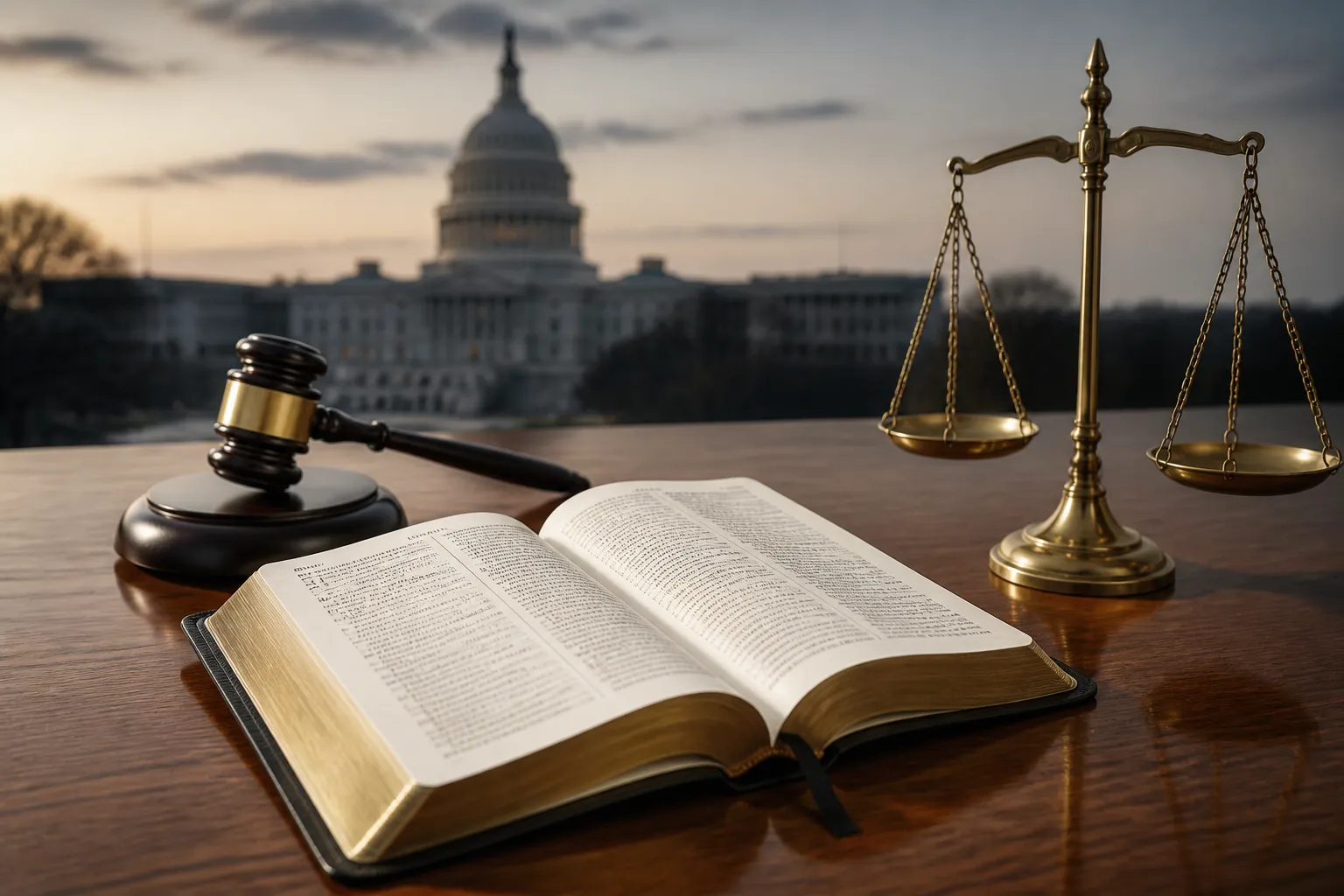
The debate also surfaced in a congressional hearing on the Department of Homeland Security’s Minnesota deportation efforts. Republican Rep. Michael Cloud, a former evangelical megachurch communications director, used a Bible to argue that Christians should not lobby the government. Rev. Mariah Tollgaard, a United Methodist minister, responded that Scripture contains laws about gleaning, Jubilee debt release and caring for the stranger—principles she said require collective action.
Warnock said he is not seeking a theological debate but wants to challenge lawmakers who pray before passing legislation he believes cuts access to healthcare. He stated that religion is used as a tool in a political project. The meeting between Warnock and Johnson did not resolve the disagreement. The debate over Matthew 25 continues to shape discussions on immigration, Medicaid and the role of faith in public policy. No official policy changes have resulted from the conversation, and both lawmakers have indicated they will continue to use their religious convictions to guide their legislative priorities. The current situation remains a point of contention in Congress, with the debate over Matthew 25 reflecting broader tensions between evangelical conservatives and progressive Christians on how scripture informs public policy.
Warnock, a pastor at Ebenezer Baptist Church and a member of the Progressive National Baptist Convention, recently told The New York Times that he identifies as a “Matthew 25 Christian.” In the interview he framed the passage as a call to care for the hungry, the stranger and the imprisoned, and asked Johnson whether the speaker’s Republican politics reflected that faith. He highlighted the contrast between prayer and a trillion‑dollar cut to Medicaid.
Johnson, a Southern Baptist who has never attended seminary, offered a different reading. He told Warnock that the passage is about individuals, not nations, and that the text actually says “nations.” After the meeting he posted a long essay on X that expanded on his interpretation, arguing that scripture does not require civil authorities to act.
The debate over Matthew 25 has intensified over the past year. Pope Leo XIII invoked the passage in November when asked about President Donald Trump’s immigration policies, noting that the Bible asks, “how did you receive the foreigner?” Johnson’s February X post was praised by evangelical conservatives such as Allie Beth Stuckey and Tony Perkins, while more than 40 Catholic Democrats in the House signed a letter rebuking his interpretation. Rev. William Barber II called for a public theological debate on immigration.
Johnson’s stance is not universally held within the Southern Baptist Convention (SBC). Representatives for the speaker declined interview requests, and the SBC’s Ethics and Religious Liberty Commission said it has no position on the passage. Other evangelical scholars offered similar interpretations. Pastor Robert Jeffress of Texas said Matthew 25 does not address the “least of these” as a call to care for the vulnerable, while Judith Gundry, a New Testament professor at Yale Divinity School, argued that the phrase refers to disciples fleeing persecution.
Princeton Theological Seminary professor Heath Carter noted that the broader debate reflects deeper, longer‑standing divides among U.S. Christians. He explained that some Christians view faith as focused on individual salvation, while others see it as a mandate to confront structural inequality. Carter traced the rise of the social gospel in the early 20th century—an approach that linked Christian ethics to social reform and helped shape the New Deal.
John Compton, a professor at Chapman University, suggested that Johnson’s interpretation shows a Trump‑era influence, arguing that the idea that government should not act on behalf of the poor is a relatively recent development.
The debate also surfaced in a congressional hearing on the Department of Homeland Security’s Minnesota deportation efforts. Republican Rep. Michael Cloud, a former evangelical megachurch communications director, used a Bible to argue that Christians should not lobby the government. Rev. Mariah Tollgaard, a United Methodist minister, responded that Scripture contains laws about gleaning, Jubilee debt release and caring for the stranger—principles she said require collective action.
Warnock said he is not seeking a theological debate but wants to challenge lawmakers who pray before passing legislation he believes cuts access to healthcare. He stated that religion is used as a tool in a political project. The meeting between Warnock and Johnson did not resolve the disagreement. The debate over Matthew 25 continues to shape discussions on immigration, Medicaid and the role of faith in public policy. No official policy changes have resulted from the conversation, and both lawmakers have indicated they will continue to use their religious convictions to guide their legislative priorities. The current situation remains a point of contention in Congress, with the debate over Matthew 25 reflecting broader tensions between evangelical conservatives and progressive Christians on how scripture informs public policy.