Blab Politics
Minnesota Research Funding Faces Threat as OMB Proposes Politically-Driven Grant Rule
The Office of Management and Budget (OMB) announced a new rule on May 29 that would change how federal research grants are awarded and managed. The proposal, titled Regulation for Federal Financial Assistance, would give political appointees the authority to approve, reject or cut funding for projects that have traditionally been vetted by independent scientists. The rule is part of the Trump administration’s Project 2025 plan to reshape federal agencies.
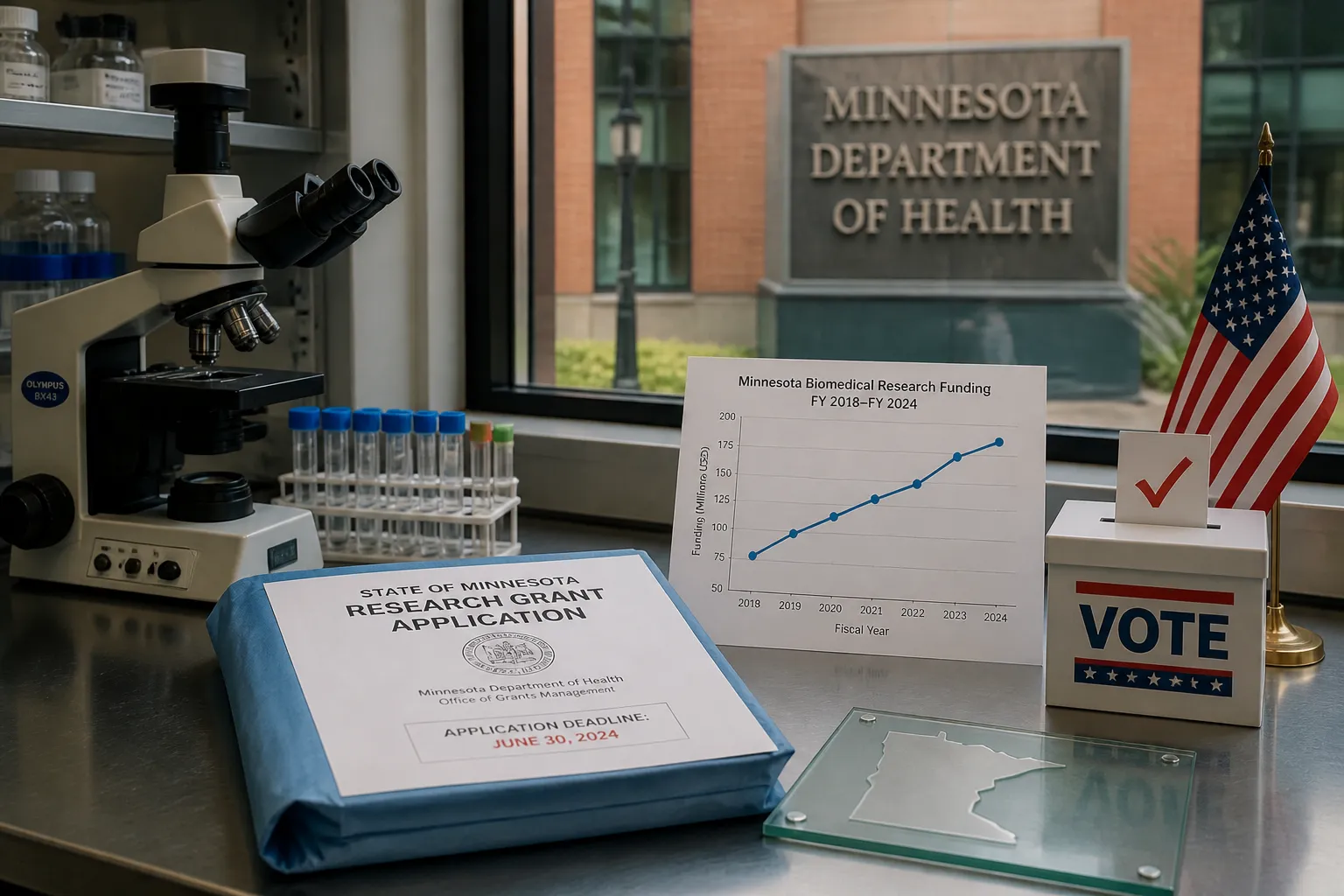
In 2025, the National Institutes of Health (NIH) awarded Minnesota institutions $725 million in grants and contracts. Those funds supported 7,735 jobs and generated $1.79 billion in economic activity, according to data compiled by United for Medical Research. The same year, the U.S. government spent an estimated $193 billion on research and development across all fields, a figure that underscores the national importance of the NIH’s extramural program.
The OMB rule would replace the current government‑wide framework that governs federal grants. Under the new proposal, agencies could terminate active grants, even years into a study, without a scientific reason. The rule also would prohibit the use of federal funds to support diversity, equity, inclusion, or gender‑ideology initiatives, and would allow agencies to “curate” research portfolios to align with the president’s political agenda.
The American medical community has expressed concern. In a June editorial, the New England Journal of Medicine warned that removing a merit‑based award process could endanger patients and waste resources. The editors highlighted the risk of abruptly ending a multi‑year clinical trial, such as one testing a new cancer therapy, and questioned how patients enrolled at the time of termination would be protected.
Minnesota’s major research centers have also voiced opposition. A spokesperson for the University of Minnesota said the institution was “concerned about the Office of Management and Budget’s proposed rule and its potential impact on federally funded research.” Mayo Clinic’s communications office did not respond to inquiries, but individual researchers filed public comments on the OMB docket expressing their opposition.
The rule has attracted bipartisan criticism. Senator Tina Smith of Minnesota released a letter on June 26 that described the proposal as turning federal assistance into a “political slush fund.” The letter was joined on July 1 by all 21 members of the Senate Democratic caucus, including Senator Amy Klobuchar, who demanded that OMB rescind the rule. Senate Appropriations Committee Chair Susan Collins, a Republican from Maine, also requested that OMB extend the public‑comment period and remove the most damaging provisions.
The proposed changes have been framed by OMB as a way to improve oversight and combat waste, fraud, and abuse. Critics argue that stronger audits and oversight can address those problems without handing presidential appointees the power to override scientific judgment. The rule’s potential to shift funding away from high‑impact research, such as the University of Minnesota’s development of a synthetic cell with a complete life cycle, has been cited as a specific example of the risk.
The public‑comment period for the rule closed on Monday, July 10. The rule is currently pending review by the federal register. No decision has been announced, and it remains unclear whether the rule will be finalized, modified, or withdrawn. Stakeholders, including Minnesota research institutions, senators, and the broader scientific community, continue to monitor the process.
The situation highlights the tension between federal oversight and scientific independence. Minnesota’s 2025 NIH funding demonstrates the state’s reliance on federal grants for both economic vitality and medical innovation. The outcome of the OMB proposal will determine whether that funding remains guided by peer review or becomes subject to political considerations.
In 2025, the National Institutes of Health (NIH) awarded Minnesota institutions $725 million in grants and contracts. Those funds supported 7,735 jobs and generated $1.79 billion in economic activity, according to data compiled by United for Medical Research. The same year, the U.S. government spent an estimated $193 billion on research and development across all fields, a figure that underscores the national importance of the NIH’s extramural program.
The OMB rule would replace the current government‑wide framework that governs federal grants. Under the new proposal, agencies could terminate active grants, even years into a study, without a scientific reason. The rule also would prohibit the use of federal funds to support diversity, equity, inclusion, or gender‑ideology initiatives, and would allow agencies to “curate” research portfolios to align with the president’s political agenda.
The American medical community has expressed concern. In a June editorial, the New England Journal of Medicine warned that removing a merit‑based award process could endanger patients and waste resources. The editors highlighted the risk of abruptly ending a multi‑year clinical trial, such as one testing a new cancer therapy, and questioned how patients enrolled at the time of termination would be protected.
Minnesota’s major research centers have also voiced opposition. A spokesperson for the University of Minnesota said the institution was “concerned about the Office of Management and Budget’s proposed rule and its potential impact on federally funded research.” Mayo Clinic’s communications office did not respond to inquiries, but individual researchers filed public comments on the OMB docket expressing their opposition.
The rule has attracted bipartisan criticism. Senator Tina Smith of Minnesota released a letter on June 26 that described the proposal as turning federal assistance into a “political slush fund.” The letter was joined on July 1 by all 21 members of the Senate Democratic caucus, including Senator Amy Klobuchar, who demanded that OMB rescind the rule. Senate Appropriations Committee Chair Susan Collins, a Republican from Maine, also requested that OMB extend the public‑comment period and remove the most damaging provisions.
The proposed changes have been framed by OMB as a way to improve oversight and combat waste, fraud, and abuse. Critics argue that stronger audits and oversight can address those problems without handing presidential appointees the power to override scientific judgment. The rule’s potential to shift funding away from high‑impact research, such as the University of Minnesota’s development of a synthetic cell with a complete life cycle, has been cited as a specific example of the risk.
The public‑comment period for the rule closed on Monday, July 10. The rule is currently pending review by the federal register. No decision has been announced, and it remains unclear whether the rule will be finalized, modified, or withdrawn. Stakeholders, including Minnesota research institutions, senators, and the broader scientific community, continue to monitor the process.
The situation highlights the tension between federal oversight and scientific independence. Minnesota’s 2025 NIH funding demonstrates the state’s reliance on federal grants for both economic vitality and medical innovation. The outcome of the OMB proposal will determine whether that funding remains guided by peer review or becomes subject to political considerations.







