Blab Politics
Secretary of State Marco Rubio Orders Detention of Colombian Journalist Under 1952 Immigration Law
On June 16, 2026, the U.S. Immigration and Customs Enforcement (ICE) agency detained Colombian journalist Franklin Humberto Coral Garrido—known online as Beto Coral—in Arizona. The detention was authorized by a memo signed by Secretary of State Marco Rubio and was based on allegations that Coral used U.S. platforms to conduct politically motivated disinformation campaigns. The case has drawn attention to the use of the 1952 Immigration and Naturalization Act (INA) and to the broader pattern of immigration enforcement actions that target political critics.
The INA, enacted in 1952 during the Red Scare, gives the Secretary of State the authority to deport aliens whose presence or activities are believed to have “potentially serious adverse foreign policy consequences.” The statute also states that an alien shall not be excluded or restricted because of beliefs or associations that would be lawful in the United States, unless the Secretary personally determines that admission would compromise a compelling U.S. foreign‑policy interest. The law was originally aimed at suspected communists but has been applied in recent years to a range of political dissidents.
Coral, a 40‑year‑old journalist from Medellín, had been active on social media supporting the left‑wing government of President Gustavo Petro. He publicly criticized the campaign of Colombia’s president‑elect Abelardo de la Espriella, a far‑right candidate who has pledged to “disembowel the left.” According to a U.S. government statement released on June 17, the detention was justified by allegations that Coral used U.S. platforms to conduct politically motivated disinformation campaigns. ICE has moved Coral to several detention facilities since his arrest and has reportedly held him incommunicado during the first days of his detention.
Rubio’s memo, issued the day after Coral’s arrest, was reportedly coordinated with the Colombian president‑elect. On June 21, the State Department released a statement congratulating de la Espriella on his electoral victory. In that same week, Rubio signed the order that authorized Coral’s detention, a move that critics say reflects a pattern of using the INA to target political opponents.
The Coral case follows a similar incident in 2025 when ICE detained Mahmoud Khalil, a green‑card holder and Columbia University graduate student, for protesting against Israel. Khalil’s detention was part of a broader Trump‑era policy that targeted pro‑Palestinian activists. Both cases illustrate a trend in which the Department of Homeland Security has used immigration enforcement to address political activity.
The use of the INA in these cases raises First Amendment concerns. The statute’s language that an alien shall not be excluded because of lawful beliefs is intended to protect free speech, but the Secretary’s discretion to determine a “compelling foreign‑policy interest” can be invoked to override that protection. Legal scholars argue that detaining a journalist for criticizing a foreign government may violate constitutional rights, although no court has yet ruled on the Coral case.
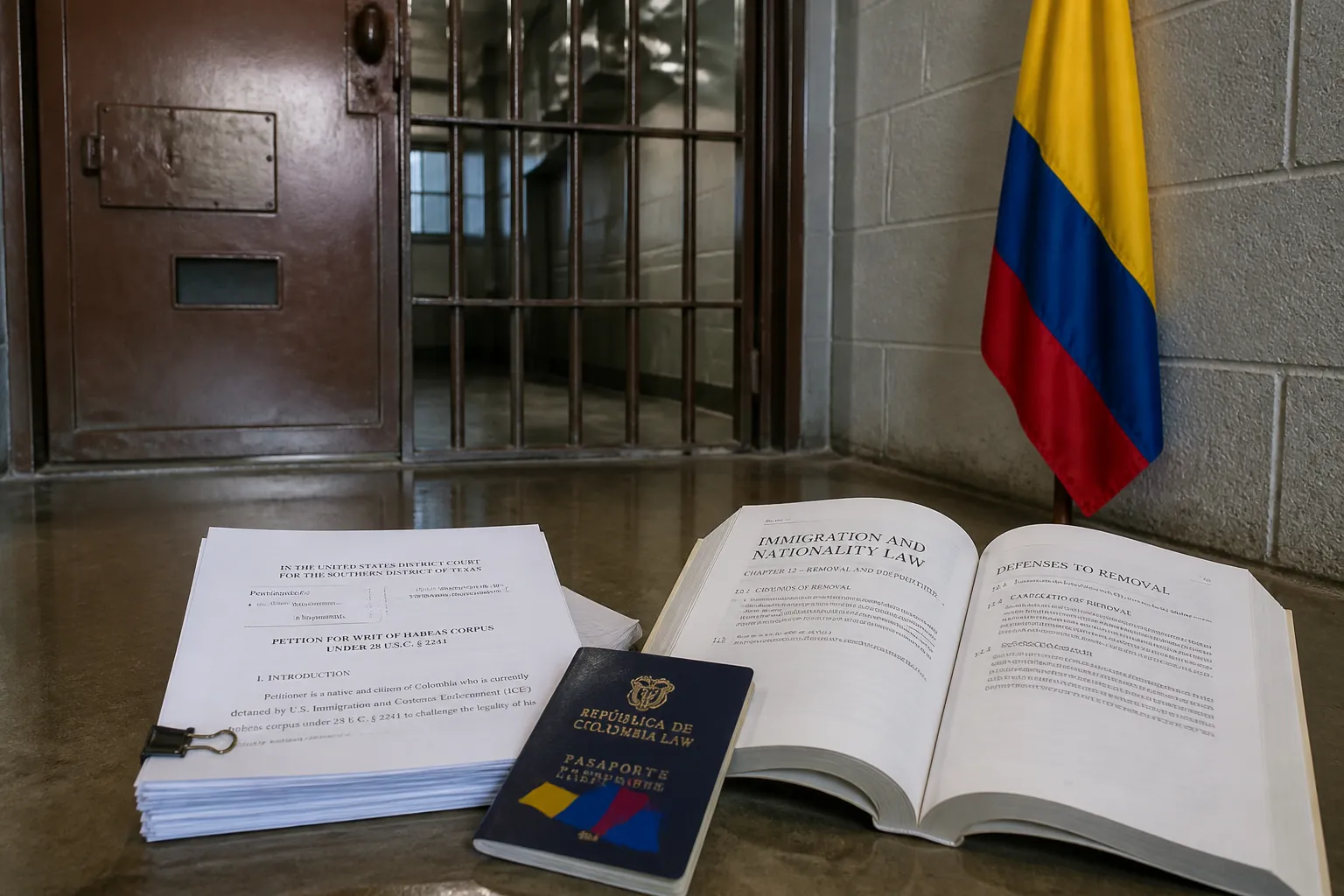
At present, Coral remains in ICE custody. His family has filed a petition for release, citing allegations of torture and mistreatment. The U.S. Department of Justice has not announced a hearing date, and no federal court has yet issued a ruling on the legality of the detention. The case is pending further administrative review and may be brought before the federal courts if the family files a lawsuit.
The detention of Beto Coral has drawn criticism from civil‑rights groups and from the Colombian government, which has called for his immediate release. The U.S. State Department has not issued a public response beyond the initial statement announcing the detention. The situation remains unresolved as the legal process unfolds.
The case highlights the continued use of the 1952 INA by the current administration to target political critics abroad. Whether the detention will be upheld or overturned remains to be seen, but it underscores ongoing tensions between U.S. immigration enforcement and First Amendment protections.
The INA, enacted in 1952 during the Red Scare, gives the Secretary of State the authority to deport aliens whose presence or activities are believed to have “potentially serious adverse foreign policy consequences.” The statute also states that an alien shall not be excluded or restricted because of beliefs or associations that would be lawful in the United States, unless the Secretary personally determines that admission would compromise a compelling U.S. foreign‑policy interest. The law was originally aimed at suspected communists but has been applied in recent years to a range of political dissidents.
Coral, a 40‑year‑old journalist from Medellín, had been active on social media supporting the left‑wing government of President Gustavo Petro. He publicly criticized the campaign of Colombia’s president‑elect Abelardo de la Espriella, a far‑right candidate who has pledged to “disembowel the left.” According to a U.S. government statement released on June 17, the detention was justified by allegations that Coral used U.S. platforms to conduct politically motivated disinformation campaigns. ICE has moved Coral to several detention facilities since his arrest and has reportedly held him incommunicado during the first days of his detention.
Rubio’s memo, issued the day after Coral’s arrest, was reportedly coordinated with the Colombian president‑elect. On June 21, the State Department released a statement congratulating de la Espriella on his electoral victory. In that same week, Rubio signed the order that authorized Coral’s detention, a move that critics say reflects a pattern of using the INA to target political opponents.
The Coral case follows a similar incident in 2025 when ICE detained Mahmoud Khalil, a green‑card holder and Columbia University graduate student, for protesting against Israel. Khalil’s detention was part of a broader Trump‑era policy that targeted pro‑Palestinian activists. Both cases illustrate a trend in which the Department of Homeland Security has used immigration enforcement to address political activity.
The use of the INA in these cases raises First Amendment concerns. The statute’s language that an alien shall not be excluded because of lawful beliefs is intended to protect free speech, but the Secretary’s discretion to determine a “compelling foreign‑policy interest” can be invoked to override that protection. Legal scholars argue that detaining a journalist for criticizing a foreign government may violate constitutional rights, although no court has yet ruled on the Coral case.
At present, Coral remains in ICE custody. His family has filed a petition for release, citing allegations of torture and mistreatment. The U.S. Department of Justice has not announced a hearing date, and no federal court has yet issued a ruling on the legality of the detention. The case is pending further administrative review and may be brought before the federal courts if the family files a lawsuit.
The detention of Beto Coral has drawn criticism from civil‑rights groups and from the Colombian government, which has called for his immediate release. The U.S. State Department has not issued a public response beyond the initial statement announcing the detention. The situation remains unresolved as the legal process unfolds.
The case highlights the continued use of the 1952 INA by the current administration to target political critics abroad. Whether the detention will be upheld or overturned remains to be seen, but it underscores ongoing tensions between U.S. immigration enforcement and First Amendment protections.







