Blab Politics
South Korea Sets Course for Nuclear-Powered Submarines Amid Cost Uncertainty and Regional Security Concerns
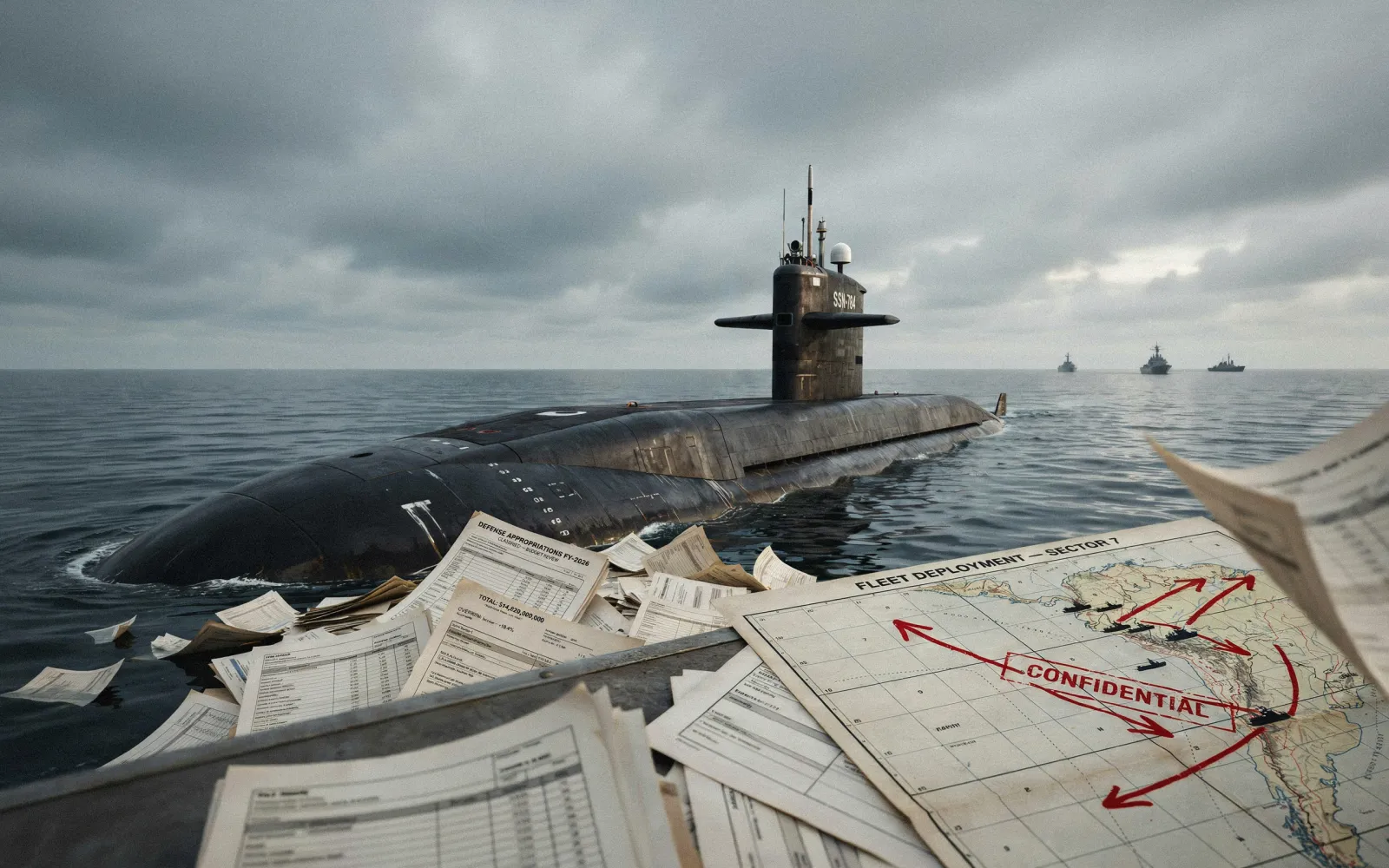
Seoul revealed plans to launch its first nuclear‑powered attack submarine (SSN) by the mid‑2030s, with the inaugural hull slated for service in the late 2030s. The move builds on a 2025 Trump‑era authorization that cleared the Republic of Korea to build nuclear‑propelled vessels—a decision the United States has touted as a win for American shipyards. However, Seoul has yet to specify the fleet size or the program’s budget.
South Korea’s dream of nuclear‑powered submarines has simmered for twenty years, but worries about proliferation kept the project on hold. In October 2025, President Donald Trump broke with tradition, declaring that South Korea could now build SSNs and framing the decision as a boost for U.S. shipyards. Shortly after, Defence Minister Ahn Gyu‑back announced that the submarines would be designed and built in Korea, powered by low‑enriched uranium. He projected the first vessel’s launch in roughly a decade, though he did not disclose a cost.
The missing price tag raises alarms. “The biggest issue is that they haven’t put a dollar figure on it,” said Euan Graham, senior fellow at the Australian Strategic Policy Institute. By comparison, the AUKUS submarine initiative—an alliance of Australia, the United Kingdom and the United States—has a $368 billion budget, a number that analysts anticipate will climb. Graham noted that Seoul’s opacity may simply reflect the still‑unsettled economics of the project.
Strategically, Seoul views SSNs as a counterweight to North Korea’s growing submarine‑launched ballistic missile (SLBM) arsenal. Nuclear propulsion lets a submarine stay submerged for weeks, vastly extending its endurance compared to diesel‑electric peers. “Diesel‑electric subs are powerful, but they’re constrained when it comes to long‑range underwater surveillance,” said Seong‑Hyon Lee, associate researcher at Harvard University’s Asia Center. By operating beyond the immediate coastal zone, South Korea could also bolster sea‑lane protection and broader allied deterrence.
Constructing a nuclear submarine presents steep technical hurdles. While Korea boasts a world‑class shipbuilding industry and a civilian nuclear power base, it still faces challenges like reactor miniaturisation, acoustic quieting, shock resistance, and propulsion integration. “These are highly demanding technical areas where even established naval powers have encountered substantial obstacles,” Lee noted. The effort will also hinge on U.S. cooperation for nuclear fuel, safeguards, regulatory frameworks, and political clearance.
Diplomatic knots still need untangling. Reuters reports that this week, the U.S. and South Korea convened to discuss expanding uranium enrichment and spent‑fuel reprocessing rights to back the submarine effort. The core issue remains the nuclear‑fuel framework under which the vessels would operate. Korea’s current U.S. agreement caps its enrichment capabilities, and the broader political, legal, and technical contours of U.S.–Korean cooperation remain to be ironed out.
Korea also faces a perception challenge. “South Korea has to emphasize that its program involves conventionally armed, nuclear‑powered submarines,” said Jihoon Yu, research fellow at the Korea Institute for Defense Analyses. The line between nuclear propulsion and nuclear armament is vital for maintaining diplomatic credibility and non‑proliferation compliance.
As of now, the Defence Acquisition Program Administration and the Agency for Defense Development have finished technical reviews of the SSN. Still, no formal cost estimate exists, and the launch window for the first hull remains provisional. The United States has yet to grant final approval, and the program’s viability hinges on settling fuel‑framework talks, securing domestic reactor‑design capacity, and weighing the project against other defense priorities—including air and missile defence, conventional submarines, unmanned systems, cyber capabilities, and space‑based surveillance.
In short, South Korea is charting a path toward nuclear‑powered submarines that could strengthen deterrence against North Korea and broaden its maritime footprint. Yet, the absence of a budget, pending fuel‑framework negotiations, and the technical hurdles of domestic reactor development keep the program’s future in limbo. The next milestones include securing final U.S. approval, finalising a detailed budget, and building a domestic industrial base that can design, build, and maintain nuclear submarines.
South Korea’s dream of nuclear‑powered submarines has simmered for twenty years, but worries about proliferation kept the project on hold. In October 2025, President Donald Trump broke with tradition, declaring that South Korea could now build SSNs and framing the decision as a boost for U.S. shipyards. Shortly after, Defence Minister Ahn Gyu‑back announced that the submarines would be designed and built in Korea, powered by low‑enriched uranium. He projected the first vessel’s launch in roughly a decade, though he did not disclose a cost.
The missing price tag raises alarms. “The biggest issue is that they haven’t put a dollar figure on it,” said Euan Graham, senior fellow at the Australian Strategic Policy Institute. By comparison, the AUKUS submarine initiative—an alliance of Australia, the United Kingdom and the United States—has a $368 billion budget, a number that analysts anticipate will climb. Graham noted that Seoul’s opacity may simply reflect the still‑unsettled economics of the project.
Strategically, Seoul views SSNs as a counterweight to North Korea’s growing submarine‑launched ballistic missile (SLBM) arsenal. Nuclear propulsion lets a submarine stay submerged for weeks, vastly extending its endurance compared to diesel‑electric peers. “Diesel‑electric subs are powerful, but they’re constrained when it comes to long‑range underwater surveillance,” said Seong‑Hyon Lee, associate researcher at Harvard University’s Asia Center. By operating beyond the immediate coastal zone, South Korea could also bolster sea‑lane protection and broader allied deterrence.
Constructing a nuclear submarine presents steep technical hurdles. While Korea boasts a world‑class shipbuilding industry and a civilian nuclear power base, it still faces challenges like reactor miniaturisation, acoustic quieting, shock resistance, and propulsion integration. “These are highly demanding technical areas where even established naval powers have encountered substantial obstacles,” Lee noted. The effort will also hinge on U.S. cooperation for nuclear fuel, safeguards, regulatory frameworks, and political clearance.
Diplomatic knots still need untangling. Reuters reports that this week, the U.S. and South Korea convened to discuss expanding uranium enrichment and spent‑fuel reprocessing rights to back the submarine effort. The core issue remains the nuclear‑fuel framework under which the vessels would operate. Korea’s current U.S. agreement caps its enrichment capabilities, and the broader political, legal, and technical contours of U.S.–Korean cooperation remain to be ironed out.
Korea also faces a perception challenge. “South Korea has to emphasize that its program involves conventionally armed, nuclear‑powered submarines,” said Jihoon Yu, research fellow at the Korea Institute for Defense Analyses. The line between nuclear propulsion and nuclear armament is vital for maintaining diplomatic credibility and non‑proliferation compliance.
As of now, the Defence Acquisition Program Administration and the Agency for Defense Development have finished technical reviews of the SSN. Still, no formal cost estimate exists, and the launch window for the first hull remains provisional. The United States has yet to grant final approval, and the program’s viability hinges on settling fuel‑framework talks, securing domestic reactor‑design capacity, and weighing the project against other defense priorities—including air and missile defence, conventional submarines, unmanned systems, cyber capabilities, and space‑based surveillance.
In short, South Korea is charting a path toward nuclear‑powered submarines that could strengthen deterrence against North Korea and broaden its maritime footprint. Yet, the absence of a budget, pending fuel‑framework negotiations, and the technical hurdles of domestic reactor development keep the program’s future in limbo. The next milestones include securing final U.S. approval, finalising a detailed budget, and building a domestic industrial base that can design, build, and maintain nuclear submarines.