Blab Politics
International Coalition Calls for Sudans Civilian-Led Dialogue and Humanitarian Truce
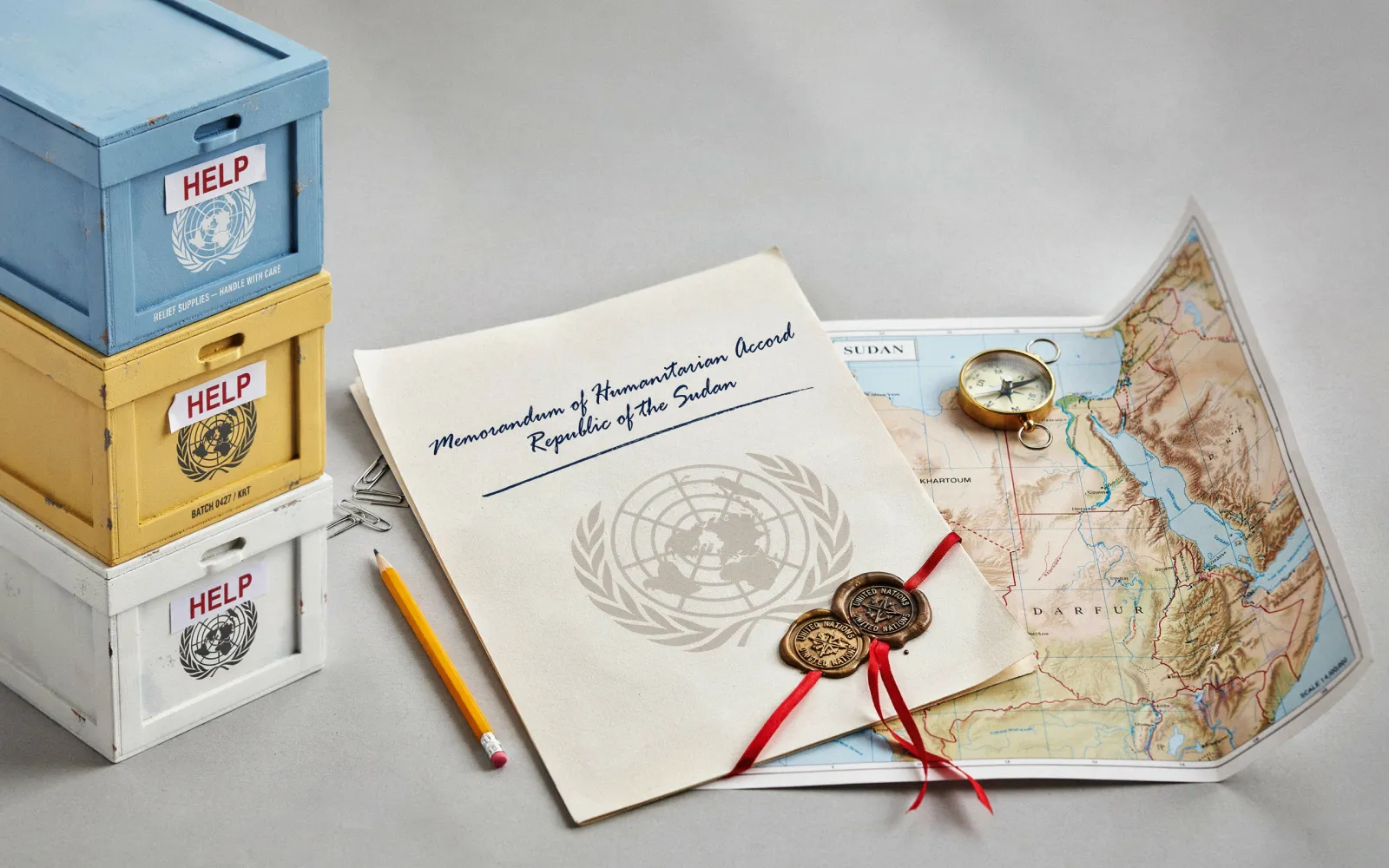
On 8 June 2026, a coalition of countries and multilateral bodies released a joint statement that underscored a shared pledge to Sudan’s people and to a peaceful, democratic, and stable future for the country.
The declaration was signed by Belgium, France, Germany, Greece, Italy, Norway, the United Kingdom, the United States, the African Union, the European Union, the Intergovernmental Authority on Development (IGAD), the League of Arab States, and the United Nations. The signatories expressed deep concern over the humanitarian toll of the Sudanese civil war, which erupted on 15 April 2023 after a power struggle between the Sudanese Armed Forces (SAF) under General Abdel Fattah al‑Burhan and the Rapid Support Forces (RSF) led by General Muhammad Hamdan Dagalo.
According to United Nations reports, more than 20 million people now need food assistance, 21 million require broader humanitarian aid, and 12 million have been displaced within Sudan. Of those displaced, 3.5 million have fled as refugees.
The coalition urges an immediate humanitarian truce that would pave the way for a permanent ceasefire. It cites the Berlin Conference held on 15 April 2026, where 22 countries and organizations adopted the “Berlin Principles for Sudan.” The conference also produced a “Joint Call to End the War and Advance a Sudanese‑Owned Political Process,” facilitated by the Quintet—comprising the AU, IGAD, LAS, EU, and UN.
Central to the statement is the insistence that the conflict cannot be resolved militarily. It calls for a swift, time‑bound civilian track that culminates in a civilian‑led transition. The coalition stresses that the transition must be inclusive, independent, and free from extremist or single‑party control. It welcomes the Quintet’s plans to launch a comprehensive dialogue within the next few weeks, with a target of concluding the process within six months.
The dialogue is to bring together a broad spectrum of Sudanese actors, including civil society, women’s groups, youth, and representatives from the country’s diverse regions. The statement stresses that the process must be transparent, credible, and free from coercion. It also notes that the outcome should establish a clear pathway toward an independent civilian‑led government that is accountable, respects human rights, and is determined by the Sudanese people.
The coalition warns that those who seek to undermine the civilian transition may face international measures. It reaffirms its commitment to continued coordination to end the conflict, alleviate suffering, and support Sudan’s peaceful transition. The declaration was published on 8 June 2026.
The joint statement arrives amid a humanitarian crisis that the United Nations has described as the world’s worst. The conflict has triggered widespread famine, with the Global Famine Review Committee reporting in August 2025 that IPC Phase 5 famine conditions were possible in North Darfur. The United Nations and other agencies have documented systematic attacks on civilians, destruction of infrastructure, and severe restrictions on humanitarian access.
The international community’s call for a civilian‑led dialogue follows years of failed ceasefire attempts. The 2023 Jeddah Declaration, the 2024 Paris and 2025 London conferences, and the 2026 Berlin conference all sought to build consensus on a political solution. The current statement consolidates those efforts and places the Sudanese people at the center of the process.
In short, the coalition’s declaration underscores that a durable end to the Sudanese war requires a civilian‑led transition, backed by a humanitarian truce and sustained international support. The next steps involve the Quintet’s preparation of the dialogue, the establishment of benchmarks, and the monitoring of progress toward a civilian‑led government.
The declaration was signed by Belgium, France, Germany, Greece, Italy, Norway, the United Kingdom, the United States, the African Union, the European Union, the Intergovernmental Authority on Development (IGAD), the League of Arab States, and the United Nations. The signatories expressed deep concern over the humanitarian toll of the Sudanese civil war, which erupted on 15 April 2023 after a power struggle between the Sudanese Armed Forces (SAF) under General Abdel Fattah al‑Burhan and the Rapid Support Forces (RSF) led by General Muhammad Hamdan Dagalo.
According to United Nations reports, more than 20 million people now need food assistance, 21 million require broader humanitarian aid, and 12 million have been displaced within Sudan. Of those displaced, 3.5 million have fled as refugees.
The coalition urges an immediate humanitarian truce that would pave the way for a permanent ceasefire. It cites the Berlin Conference held on 15 April 2026, where 22 countries and organizations adopted the “Berlin Principles for Sudan.” The conference also produced a “Joint Call to End the War and Advance a Sudanese‑Owned Political Process,” facilitated by the Quintet—comprising the AU, IGAD, LAS, EU, and UN.
Central to the statement is the insistence that the conflict cannot be resolved militarily. It calls for a swift, time‑bound civilian track that culminates in a civilian‑led transition. The coalition stresses that the transition must be inclusive, independent, and free from extremist or single‑party control. It welcomes the Quintet’s plans to launch a comprehensive dialogue within the next few weeks, with a target of concluding the process within six months.
The dialogue is to bring together a broad spectrum of Sudanese actors, including civil society, women’s groups, youth, and representatives from the country’s diverse regions. The statement stresses that the process must be transparent, credible, and free from coercion. It also notes that the outcome should establish a clear pathway toward an independent civilian‑led government that is accountable, respects human rights, and is determined by the Sudanese people.
The coalition warns that those who seek to undermine the civilian transition may face international measures. It reaffirms its commitment to continued coordination to end the conflict, alleviate suffering, and support Sudan’s peaceful transition. The declaration was published on 8 June 2026.
The joint statement arrives amid a humanitarian crisis that the United Nations has described as the world’s worst. The conflict has triggered widespread famine, with the Global Famine Review Committee reporting in August 2025 that IPC Phase 5 famine conditions were possible in North Darfur. The United Nations and other agencies have documented systematic attacks on civilians, destruction of infrastructure, and severe restrictions on humanitarian access.
The international community’s call for a civilian‑led dialogue follows years of failed ceasefire attempts. The 2023 Jeddah Declaration, the 2024 Paris and 2025 London conferences, and the 2026 Berlin conference all sought to build consensus on a political solution. The current statement consolidates those efforts and places the Sudanese people at the center of the process.
In short, the coalition’s declaration underscores that a durable end to the Sudanese war requires a civilian‑led transition, backed by a humanitarian truce and sustained international support. The next steps involve the Quintet’s preparation of the dialogue, the establishment of benchmarks, and the monitoring of progress toward a civilian‑led government.