Blab Politics
Pope Leo XIV Addresses Spanish Parliament, Calls for Migrant Rights and International Law
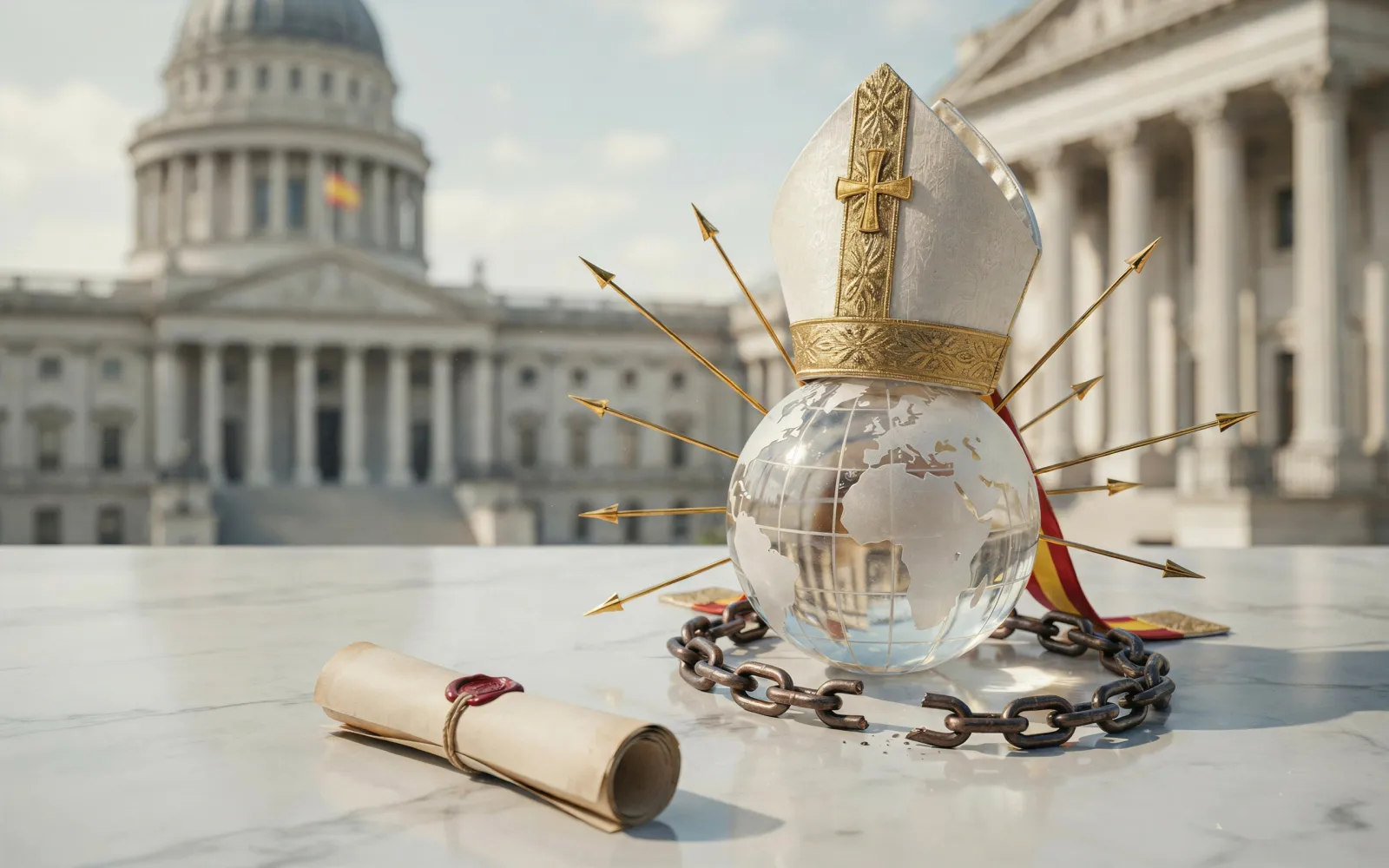
Pope Leo XIV addressed Spain’s Cortes Generales on Monday, a historic first for the Catholic Church in a country that has grown increasingly secular since the 1970s. The speech, delivered during a week‑long visit that drew up to 1.5 million people to a Mass in Madrid and 600,000 young people to a prayer vigil, urged lawmakers to respect migrants’ rights and uphold international law.
When the pope finished speaking, the chamber erupted in a standing ovation and the echo of “Viva el Papa” rang through the hall. The applause signals a new level of acceptance for the Church in Spain, where its influence had waned after democracy was established in the 1970s, even as it had once been a pillar of Franco’s dictatorship.
Leo called for a “moral renewal” in both legislatures and public life, insisting that a nation’s greatness is measured by how it accompanies, protects, and loves the most fragile among its people—including migrants, the unborn, and the vulnerable. He warned that decisions about life and death must never be left to automated systems and urged Spain to maintain rigorous ethical oversight of artificial‑intelligence‑driven weapons.
The pope also cautioned against the escalating conflict between Israel and Iran, urging states to seek peaceful solutions. He expressed concern about Europe’s defense budgets and rearmament in the wake of Russia’s invasion of Ukraine.
Migration remained the centerpiece of Leo’s address. He praised the Socialist‑led government’s push to legalize unauthorized immigrants, arguing that immigration is both an economic and humanitarian necessity. He called for stronger international cooperation to curb smuggling and for conditions that enable migrants to remain in their home countries. In a nod to Spain’s legal heritage, Leo referenced the School of Salamanca, highlighting its role in shaping concepts of international law and human rights.
The visit comes at a time when Prime Minister Pedro Sánchez faces corruption investigations and growing political polarization. Sánchez has struggled to pass legislation, including a budget, and has been criticized for probes involving close associates. The pope’s message about unity and the need to avoid constant disparagement of adversaries resonated with Sánchez, who has described Leo as a moral compass.
Leo also issued an apology for the Church’s historical role in legitimizing slavery during the trans‑Atlantic slave trade, acknowledging that the institution had not always lived up to its Christian tradition. This apology follows a recent statement by the Holy See.
The address marked a milestone in Vatican‑Spain relations, underscoring the pope’s focus on migration, international law, AI ethics, and political unity. The speech was followed by a standing ovation and chants of “Viva el Papa” from lawmakers. The pope’s visit continues as he meets with various groups across Spain, including migrants and the homeless.
When the pope finished speaking, the chamber erupted in a standing ovation and the echo of “Viva el Papa” rang through the hall. The applause signals a new level of acceptance for the Church in Spain, where its influence had waned after democracy was established in the 1970s, even as it had once been a pillar of Franco’s dictatorship.
Leo called for a “moral renewal” in both legislatures and public life, insisting that a nation’s greatness is measured by how it accompanies, protects, and loves the most fragile among its people—including migrants, the unborn, and the vulnerable. He warned that decisions about life and death must never be left to automated systems and urged Spain to maintain rigorous ethical oversight of artificial‑intelligence‑driven weapons.
The pope also cautioned against the escalating conflict between Israel and Iran, urging states to seek peaceful solutions. He expressed concern about Europe’s defense budgets and rearmament in the wake of Russia’s invasion of Ukraine.
Migration remained the centerpiece of Leo’s address. He praised the Socialist‑led government’s push to legalize unauthorized immigrants, arguing that immigration is both an economic and humanitarian necessity. He called for stronger international cooperation to curb smuggling and for conditions that enable migrants to remain in their home countries. In a nod to Spain’s legal heritage, Leo referenced the School of Salamanca, highlighting its role in shaping concepts of international law and human rights.
The visit comes at a time when Prime Minister Pedro Sánchez faces corruption investigations and growing political polarization. Sánchez has struggled to pass legislation, including a budget, and has been criticized for probes involving close associates. The pope’s message about unity and the need to avoid constant disparagement of adversaries resonated with Sánchez, who has described Leo as a moral compass.
Leo also issued an apology for the Church’s historical role in legitimizing slavery during the trans‑Atlantic slave trade, acknowledging that the institution had not always lived up to its Christian tradition. This apology follows a recent statement by the Holy See.
The address marked a milestone in Vatican‑Spain relations, underscoring the pope’s focus on migration, international law, AI ethics, and political unity. The speech was followed by a standing ovation and chants of “Viva el Papa” from lawmakers. The pope’s visit continues as he meets with various groups across Spain, including migrants and the homeless.