Blab Politics
Chicago Council Faces Petition to Rename Wabash Avenue After Trump Tower
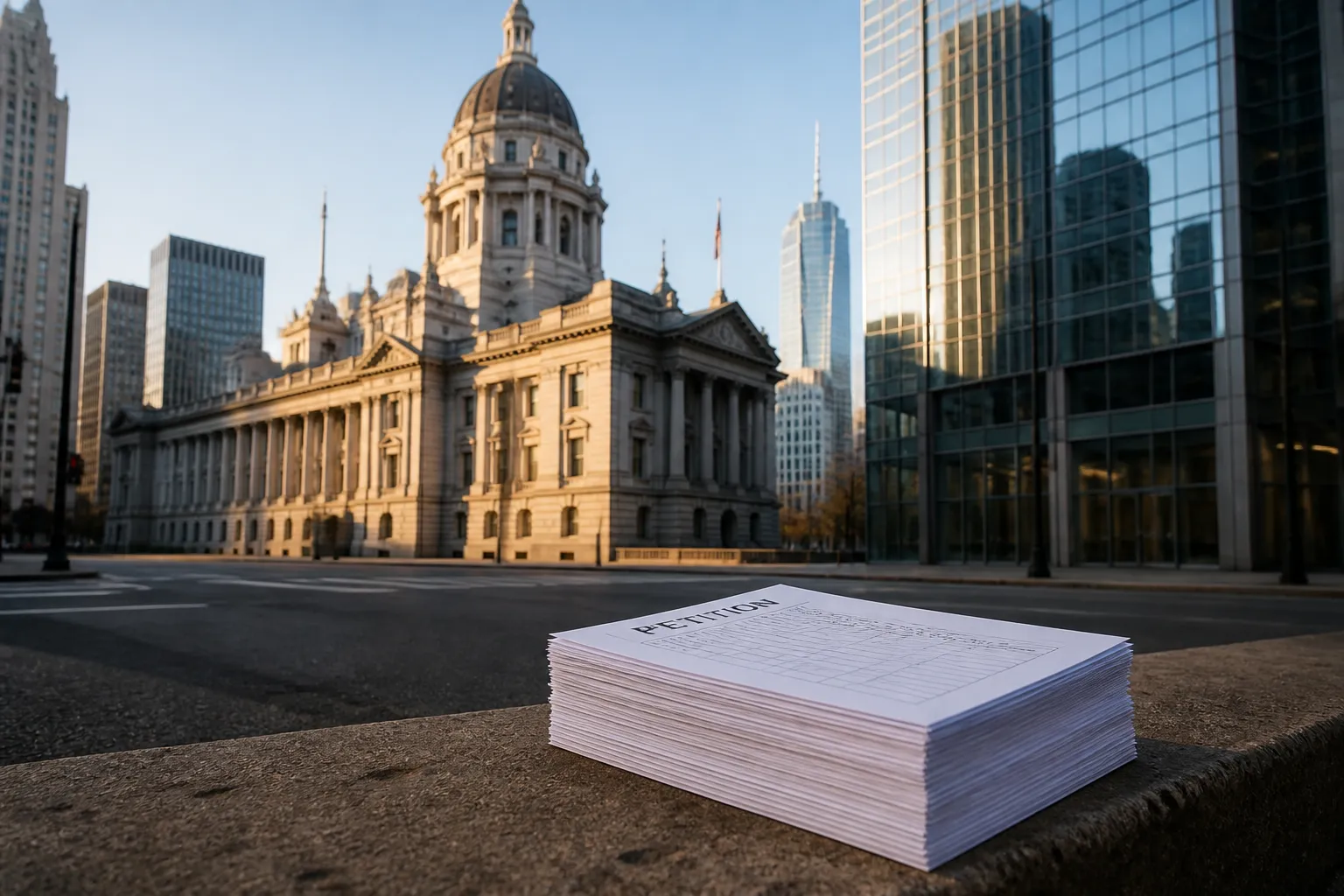
When a 30,000‑signature petition threatens to rename a bustling stretch of North Wabash Avenue, the city’s streets become a battleground for legacy, commerce, and public memory.
The movement, launched by resident Bryce Jones, has collected more than 30,000 signatures on Change.org. Petitioners argue that the current name—tied to a private real‑estate developer—should be replaced with Barack Hussein Obama Avenue, honoring the former president who will soon open a major public project in the city.
Alderman Brendan Reilly has taken the online call to the city council by introducing a resolution that would grant the street an honorary designation. The resolution is now before the Committee on Pedestrian and Traffic Safety, which must decide whether the proposal can be amended to comply with Chicago’s municipal code. That code traditionally bars honorary street names for living people, a rule that would apply to President Obama.
The timing of the petition is linked to the Obama Presidential Center, a 19‑acre campus set to open on June 20‑21, 2026, in Jackson Park. The center will feature a museum, library, and community spaces and is billed as the most expensive and architecturally ambitious presidential project in U.S. history. The foundation stresses the center’s role in community engagement.
Supporters of the name change claim the gesture would reflect values of hope and inclusivity, standing in contrast to the “real‑estate branding” they associate with Trump Tower. Jones wrote that the change would “immortalize small acts of resistance in our cityscape,” framing the effort as a grassroots reclaiming of public space.
The proposal has drawn national attention. President Trump has used social media to denounce the Obama Center’s design, calling it a “total disaster” and sharing an AI‑generated image depicting the campus overrun by garbage and encampments. He also posted a graphic that portrayed Barack and Michelle Obama as monkeys, a post that sparked widespread condemnation.
Trump’s attacks are part of a long‑standing hostility toward the former president. The feud began in 2008 with the “birther” conspiracy theory, intensified after the 2011 White House Correspondents’ Dinner when Obama mocked Trump, and has since become a stated goal of Trump’s administration to dismantle Obama’s legacy.
In contrast, officials at the Obama Foundation have opted for a dignified response. CEO Valerie Jarrett invited Trump to visit the new center and offered a personal tour, arguing that experiencing the campus firsthand would clarify its purpose.
Chicago’s decision on the street‑name petition will set a precedent for how the city handles honorary naming for living figures. If the council approves the resolution, it would become the first instance in the city’s history where a living person’s name is used for a street. If rejected, petitioners may pursue alternative avenues, such as a memorial plaque or a separate public space naming.
The outcome will be decided in the coming weeks as the Committee on Pedestrian and Traffic Safety reviews the resolution. The city council will then vote on the final ordinance, after which the Chicago Office of the City Clerk would issue the official name change if approved.
The debate over North Wabash Avenue underscores a broader cultural conversation about how public spaces honor historical figures and how private development intersects with civic identity. The city’s next steps will determine whether the street will carry a name that reflects the legacy of a former president or remain tied to its current commercial association.
The movement, launched by resident Bryce Jones, has collected more than 30,000 signatures on Change.org. Petitioners argue that the current name—tied to a private real‑estate developer—should be replaced with Barack Hussein Obama Avenue, honoring the former president who will soon open a major public project in the city.
Alderman Brendan Reilly has taken the online call to the city council by introducing a resolution that would grant the street an honorary designation. The resolution is now before the Committee on Pedestrian and Traffic Safety, which must decide whether the proposal can be amended to comply with Chicago’s municipal code. That code traditionally bars honorary street names for living people, a rule that would apply to President Obama.
The timing of the petition is linked to the Obama Presidential Center, a 19‑acre campus set to open on June 20‑21, 2026, in Jackson Park. The center will feature a museum, library, and community spaces and is billed as the most expensive and architecturally ambitious presidential project in U.S. history. The foundation stresses the center’s role in community engagement.
Supporters of the name change claim the gesture would reflect values of hope and inclusivity, standing in contrast to the “real‑estate branding” they associate with Trump Tower. Jones wrote that the change would “immortalize small acts of resistance in our cityscape,” framing the effort as a grassroots reclaiming of public space.
The proposal has drawn national attention. President Trump has used social media to denounce the Obama Center’s design, calling it a “total disaster” and sharing an AI‑generated image depicting the campus overrun by garbage and encampments. He also posted a graphic that portrayed Barack and Michelle Obama as monkeys, a post that sparked widespread condemnation.
Trump’s attacks are part of a long‑standing hostility toward the former president. The feud began in 2008 with the “birther” conspiracy theory, intensified after the 2011 White House Correspondents’ Dinner when Obama mocked Trump, and has since become a stated goal of Trump’s administration to dismantle Obama’s legacy.
In contrast, officials at the Obama Foundation have opted for a dignified response. CEO Valerie Jarrett invited Trump to visit the new center and offered a personal tour, arguing that experiencing the campus firsthand would clarify its purpose.
Chicago’s decision on the street‑name petition will set a precedent for how the city handles honorary naming for living figures. If the council approves the resolution, it would become the first instance in the city’s history where a living person’s name is used for a street. If rejected, petitioners may pursue alternative avenues, such as a memorial plaque or a separate public space naming.
The outcome will be decided in the coming weeks as the Committee on Pedestrian and Traffic Safety reviews the resolution. The city council will then vote on the final ordinance, after which the Chicago Office of the City Clerk would issue the official name change if approved.
The debate over North Wabash Avenue underscores a broader cultural conversation about how public spaces honor historical figures and how private development intersects with civic identity. The city’s next steps will determine whether the street will carry a name that reflects the legacy of a former president or remain tied to its current commercial association.