Blab Politics
Senate Commerce Committee Advances Bipartisan Bill to Regulate College Sports
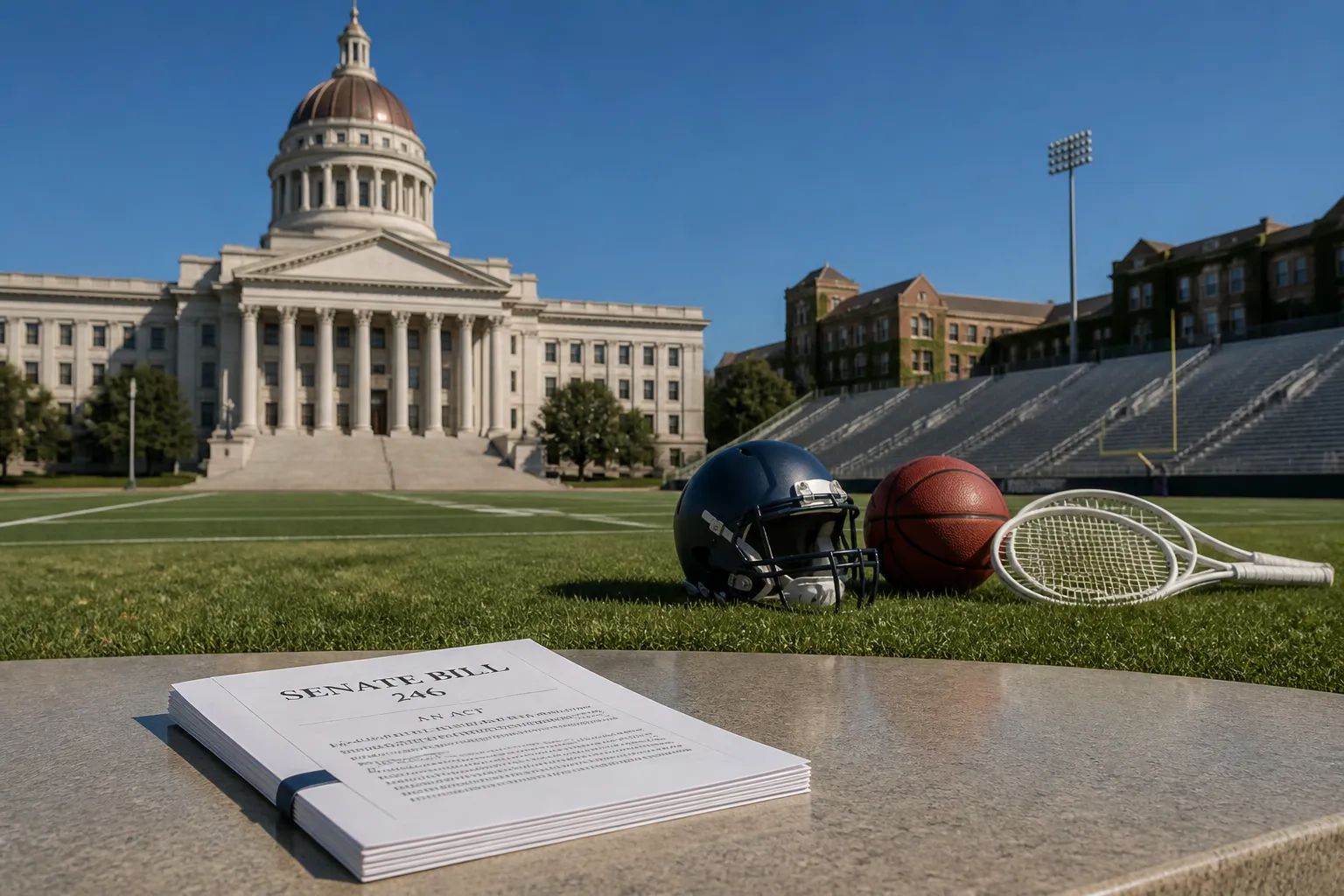
In a decisive move, the Senate Commerce, Science and Transportation Committee advanced the Protect College Sports Act of 2026 to the full Senate floor for debate in July. The measure, which passed the committee with a 19‑9 vote, seeks to impose federal standards on the college athletics industry—a sector lawmakers describe as “increasingly chaotic.”
The bill, as outlined in the committee’s press release, creates a uniform national framework for name‑image‑likeness (NIL) compensation, dissolving the current patchwork of state‑level rules. It caps player mobility to one transfer in any five‑year span, ensuring no competitive penalty, and introduces antitrust safeguards designed to stop large programs from leveraging booster networks to outbid smaller schools for recruits.
Senators Ted Cruz (R‑TX) and Maria Cantwell (D‑WA) brought the bill to life, with backing from Eric Schmitt (R‑MO) and Chris Coons (D‑DE). Cruz called the measure “the last, best hope” to protect college sports, while Cantwell stressed the necessity of a federal standard that would safeguard student‑athletes and maintain competitive balance.
The bill faces cross‑party resistance. Senator Cory Booker (D‑NJ), the Senate’s lone former Division I athlete, argues that the NCAA has long exploited athletes and that federal intervention would fail to address the root issues. Booker’s position echoes that of former Auburn and Ole Miss head coach Tommy Tuberville (R‑AL), who warned the legislation would constitute federal overreach, likening it to the Affordable Care Act.
Athletic conferences that command the bulk of television revenue have also taken a cautious stance. The SEC and Big Ten, which collectively control the lion’s share of broadcast income, warned that federal regulation could erode their negotiating power and fragment the media landscape. An Associated Press report notes that conference officials fear the legislation might spur the formation of a new “mega‑conference,” sidelining traditional universities.
The NCAA, the long‑standing steward of college athletics, has acknowledged its limited capacity to regulate the contemporary NIL landscape. In a May statement, the organization said it had lobbied Congress for intervention, noting that recent court rulings and the surge of commercial interests have weakened its enforcement mechanisms.
The bill also tackles the transfer portal, a system critics say fuels a “carousel” of player movement. Former Alabama head coach Nick Saban, who testified before the committee, underscored the absence of regulation over sports agents and the instability it brings to teams.
Beyond the sport’s insiders, the legislation could affect everyday fans. Senators Amy Klobuchar (D‑MN) and Tammy Baldwin (D‑WI) cautioned that a corporate‑driven model might raise broadcast costs and push games behind paywalls, complicating access for families relying on basic television.
The Senate’s summer docket is packed with national‑security and intelligence issues, prompting lawmakers to weigh the bill’s urgency against other priorities. The House has already stalled on comparable legislation, withdrawing two college‑sports bills earlier this year due to insufficient backing.
With the bill now slated for floor debate, lawmakers will soon deliberate, amend, and vote on it. Should it pass, the Protect College Sports Act would stand as the first federal law governing the entire college‑athletics industry, imposing new standards for NIL compensation, player mobility, and antitrust enforcement. The decision would reverberate across the sport, redefining the NCAA’s role and reshaping the financial landscape for universities, athletes, and fans.
Today, the bill has cleared the Senate Commerce Committee and is set for a July debate on the Senate floor. No full‑Senate vote has yet occurred, and its fate remains uncertain amid competing legislative priorities and a divided congressional view.
The bill, as outlined in the committee’s press release, creates a uniform national framework for name‑image‑likeness (NIL) compensation, dissolving the current patchwork of state‑level rules. It caps player mobility to one transfer in any five‑year span, ensuring no competitive penalty, and introduces antitrust safeguards designed to stop large programs from leveraging booster networks to outbid smaller schools for recruits.
Senators Ted Cruz (R‑TX) and Maria Cantwell (D‑WA) brought the bill to life, with backing from Eric Schmitt (R‑MO) and Chris Coons (D‑DE). Cruz called the measure “the last, best hope” to protect college sports, while Cantwell stressed the necessity of a federal standard that would safeguard student‑athletes and maintain competitive balance.
The bill faces cross‑party resistance. Senator Cory Booker (D‑NJ), the Senate’s lone former Division I athlete, argues that the NCAA has long exploited athletes and that federal intervention would fail to address the root issues. Booker’s position echoes that of former Auburn and Ole Miss head coach Tommy Tuberville (R‑AL), who warned the legislation would constitute federal overreach, likening it to the Affordable Care Act.
Athletic conferences that command the bulk of television revenue have also taken a cautious stance. The SEC and Big Ten, which collectively control the lion’s share of broadcast income, warned that federal regulation could erode their negotiating power and fragment the media landscape. An Associated Press report notes that conference officials fear the legislation might spur the formation of a new “mega‑conference,” sidelining traditional universities.
The NCAA, the long‑standing steward of college athletics, has acknowledged its limited capacity to regulate the contemporary NIL landscape. In a May statement, the organization said it had lobbied Congress for intervention, noting that recent court rulings and the surge of commercial interests have weakened its enforcement mechanisms.
The bill also tackles the transfer portal, a system critics say fuels a “carousel” of player movement. Former Alabama head coach Nick Saban, who testified before the committee, underscored the absence of regulation over sports agents and the instability it brings to teams.
Beyond the sport’s insiders, the legislation could affect everyday fans. Senators Amy Klobuchar (D‑MN) and Tammy Baldwin (D‑WI) cautioned that a corporate‑driven model might raise broadcast costs and push games behind paywalls, complicating access for families relying on basic television.
The Senate’s summer docket is packed with national‑security and intelligence issues, prompting lawmakers to weigh the bill’s urgency against other priorities. The House has already stalled on comparable legislation, withdrawing two college‑sports bills earlier this year due to insufficient backing.
With the bill now slated for floor debate, lawmakers will soon deliberate, amend, and vote on it. Should it pass, the Protect College Sports Act would stand as the first federal law governing the entire college‑athletics industry, imposing new standards for NIL compensation, player mobility, and antitrust enforcement. The decision would reverberate across the sport, redefining the NCAA’s role and reshaping the financial landscape for universities, athletes, and fans.
Today, the bill has cleared the Senate Commerce Committee and is set for a July debate on the Senate floor. No full‑Senate vote has yet occurred, and its fate remains uncertain amid competing legislative priorities and a divided congressional view.