Blab Politics
Canadas Defense Future: Rethinking NORAD in a Changing Threat Landscape
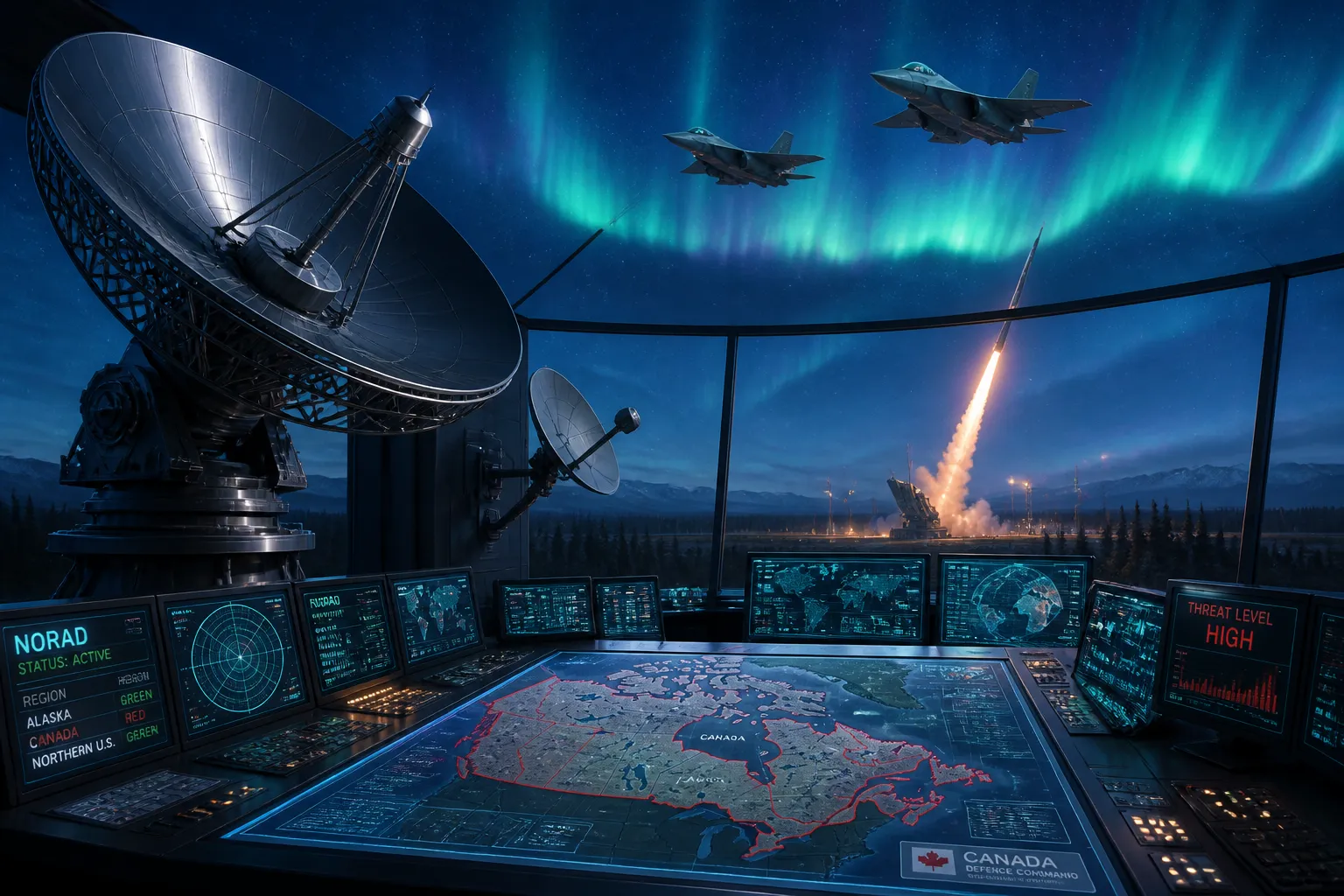
When the Cold War’s icy skies threatened the North, a partnership was forged in 1957 that would become the backbone of continental air defense. North American Aerospace Defense Command, or NORAD, was born from a bi‑national agreement between Canada and the United States to watch over and protect North American airspace.
The command’s nerve center sits at Peterson Space Force Base in Colorado, with a secondary stronghold in the Cheyenne Mountain Complex. Over the decades, NORAD’s remit grew: it added maritime warning, launched domestic air patrols, and, after the September 11 attacks, expanded into counter‑terrorism surveillance.
Today, Canada is reshaping its military for a new era. In June 2026, Defence Minister Anita Anand announced a $4.9 billion, six‑year program to modernize NORAD’s infrastructure. The plan upgrades the North Warning System and installs an Over‑the‑Horizon (OTH) radar network across southern Ontario farmland. In tandem, Canada is forging an OTH partnership with Australia, extending its domain awareness farther into the Pacific.
Yet analysts point out that the original raison d’être for NORAD—Soviet bomber raids over the polar region—has largely vanished. The Russian bomber fleet has been pared down, and the most immediate threats now stem from hypersonic cruise missiles such as the Kh‑47M2 Kinzhal. These weapons can be launched from submarines, aircraft, or surface ships and travel 1,500–2,000 km, reaching North American targets without ever crossing Canadian airspace.
The threat spectrum has broadened further. Long‑range attack drones, cyber assaults on critical infrastructure, sabotage, and hybrid warfare tactics now sit alongside hypersonics. Canada’s existing defense assets are not optimally configured to counter these challenges, and the United States cannot, on its own, fill the gaps.
In light of these shifts, some Canadian policymakers are calling for a “managed divorce” from the traditional NORAD framework. The idea is to preserve the core early‑warning function—joint detection of attacks on North America—while pivoting Canada’s defense posture toward NATO’s Arctic and Euro‑Atlantic missions. A NATO‑centric approach would let Canada contribute sovereign capabilities such as its own early‑warning radar, intelligence gathering, and maritime surveillance, all while maintaining close ties with the United States.
The United States has voiced concerns that any reconfiguration could dilute its dominant role in continental defense. In 2025, the U.S. Department of Defense paused the Permanent Joint Board of Defense, a high‑level planning body that predates NORAD, citing criticism of Canada’s defense spending and a perceived lack of a clear long‑term plan. Washington also warned that if Canada does not procure the full complement of U‑35 fighter jets for NORAD, U.S. aircraft may need to operate more extensively in Canadian airspace.
Proponents argue that a more balanced partnership would benefit both sides. Canada would gain greater control over its own defense assets, while the United States would enjoy a stronger NATO presence in the Arctic and North Atlantic. The shift would also align Canada’s defense strategy with its broader foreign policy goals—an expanded role in the Arctic and a clearer stance on sovereignty.
The debate remains in its infancy. No official decision has been taken, and the Canadian government has yet to outline a concrete transition plan. Still, the ongoing radar modernization, the growing emphasis on NATO’s Arctic Sentry mission, and the evolving missile threat signal that Canada is actively reassessing its continental defense role.
At present, Canada remains a key partner in NORAD’s early‑warning network, and the United States continues to rely on Canadian facilities for airspace monitoring. Whether Canada will ultimately pivot to a NATO‑centric defense posture remains to be seen, but the conversation about sovereignty, strategic relevance, and the changing threat environment is already underway.
The command’s nerve center sits at Peterson Space Force Base in Colorado, with a secondary stronghold in the Cheyenne Mountain Complex. Over the decades, NORAD’s remit grew: it added maritime warning, launched domestic air patrols, and, after the September 11 attacks, expanded into counter‑terrorism surveillance.
Today, Canada is reshaping its military for a new era. In June 2026, Defence Minister Anita Anand announced a $4.9 billion, six‑year program to modernize NORAD’s infrastructure. The plan upgrades the North Warning System and installs an Over‑the‑Horizon (OTH) radar network across southern Ontario farmland. In tandem, Canada is forging an OTH partnership with Australia, extending its domain awareness farther into the Pacific.
Yet analysts point out that the original raison d’être for NORAD—Soviet bomber raids over the polar region—has largely vanished. The Russian bomber fleet has been pared down, and the most immediate threats now stem from hypersonic cruise missiles such as the Kh‑47M2 Kinzhal. These weapons can be launched from submarines, aircraft, or surface ships and travel 1,500–2,000 km, reaching North American targets without ever crossing Canadian airspace.
The threat spectrum has broadened further. Long‑range attack drones, cyber assaults on critical infrastructure, sabotage, and hybrid warfare tactics now sit alongside hypersonics. Canada’s existing defense assets are not optimally configured to counter these challenges, and the United States cannot, on its own, fill the gaps.
In light of these shifts, some Canadian policymakers are calling for a “managed divorce” from the traditional NORAD framework. The idea is to preserve the core early‑warning function—joint detection of attacks on North America—while pivoting Canada’s defense posture toward NATO’s Arctic and Euro‑Atlantic missions. A NATO‑centric approach would let Canada contribute sovereign capabilities such as its own early‑warning radar, intelligence gathering, and maritime surveillance, all while maintaining close ties with the United States.
The United States has voiced concerns that any reconfiguration could dilute its dominant role in continental defense. In 2025, the U.S. Department of Defense paused the Permanent Joint Board of Defense, a high‑level planning body that predates NORAD, citing criticism of Canada’s defense spending and a perceived lack of a clear long‑term plan. Washington also warned that if Canada does not procure the full complement of U‑35 fighter jets for NORAD, U.S. aircraft may need to operate more extensively in Canadian airspace.
Proponents argue that a more balanced partnership would benefit both sides. Canada would gain greater control over its own defense assets, while the United States would enjoy a stronger NATO presence in the Arctic and North Atlantic. The shift would also align Canada’s defense strategy with its broader foreign policy goals—an expanded role in the Arctic and a clearer stance on sovereignty.
The debate remains in its infancy. No official decision has been taken, and the Canadian government has yet to outline a concrete transition plan. Still, the ongoing radar modernization, the growing emphasis on NATO’s Arctic Sentry mission, and the evolving missile threat signal that Canada is actively reassessing its continental defense role.
At present, Canada remains a key partner in NORAD’s early‑warning network, and the United States continues to rely on Canadian facilities for airspace monitoring. Whether Canada will ultimately pivot to a NATO‑centric defense posture remains to be seen, but the conversation about sovereignty, strategic relevance, and the changing threat environment is already underway.