Blab Politics
Chicago Welcomes Barack Obama Presidential Center on Juneteenth
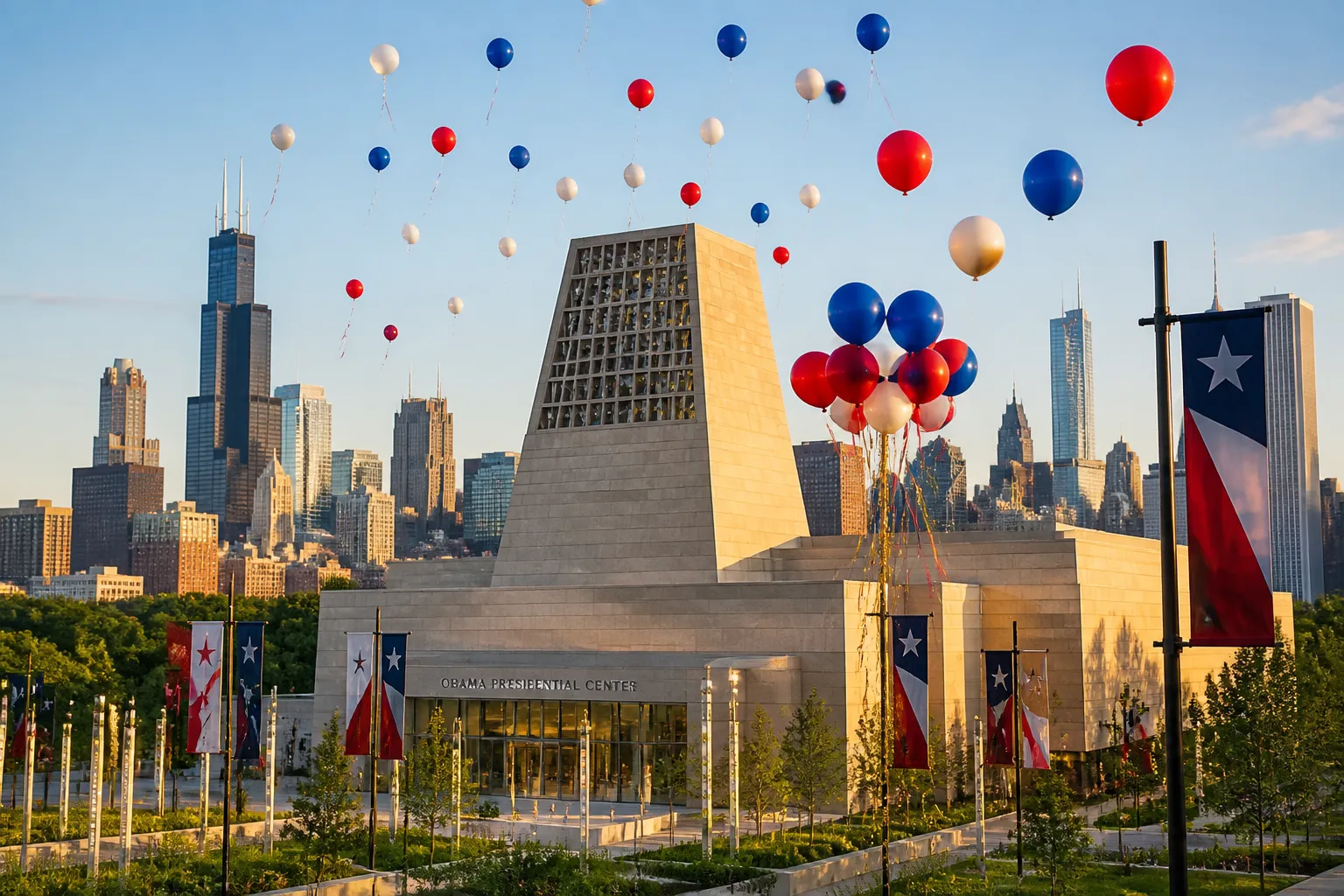
On June 19, 2026, the city of Chicago opened the Barack Obama Presidential Center to the public, a day after the formal dedication on June 18. The event, held on the 19.3‑acre campus in Jackson Park on the South Side, was timed to coincide with Juneteenth, the holiday that marks the emancipation of enslaved people in the United States. The alignment of the opening with this moment of remembrance underscores the center’s mission to advance equity, inclusion, and democratic participation.
The campus, located just north of the University of Chicago, houses a museum, a library, community and conference facilities, a branch of the Chicago Public Library, and an athletic complex. The design blends landscaped public park space, gardens, and a playground, creating a welcoming environment that critics have praised for its harmony with the historic setting of Jackson Park.
The idea for the center began when President Barack Obama chose the site in 2014. Over more than a decade of planning, design, and construction, the Obama Foundation has turned the vision into reality. A key feature announced by the foundation is a fully digitized presidential library, created in partnership with the National Archives and Records Administration (NARA). While NARA will loan many documents and artifacts for display, the originals will be archived at a separate facility.
The opening day was a free, open‑house celebration that drew thousands of visitors. Dignitaries, community leaders, and school groups gathered at John Lewis Plaza, the main entrance, where President Obama and First Lady Michelle Obama delivered speeches. The ceremony was enlivened by performances from Bruce Springsteen, The Roots, and other artists, and the proceedings were livestreamed to a broader audience. The grand opening weekend, which ran from June 19 to 21, saw even more crowds exploring the new campus.
The center’s construction cost has risen dramatically—from an initial estimate of $330 million to $830 million, according to a Fox News report. Some residents of the South Side have voiced concerns that the development could accelerate displacement and gentrification. In response, the Obama Foundation and the City of Chicago have emphasized that the center will bring cultural, educational, and economic benefits to the community.
According to the center’s website, the campus is projected to attract more than 700,000 visitors annually, including school field trips, university students, and tourists. The museum’s exhibits are described as an “honest assessment” of Obama’s presidency, while the community and conference spaces are intended to nurture future civic leaders.
The dedication ceremony on June 18 was framed by the Obama Foundation as a “celebration of community, creativity, and joy.” Attendees included local officials, university faculty and alumni, and representatives from the Chicago Public Library system. The foundation’s design choices—integrating landscaped public park, gardens, and a playground—were highlighted as enhancing the historic Jackson Park setting.
The Barack Obama Presidential Center is the latest addition to the nation’s roster of presidential memorials, following earlier projects such as the Lincoln Memorial and the Kennedy Center. It is intended as a place where the public can learn about the presidency, engage in civic education, and participate in community events.
Looking ahead, the Obama Foundation plans to host educational programs, leadership workshops, and public forums. The Chicago Public Library branch on campus will offer free access to books, digital resources, and community meeting rooms. While the center is already open, the full range of its programs and exhibits will roll out over the coming months. Additional features—such as a digital archive and interactive learning spaces—will be added as funding and construction progress.
The opening of the Barack Obama Presidential Center marks a milestone for Chicago and for the national effort to preserve presidential history. It also highlights the ongoing conversation about how large cultural projects can balance community benefits with concerns about cost and displacement. The center will remain open to the public with free admission and scheduled tours, and the Obama Foundation will continue to coordinate with the City of Chicago, the University of Chicago, and local community groups to ensure the center serves the South Side’s residents and visitors alike.
The campus, located just north of the University of Chicago, houses a museum, a library, community and conference facilities, a branch of the Chicago Public Library, and an athletic complex. The design blends landscaped public park space, gardens, and a playground, creating a welcoming environment that critics have praised for its harmony with the historic setting of Jackson Park.
The idea for the center began when President Barack Obama chose the site in 2014. Over more than a decade of planning, design, and construction, the Obama Foundation has turned the vision into reality. A key feature announced by the foundation is a fully digitized presidential library, created in partnership with the National Archives and Records Administration (NARA). While NARA will loan many documents and artifacts for display, the originals will be archived at a separate facility.
The opening day was a free, open‑house celebration that drew thousands of visitors. Dignitaries, community leaders, and school groups gathered at John Lewis Plaza, the main entrance, where President Obama and First Lady Michelle Obama delivered speeches. The ceremony was enlivened by performances from Bruce Springsteen, The Roots, and other artists, and the proceedings were livestreamed to a broader audience. The grand opening weekend, which ran from June 19 to 21, saw even more crowds exploring the new campus.
The center’s construction cost has risen dramatically—from an initial estimate of $330 million to $830 million, according to a Fox News report. Some residents of the South Side have voiced concerns that the development could accelerate displacement and gentrification. In response, the Obama Foundation and the City of Chicago have emphasized that the center will bring cultural, educational, and economic benefits to the community.
According to the center’s website, the campus is projected to attract more than 700,000 visitors annually, including school field trips, university students, and tourists. The museum’s exhibits are described as an “honest assessment” of Obama’s presidency, while the community and conference spaces are intended to nurture future civic leaders.
The dedication ceremony on June 18 was framed by the Obama Foundation as a “celebration of community, creativity, and joy.” Attendees included local officials, university faculty and alumni, and representatives from the Chicago Public Library system. The foundation’s design choices—integrating landscaped public park, gardens, and a playground—were highlighted as enhancing the historic Jackson Park setting.
The Barack Obama Presidential Center is the latest addition to the nation’s roster of presidential memorials, following earlier projects such as the Lincoln Memorial and the Kennedy Center. It is intended as a place where the public can learn about the presidency, engage in civic education, and participate in community events.
Looking ahead, the Obama Foundation plans to host educational programs, leadership workshops, and public forums. The Chicago Public Library branch on campus will offer free access to books, digital resources, and community meeting rooms. While the center is already open, the full range of its programs and exhibits will roll out over the coming months. Additional features—such as a digital archive and interactive learning spaces—will be added as funding and construction progress.
The opening of the Barack Obama Presidential Center marks a milestone for Chicago and for the national effort to preserve presidential history. It also highlights the ongoing conversation about how large cultural projects can balance community benefits with concerns about cost and displacement. The center will remain open to the public with free admission and scheduled tours, and the Obama Foundation will continue to coordinate with the City of Chicago, the University of Chicago, and local community groups to ensure the center serves the South Side’s residents and visitors alike.