Blab Politics
Secretary of Defense Pete Hegseths Controversial Policies Spark Debate Over Military Diversity and Religious Expression
A portrait of the Pentagon’s newest face‑off: Secretary Pete Hegseth’s visible tattoos and sweeping policy shifts have ignited a storm over diversity, religious expression, and leadership in the U.S. armed forces.
Hegseth, who took office in 2025, has become a lightning rod for criticism. His personal religious tattoos— a Jerusalem cross, the Latin phrase Deus Vult (“God wills it”), and an Arabic inscription meaning kafir (“non‑believer”)—have been highlighted by the Guardian and other outlets. The Deus Vult mark, historically tied to the First Crusade, has also been adopted by some contemporary extremist groups, while the Arabic symbol has been described as a “clear symbol of Islamophobia.” Hegseth maintains that the tattoos reflect his Christian faith and testify to the persecution he has faced for his religious and conservative beliefs.
During his time in the Minnesota Army National Guard, commanders cited Hegseth’s body art as a potential insider‑threat risk. They barred him from the security detail at President Biden’s 2021 inauguration. Current Department of Defense regulations state that visible tattoos bearing extremist or religious symbols can disqualify recruits and may lead to discipline for active‑duty personnel.
In February 2025, Hegseth publicly denounced the Department’s diversity, equity, and inclusion (DEI) initiatives, calling the phrase “diversity is our strength” the “single dumbest phrase in military history.” Following that statement, the Pentagon ordered the removal of all digital content that promoted DEI, including references to Black History Month, Women’s History Month, and the Navajo Code Talkers. Rolling Stone reported that the purge eliminated an estimated 26,000 to 100,000 pages and posts from DoD and Arlington National Cemetery websites.
The secretary’s tenure has also been marked by a rapid reshuffling of senior officers. In February 2025, he fired Air Force General Charles Q. Brown, the chairman of the Joint Chiefs of Staff, and removed Admiral Lisa Franchetti, the first woman to serve as the Navy’s top admiral. Additional removals included nine officers from the Navy’s original 31‑person promotion list, according to a New York Times report. Major General Randy George, the Army’s top general, retired effective immediately after Hegseth demanded his removal, as reported by Yahoo News. No performance issues have been documented for the officers removed.
Hegseth has also promoted a religious framing of U.S. foreign policy. In a briefing to Pentagon staff, he described the war against Iran as a holy war and a religious crusade. The Christian Science Monitor noted that his rhetoric aligns with Christian nationalism, an ideology that seeks to merge American identity with a specific conservative Christian worldview.
The cumulative effect of these actions has raised concerns about the treatment of marginalized groups in the armed forces. Reports indicate that the DoD has removed historical references to minority contributions, and that Afghan nationals who assisted U.S. forces face deportation despite prior assurances of safety. Transgender service members have been discharged or forced into early retirement, losing full pensions and benefits, according to a Common Dreams article.
Hegseth remains in office, and no legal challenges to his policies have been filed to date. The Department of Defense continues to implement its current diversity‑purge agenda, and senior‑officer appointments are being overseen by Hegseth’s office.
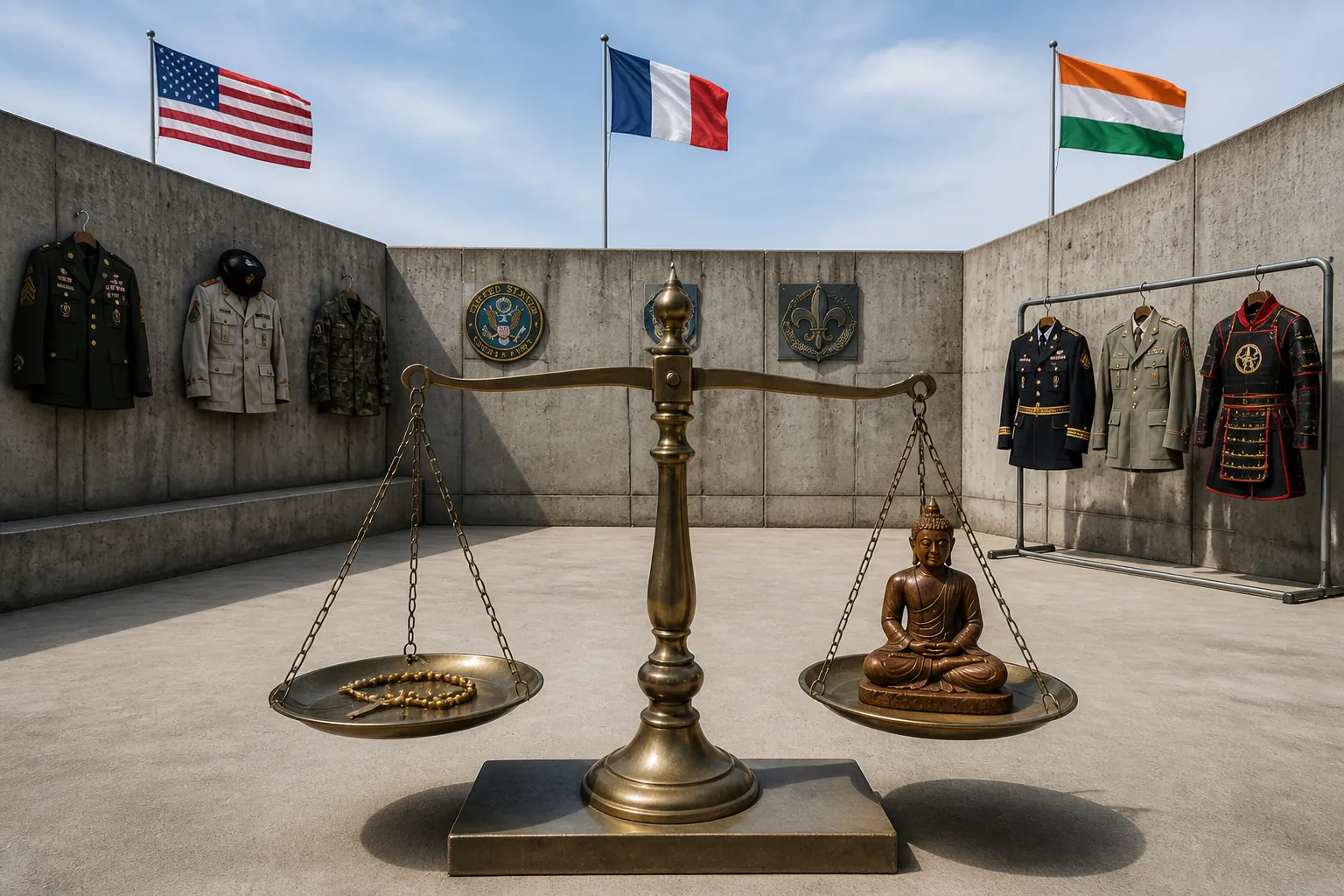
The situation underscores a broader debate over the role of religious expression in the military, the protection of diversity initiatives, and the criteria for leadership appointments. Observers note that the policies enacted under Hegseth could reshape the demographic composition of the U.S. armed forces and alter the institution’s long‑standing commitment to representing all Americans.
Hegseth, who took office in 2025, has become a lightning rod for criticism. His personal religious tattoos— a Jerusalem cross, the Latin phrase Deus Vult (“God wills it”), and an Arabic inscription meaning kafir (“non‑believer”)—have been highlighted by the Guardian and other outlets. The Deus Vult mark, historically tied to the First Crusade, has also been adopted by some contemporary extremist groups, while the Arabic symbol has been described as a “clear symbol of Islamophobia.” Hegseth maintains that the tattoos reflect his Christian faith and testify to the persecution he has faced for his religious and conservative beliefs.
During his time in the Minnesota Army National Guard, commanders cited Hegseth’s body art as a potential insider‑threat risk. They barred him from the security detail at President Biden’s 2021 inauguration. Current Department of Defense regulations state that visible tattoos bearing extremist or religious symbols can disqualify recruits and may lead to discipline for active‑duty personnel.
In February 2025, Hegseth publicly denounced the Department’s diversity, equity, and inclusion (DEI) initiatives, calling the phrase “diversity is our strength” the “single dumbest phrase in military history.” Following that statement, the Pentagon ordered the removal of all digital content that promoted DEI, including references to Black History Month, Women’s History Month, and the Navajo Code Talkers. Rolling Stone reported that the purge eliminated an estimated 26,000 to 100,000 pages and posts from DoD and Arlington National Cemetery websites.
The secretary’s tenure has also been marked by a rapid reshuffling of senior officers. In February 2025, he fired Air Force General Charles Q. Brown, the chairman of the Joint Chiefs of Staff, and removed Admiral Lisa Franchetti, the first woman to serve as the Navy’s top admiral. Additional removals included nine officers from the Navy’s original 31‑person promotion list, according to a New York Times report. Major General Randy George, the Army’s top general, retired effective immediately after Hegseth demanded his removal, as reported by Yahoo News. No performance issues have been documented for the officers removed.
Hegseth has also promoted a religious framing of U.S. foreign policy. In a briefing to Pentagon staff, he described the war against Iran as a holy war and a religious crusade. The Christian Science Monitor noted that his rhetoric aligns with Christian nationalism, an ideology that seeks to merge American identity with a specific conservative Christian worldview.
The cumulative effect of these actions has raised concerns about the treatment of marginalized groups in the armed forces. Reports indicate that the DoD has removed historical references to minority contributions, and that Afghan nationals who assisted U.S. forces face deportation despite prior assurances of safety. Transgender service members have been discharged or forced into early retirement, losing full pensions and benefits, according to a Common Dreams article.
Hegseth remains in office, and no legal challenges to his policies have been filed to date. The Department of Defense continues to implement its current diversity‑purge agenda, and senior‑officer appointments are being overseen by Hegseth’s office.
The situation underscores a broader debate over the role of religious expression in the military, the protection of diversity initiatives, and the criteria for leadership appointments. Observers note that the policies enacted under Hegseth could reshape the demographic composition of the U.S. armed forces and alter the institution’s long‑standing commitment to representing all Americans.