Blab Politics
India and U.S. Trade Ministers Review Interim Agreement Ahead of July 24 Tariff Deadline
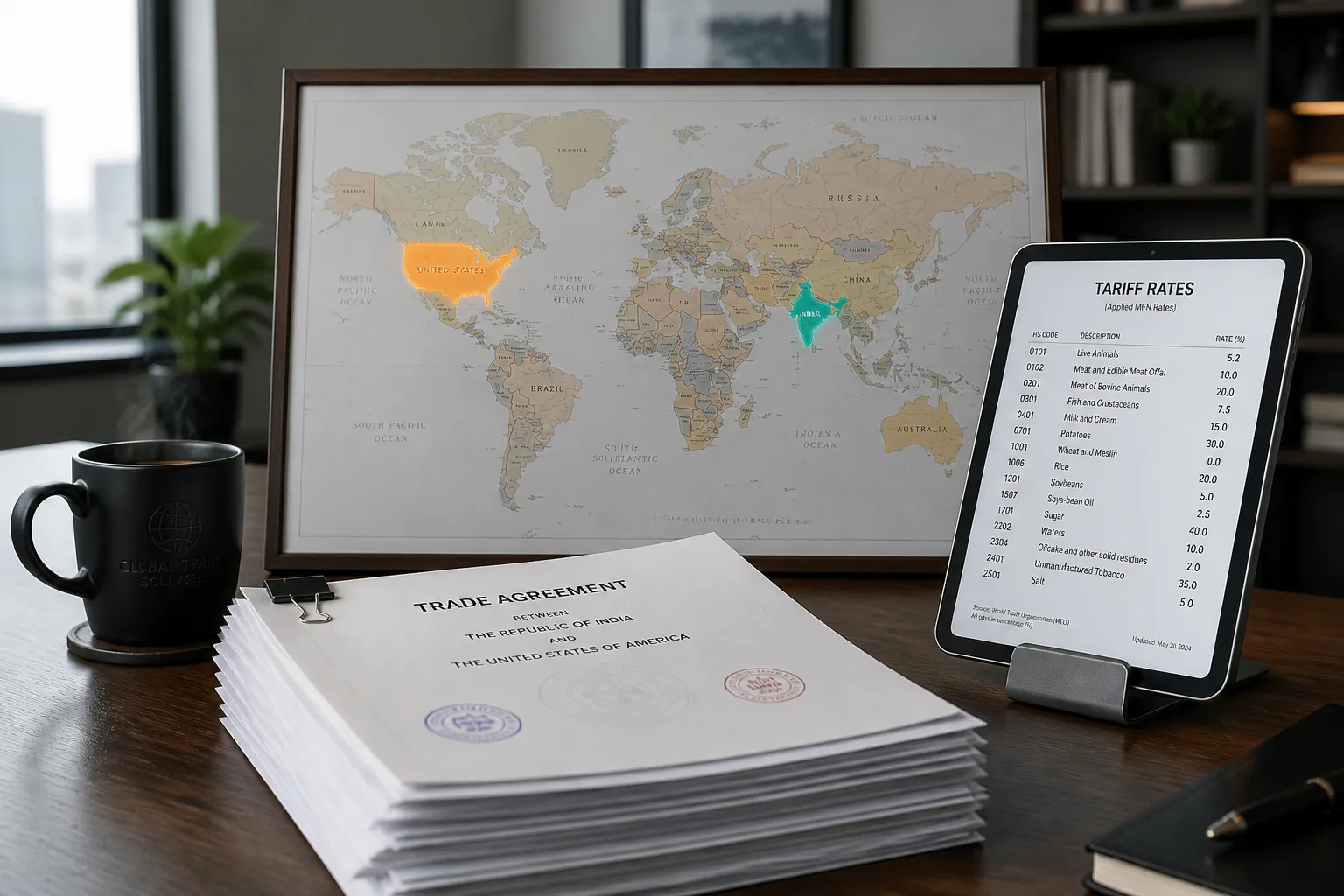
In New Delhi on 24 June 2026, Commerce Minister Piyush Goyal and U.S. Trade Representative Jamieson Greer convened a two‑day ministerial meeting to keep a long‑awaited bilateral trade agreement on schedule. The discussion focused on the core elements of the proposed pact—expanded market access, digital trade, supply‑chain resilience, and a reduction of non‑tariff barriers—and on cooperation in strategic sectors.
The talks unfolded against a ticking clock: a 10 percent U.S. tariff regime, imposed under Section 122 of the Trade Act for 150 days, is set to expire on 24 July. The deadline has injected urgency into the negotiations, as any delay could push the U.S. back into a default tariff framework that relies on Section 301 investigations.
Both ministers agreed that the parties had made "substantial" progress, although they did not confirm that all outstanding issues had been resolved. They reiterated a shared commitment to a trade agreement that balances interests and delivers tangible benefits for businesses, farmers, workers, and consumers in both countries. The dialogue also charted a path toward finalizing an interim agreement, which would serve as a milestone on the road to a comprehensive BTA.
Under the temporary tariff regime, a blanket 10 percent duty applies to all imports—including goods from India—until the July 24 deadline. After that, the U.S. would have to rely on Section 301 investigations as its primary tool for imposing tariffs. Earlier this year, the U.S. had attempted to levy 50 percent duties on Indian goods, but the Supreme Court struck down those sweeping measures on 20 February, forcing the Trump administration to adopt the current 10 percent regime.
India’s trade data for the 2025‑26 fiscal year show modest growth: exports to the United States rose 0.92 percent to $87.3 billion, while imports climbed 15.95 percent to $52.9 billion. The trade surplus narrowed to $34.4 billion from $40.89 billion the previous year, underscoring the importance of a stable trade relationship with the U.S., which remains India’s second‑largest trading partner.
During the meeting, Goyal posted on X that he appreciated Ambassador Greer’s leadership and the sustained efforts of both teams. Greer, in turn, highlighted the longstanding relationship between former President Donald Trump and Prime Minister Narendra Modi, noting that the two leaders had met at the G7 in Evian, France, and that the trade deal was part of a broader relationship expected to deepen.
The interim agreement framework was first announced in a joint statement on 6 February 2026. The framework outlined plans to reset tariffs, improve market access, and lay the groundwork for a full BTA, with a particular emphasis on digital trade and supply‑chain resilience.
The U.S. has launched Section 301 investigations on 60 economies, including India, citing alleged excess industrial capacity and forced‑labour concerns in global supply chains. These investigations provide the U.S. with a mechanism to impose tariffs if violations are found.
The ministerial talks followed earlier negotiations at the chief‑negotiator level in New Delhi from 2‑4 June. The U.S. and India formally resumed trade negotiations on 13 February 2025, after a framework understanding was reached earlier that year.
The outcome of the June meeting will determine whether the two sides can finalize an interim agreement before the July 24 deadline. If successful, the interim pact would open the 1.4‑billion‑strong Indian market to U.S. goods on reciprocal terms and could set the stage for a comprehensive BTA. If not, the U.S. would revert to the 10 percent tariff regime and rely on Section 301 investigations for any future tariff actions.
At present, no definitive timetable has been announced for a final agreement. Both sides have expressed a desire to move forward, but the July 24 deadline remains a critical juncture for the negotiations.
The talks unfolded against a ticking clock: a 10 percent U.S. tariff regime, imposed under Section 122 of the Trade Act for 150 days, is set to expire on 24 July. The deadline has injected urgency into the negotiations, as any delay could push the U.S. back into a default tariff framework that relies on Section 301 investigations.
Both ministers agreed that the parties had made "substantial" progress, although they did not confirm that all outstanding issues had been resolved. They reiterated a shared commitment to a trade agreement that balances interests and delivers tangible benefits for businesses, farmers, workers, and consumers in both countries. The dialogue also charted a path toward finalizing an interim agreement, which would serve as a milestone on the road to a comprehensive BTA.
Under the temporary tariff regime, a blanket 10 percent duty applies to all imports—including goods from India—until the July 24 deadline. After that, the U.S. would have to rely on Section 301 investigations as its primary tool for imposing tariffs. Earlier this year, the U.S. had attempted to levy 50 percent duties on Indian goods, but the Supreme Court struck down those sweeping measures on 20 February, forcing the Trump administration to adopt the current 10 percent regime.
India’s trade data for the 2025‑26 fiscal year show modest growth: exports to the United States rose 0.92 percent to $87.3 billion, while imports climbed 15.95 percent to $52.9 billion. The trade surplus narrowed to $34.4 billion from $40.89 billion the previous year, underscoring the importance of a stable trade relationship with the U.S., which remains India’s second‑largest trading partner.
During the meeting, Goyal posted on X that he appreciated Ambassador Greer’s leadership and the sustained efforts of both teams. Greer, in turn, highlighted the longstanding relationship between former President Donald Trump and Prime Minister Narendra Modi, noting that the two leaders had met at the G7 in Evian, France, and that the trade deal was part of a broader relationship expected to deepen.
The interim agreement framework was first announced in a joint statement on 6 February 2026. The framework outlined plans to reset tariffs, improve market access, and lay the groundwork for a full BTA, with a particular emphasis on digital trade and supply‑chain resilience.
The U.S. has launched Section 301 investigations on 60 economies, including India, citing alleged excess industrial capacity and forced‑labour concerns in global supply chains. These investigations provide the U.S. with a mechanism to impose tariffs if violations are found.
The ministerial talks followed earlier negotiations at the chief‑negotiator level in New Delhi from 2‑4 June. The U.S. and India formally resumed trade negotiations on 13 February 2025, after a framework understanding was reached earlier that year.
The outcome of the June meeting will determine whether the two sides can finalize an interim agreement before the July 24 deadline. If successful, the interim pact would open the 1.4‑billion‑strong Indian market to U.S. goods on reciprocal terms and could set the stage for a comprehensive BTA. If not, the U.S. would revert to the 10 percent tariff regime and rely on Section 301 investigations for any future tariff actions.
At present, no definitive timetable has been announced for a final agreement. Both sides have expressed a desire to move forward, but the July 24 deadline remains a critical juncture for the negotiations.