Blab Politics
Eight University of Michigan Affiliates Indicted for Threats, Vandalism in Anti-Israel Campaign
On Wednesday, federal prosecutors filed indictments against eight University of Michigan affiliates for a coordinated campaign of threats, vandalism, and intimidation aimed at forcing the university and other local entities to divest from Israel. The U.S. District Court for the Eastern District of Michigan says the defendants—aged 21 to 28 and including current or former students, employees, and other affiliates—conspired to threaten university leaders, law‑enforcement officers, businesses, and the Jewish Federation of Metropolitan Detroit after their demands for divestment were denied following the Oct. 7, 2023 Hamas attack.
The charges carry potential sentences of up to 20 years for witness tampering and up to five years for conspiracy to transmit threats or destruction of property. The indictment comes amid a wave of campus protests across the United States that have escalated from peaceful demonstrations to violent acts.
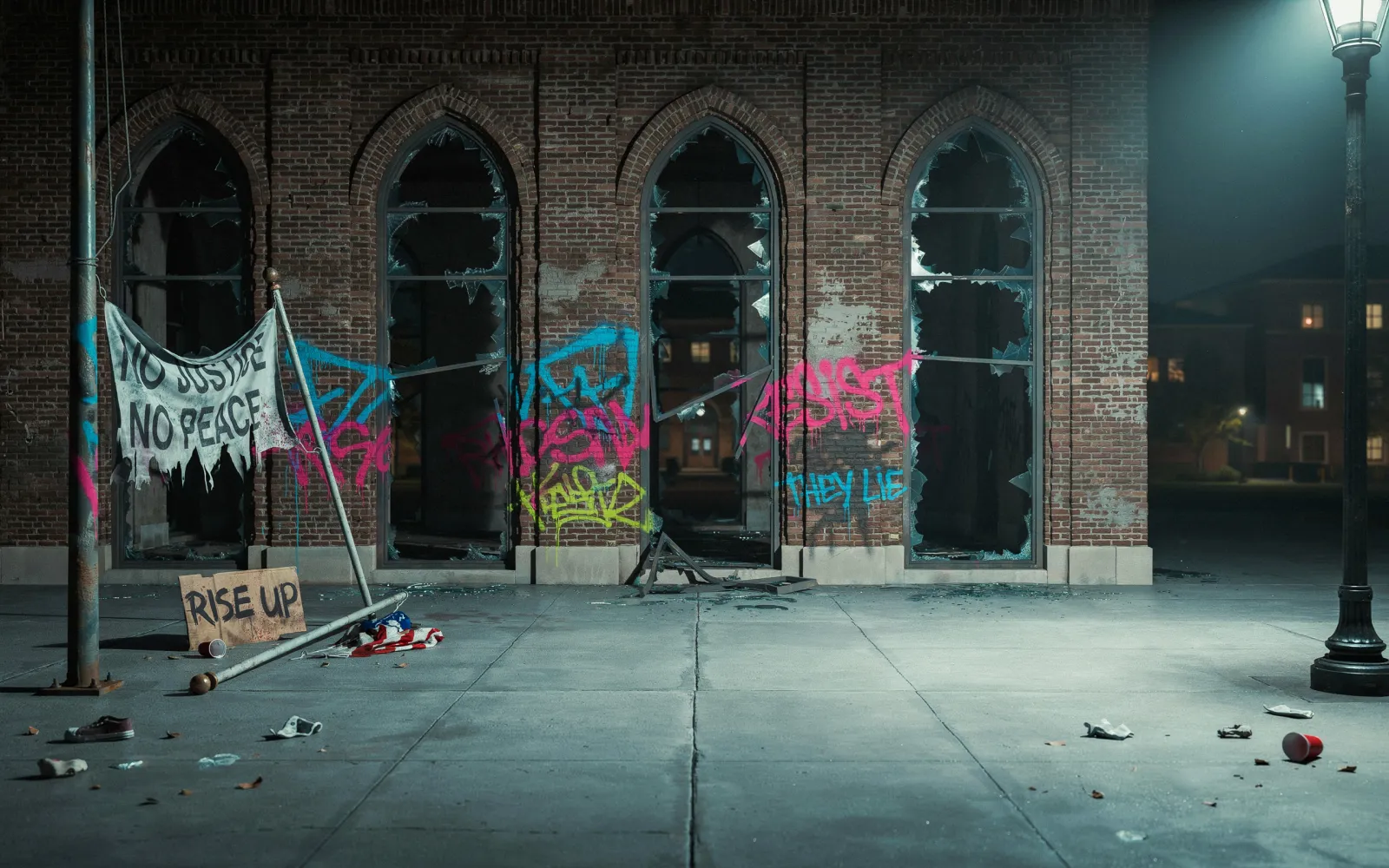
According to the indictment, the defendants traveled at night to homes and businesses, defaced property with graffiti that included inverted triangles—symbols used by Hamas to mark targets for death—, broke windows, caulked doors shut, and placed glass jars filled with butyric acid and dye inside residences. They also allegedly left demand letters on front doors, threatened families, and posted photos of the damage online with warnings that they would return stronger. In an encrypted chat dated May 21, 2024, one defendant, Paige Elizabeth Feyock, and a medical student, Zainab Aliasgar Hakim, discussed plans to “kill,” “torment,” and “terrorize” their targets and families. Hakim wrote that a victim’s entire family was on a hit list, and the student said she would become the victim’s doctor and “poison her slowly.”
The indictment also charges Hakim and Feyock with witness intimidation. Prosecutors say the two planned to confront a University of Michigan student they believed might cooperate with federal authorities. In a separate exchange, a defendant named Sepulveda is charged with destroying property to prevent seizure; prosecutors allege that he and another defendant, Zou, threw glass jars of blue liquid and food compost through the provost’s home window and spray‑painted the house with inverted red triangles and the words “Free Palestine.” When law enforcement executed a search warrant, Sepulveda allegedly wiped his phone and laptop.
Federal agents announced the arrests as part of a multi‑state operation that also targeted suspects in Illinois and Wisconsin. FBI Director Kash Patel said in a statement to Fox News Digital that the defendants “vandalized property, left threatening messages, and even violently attacked homes while children slept inside.” The indictments were issued by U.S. Attorney Jerome F. Gorgon, who said, “In America, we rule by law not by fear. These alleged threats and attempts to terrorize government officials, businesses, and the Jewish Federation are anti‑American. We will counter intimidation with justice.”
Federal Magistrate Judge Anthony Patti ordered the defendants to remain in custody until a hearing scheduled for Friday. Outside the Detroit courthouse, supporters of the defendants gathered to protest the arrests, some comparing the FBI to the Ku Klux Klan. Inside, a University of Michigan lecturer who had come to show solidarity described the charges as a First Amendment issue. UM Regent Sarah Hubbard, whose home had been surrounded with mock body bags by protesters in May 2024, retweeted the FBI announcement and thanked law enforcement.
Under federal sentencing guidelines, the defendants face up to five years for conspiracy to transmit threats, up to 20 years for witness tampering, and up to five years for destruction of property. The indictment does not presume guilt; the government must prove the allegations in court. The case will test the limits of protest, free speech, and criminal conduct in a university setting.
At this time, the eight defendants remain in federal custody and the case is pending. The next step will be the Friday hearing, after which the court will determine whether the defendants will be released on bail or remain in custody. The indictment underscores the federal government’s willingness to prosecute campus activists who cross from peaceful protest into violent intimidation and property damage.
The charges carry potential sentences of up to 20 years for witness tampering and up to five years for conspiracy to transmit threats or destruction of property. The indictment comes amid a wave of campus protests across the United States that have escalated from peaceful demonstrations to violent acts.
According to the indictment, the defendants traveled at night to homes and businesses, defaced property with graffiti that included inverted triangles—symbols used by Hamas to mark targets for death—, broke windows, caulked doors shut, and placed glass jars filled with butyric acid and dye inside residences. They also allegedly left demand letters on front doors, threatened families, and posted photos of the damage online with warnings that they would return stronger. In an encrypted chat dated May 21, 2024, one defendant, Paige Elizabeth Feyock, and a medical student, Zainab Aliasgar Hakim, discussed plans to “kill,” “torment,” and “terrorize” their targets and families. Hakim wrote that a victim’s entire family was on a hit list, and the student said she would become the victim’s doctor and “poison her slowly.”
The indictment also charges Hakim and Feyock with witness intimidation. Prosecutors say the two planned to confront a University of Michigan student they believed might cooperate with federal authorities. In a separate exchange, a defendant named Sepulveda is charged with destroying property to prevent seizure; prosecutors allege that he and another defendant, Zou, threw glass jars of blue liquid and food compost through the provost’s home window and spray‑painted the house with inverted red triangles and the words “Free Palestine.” When law enforcement executed a search warrant, Sepulveda allegedly wiped his phone and laptop.
Federal agents announced the arrests as part of a multi‑state operation that also targeted suspects in Illinois and Wisconsin. FBI Director Kash Patel said in a statement to Fox News Digital that the defendants “vandalized property, left threatening messages, and even violently attacked homes while children slept inside.” The indictments were issued by U.S. Attorney Jerome F. Gorgon, who said, “In America, we rule by law not by fear. These alleged threats and attempts to terrorize government officials, businesses, and the Jewish Federation are anti‑American. We will counter intimidation with justice.”
Federal Magistrate Judge Anthony Patti ordered the defendants to remain in custody until a hearing scheduled for Friday. Outside the Detroit courthouse, supporters of the defendants gathered to protest the arrests, some comparing the FBI to the Ku Klux Klan. Inside, a University of Michigan lecturer who had come to show solidarity described the charges as a First Amendment issue. UM Regent Sarah Hubbard, whose home had been surrounded with mock body bags by protesters in May 2024, retweeted the FBI announcement and thanked law enforcement.
Under federal sentencing guidelines, the defendants face up to five years for conspiracy to transmit threats, up to 20 years for witness tampering, and up to five years for destruction of property. The indictment does not presume guilt; the government must prove the allegations in court. The case will test the limits of protest, free speech, and criminal conduct in a university setting.
At this time, the eight defendants remain in federal custody and the case is pending. The next step will be the Friday hearing, after which the court will determine whether the defendants will be released on bail or remain in custody. The indictment underscores the federal government’s willingness to prosecute campus activists who cross from peaceful protest into violent intimidation and property damage.