Blab Politics
Olam Report Projects $1 Trillion in Middle East Economic Growth If Saudi-Israeli Normalization Occurs
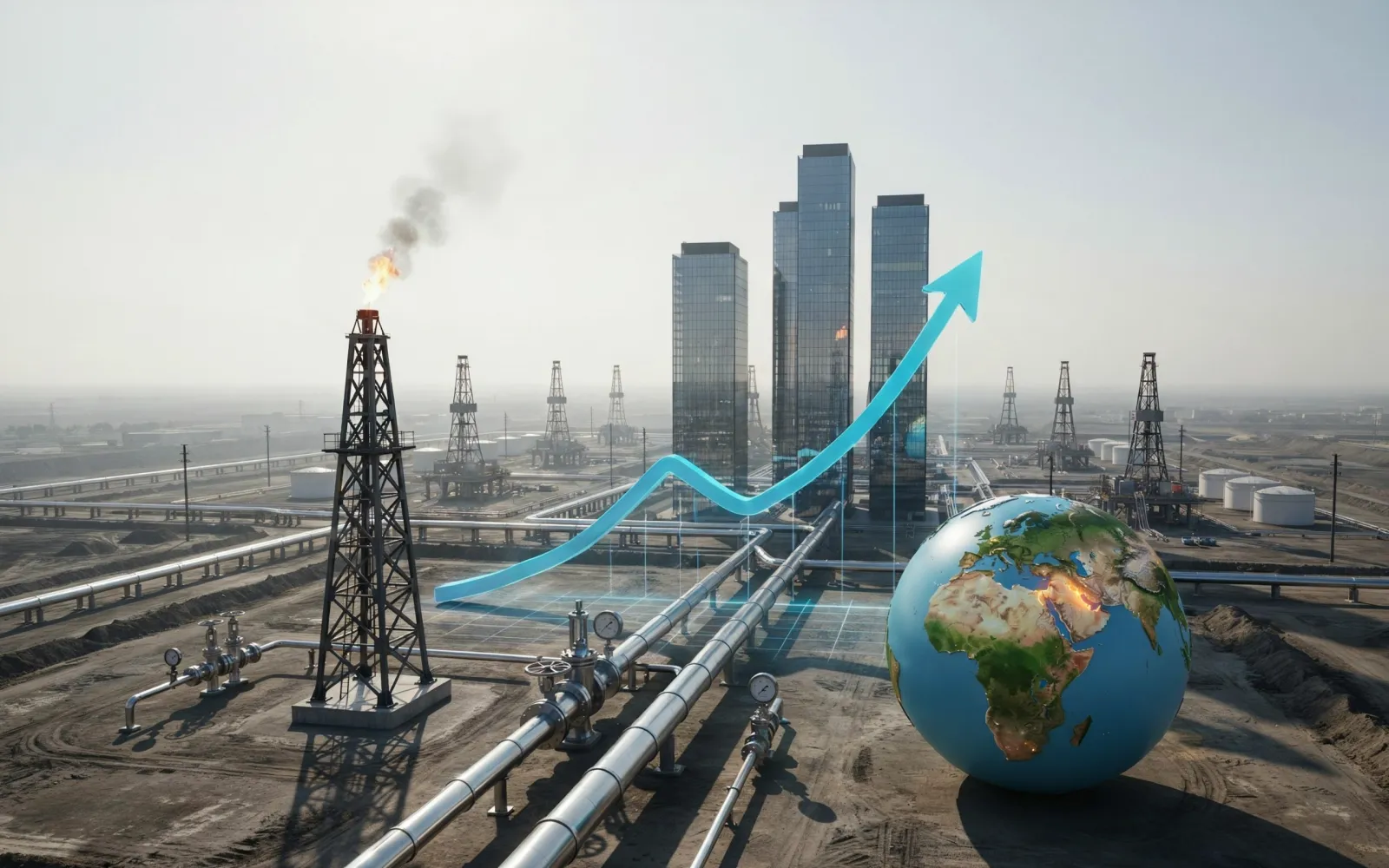
Imagine a Middle East where Saudi Arabia and Israel exchange billions in goods, tech, and capital. A new strategic research report from The Olam, released on June 10 2026, uses artificial‑intelligence‑driven scenario modeling to quantify that vision. According to the study, if the two nations were to normalize relations, cumulative new economic activity across the region could climb between $650 billion and $1.3 trillion by 2046, with the first decade already showing a surge.
The model splits the forecast into three milestones—2029, 2034, and 2046—and eight economic sectors. By 2029, Saudi‑Israeli bilateral trade could reach $2.5–$5 billion a year, growing to $8–$25 billion by 2034 and $25–$100 billion by 2046, a volume comparable to Israel’s current trade with the United States. The $650–$1.3 trillion figure represents the sum of all sectors over the 17‑year horizon.
The largest single line is a sovereign artificial‑intelligence partnership. Saudi Arabia’s Vision 2030 program has already earmarked $23 billion for AI‑stack projects under the Humain initiative, led by Crown Prince Mohammed bin Salman. Targeting 3–6 gigawatts of compute, the report estimates that the infrastructure could cost $90–$300 billion. Israeli high‑tech firms—accounting for 17–20 % of the country’s GDP and exporting more than half of its goods—are projected to capture 5–15 % of Saudi AI spending, translating to $40–$100 billion by 2034 and $200–$500 billion by 2046.
A second pillar is the India‑Middle East‑Europe Economic Corridor (IMEC). Announced at the September 2023 G20 Summit and signed by India, the United States, Saudi Arabia, the UAE, the European Union, Italy, France, and Germany, the corridor would link India’s western ports to Gulf hubs, Saudi territory, Haifa, and ultimately European ports. The report projects that, once fully operational, the corridor could move $300–$600 billion in annual goods value through Haifa by 2046. Without a Saudi‑Israeli link, the rail spine would be impossible, as the Saudi‑to‑Jordan‑to‑Israel segment cannot be built.
The report stresses that these figures hinge on a political agreement that has not yet materialized and may not follow the assumed timelines. It offers no specific date for normalization, presenting only the potential outcomes if the deal were to occur.
The projections are grounded in the rapid expansion of Israel‑UAE trade. Under the Comprehensive Economic Partnership Agreement that entered force on April 1 2023, bilateral trade surged from about $200 million in 2020 to more than $3 billion in 2024—a fifteen‑fold jump in four years. Saudi Arabia, larger than the UAE in GDP, population, and sovereign wealth—its Public Investment Fund manages roughly $925 billion in assets versus Mubadala’s $380 billion—provides a scale that the Olam model applies without resorting to overly optimistic assumptions.
For the American Jewish business community, the report notes that the Israel‑UAE corridor has already established a Jewish commercial presence in the Gulf, with several thousand residents in Dubai, Chabad‑Lubavitch centers in three emirates, and kosher food supply chains serving the wider Gulf market. A Saudi‑Israeli economic relationship could extend this infrastructure to the region’s largest Arab economy, potentially channeling Saudi sovereign capital into Israeli venture funds and creating joint capital markets spanning Tel Aviv, Riyadh, and Abu Dhabi.
Strategically, the report frames Saudi‑Israeli normalization as a cornerstone of the United States’ counter‑architecture to China’s Belt and Road Initiative. By merging Israeli innovation with U.S. hyperscalers, the United States would preserve supply‑chain leverage that could be eroded if Saudi AI were built on Chinese infrastructure.
The political path to normalization remains fraught. Saudi public commitments on broader regional security are still unresolved, and Israel’s coalition politics and Iran‑related security calculations add further variables. The Trump administration’s May 2025 Gulf trip and the 2026 six‑country framework have placed Saudi Arabia at the top of the queue for Accords expansion, but a formal treaty has not yet been signed.
In summary, the Olam report presents a detailed economic scenario that could unfold if Saudi Arabia and Israel reach a normalization agreement. The projected gains—especially in AI infrastructure, IMEC logistics, and Jewish commercial expansion—are substantial, yet the political feasibility and timing remain uncertain. The report does not predict a specific date; it simply outlines the potential economic outcomes should the deal be achieved.
The model splits the forecast into three milestones—2029, 2034, and 2046—and eight economic sectors. By 2029, Saudi‑Israeli bilateral trade could reach $2.5–$5 billion a year, growing to $8–$25 billion by 2034 and $25–$100 billion by 2046, a volume comparable to Israel’s current trade with the United States. The $650–$1.3 trillion figure represents the sum of all sectors over the 17‑year horizon.
The largest single line is a sovereign artificial‑intelligence partnership. Saudi Arabia’s Vision 2030 program has already earmarked $23 billion for AI‑stack projects under the Humain initiative, led by Crown Prince Mohammed bin Salman. Targeting 3–6 gigawatts of compute, the report estimates that the infrastructure could cost $90–$300 billion. Israeli high‑tech firms—accounting for 17–20 % of the country’s GDP and exporting more than half of its goods—are projected to capture 5–15 % of Saudi AI spending, translating to $40–$100 billion by 2034 and $200–$500 billion by 2046.
A second pillar is the India‑Middle East‑Europe Economic Corridor (IMEC). Announced at the September 2023 G20 Summit and signed by India, the United States, Saudi Arabia, the UAE, the European Union, Italy, France, and Germany, the corridor would link India’s western ports to Gulf hubs, Saudi territory, Haifa, and ultimately European ports. The report projects that, once fully operational, the corridor could move $300–$600 billion in annual goods value through Haifa by 2046. Without a Saudi‑Israeli link, the rail spine would be impossible, as the Saudi‑to‑Jordan‑to‑Israel segment cannot be built.
The report stresses that these figures hinge on a political agreement that has not yet materialized and may not follow the assumed timelines. It offers no specific date for normalization, presenting only the potential outcomes if the deal were to occur.
The projections are grounded in the rapid expansion of Israel‑UAE trade. Under the Comprehensive Economic Partnership Agreement that entered force on April 1 2023, bilateral trade surged from about $200 million in 2020 to more than $3 billion in 2024—a fifteen‑fold jump in four years. Saudi Arabia, larger than the UAE in GDP, population, and sovereign wealth—its Public Investment Fund manages roughly $925 billion in assets versus Mubadala’s $380 billion—provides a scale that the Olam model applies without resorting to overly optimistic assumptions.
For the American Jewish business community, the report notes that the Israel‑UAE corridor has already established a Jewish commercial presence in the Gulf, with several thousand residents in Dubai, Chabad‑Lubavitch centers in three emirates, and kosher food supply chains serving the wider Gulf market. A Saudi‑Israeli economic relationship could extend this infrastructure to the region’s largest Arab economy, potentially channeling Saudi sovereign capital into Israeli venture funds and creating joint capital markets spanning Tel Aviv, Riyadh, and Abu Dhabi.
Strategically, the report frames Saudi‑Israeli normalization as a cornerstone of the United States’ counter‑architecture to China’s Belt and Road Initiative. By merging Israeli innovation with U.S. hyperscalers, the United States would preserve supply‑chain leverage that could be eroded if Saudi AI were built on Chinese infrastructure.
The political path to normalization remains fraught. Saudi public commitments on broader regional security are still unresolved, and Israel’s coalition politics and Iran‑related security calculations add further variables. The Trump administration’s May 2025 Gulf trip and the 2026 six‑country framework have placed Saudi Arabia at the top of the queue for Accords expansion, but a formal treaty has not yet been signed.
In summary, the Olam report presents a detailed economic scenario that could unfold if Saudi Arabia and Israel reach a normalization agreement. The projected gains—especially in AI infrastructure, IMEC logistics, and Jewish commercial expansion—are substantial, yet the political feasibility and timing remain uncertain. The report does not predict a specific date; it simply outlines the potential economic outcomes should the deal be achieved.