Blab Politics
U.S. Indo-Pacific Strategy Shifts Toward Realism, Signals New Balance-of-Power Approach
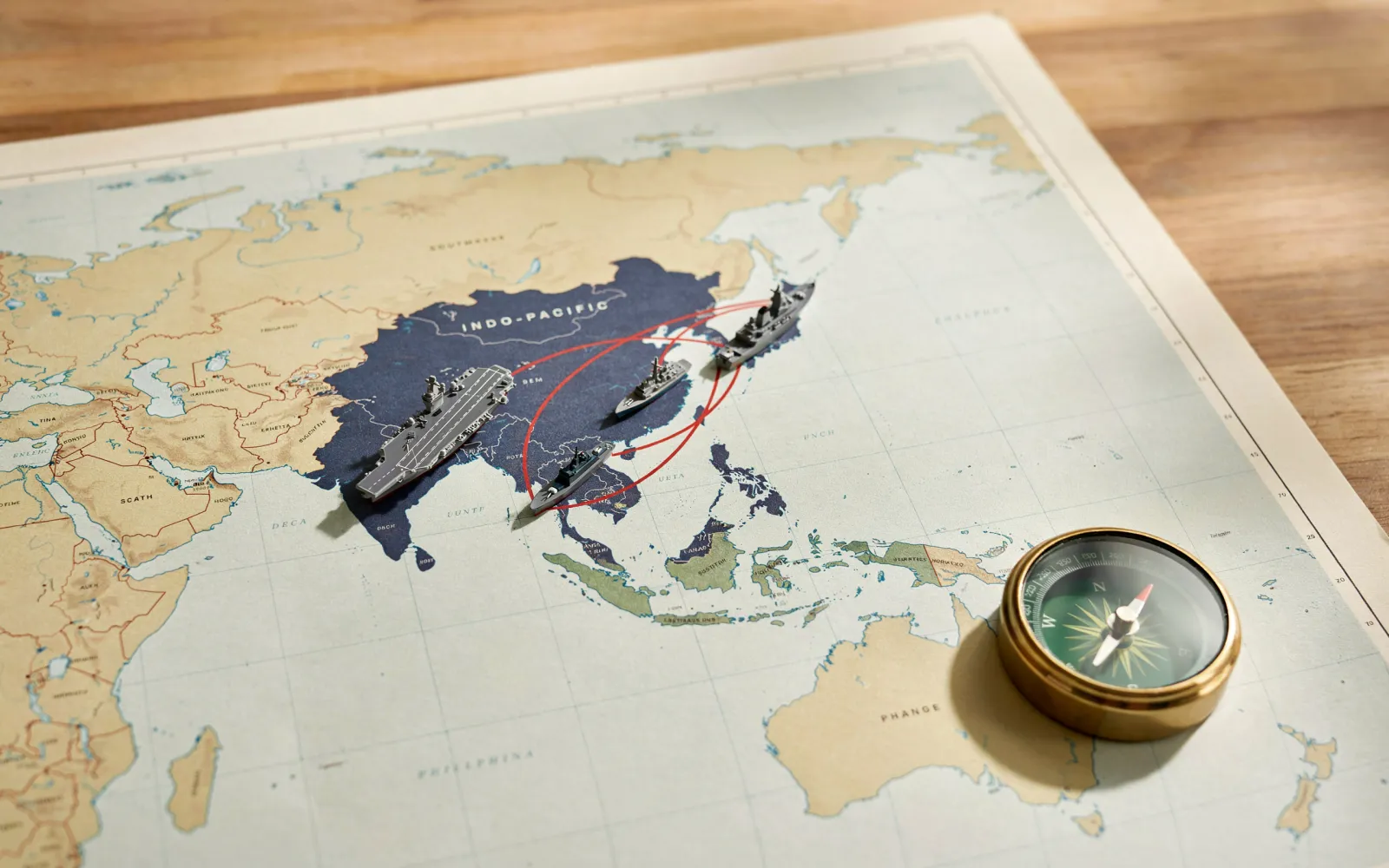
At the 2026 Shangri‑La Dialogue in Singapore, the United States quietly announced a recalibration of its Indo‑Pacific strategy. While China’s top military leaders were absent from the high‑profile forum, Washington and Beijing quietly met in Hawaii under the Military Maritime Consultative Agreement (MMCA) to discuss maritime safety and crisis‑management. The dual meetings underscored a broader trend of rebuilding lines of communication between the two powers amid strategic competition.
U.S. Secretary of Defense Pete Hegseth opened the Singapore session with a keynote that set the tone for the new direction. He described the U.S. foreign‑policy posture as moving away from what he called a “toothless, utopian, and globalist” approach. Instead, Washington is pursuing a strategy rooted in national interests, military strength, and strategic realism. Hegseth said stability in the region now derives from credible deterrence and a sustainable balance of power, rather than from a moral high ground.
The speech also questioned the traditional U.S. security‑guarantee model. Hegseth urged allies to become genuine security partners instead of long‑term dependents, framing burden‑sharing as both a budgetary responsibility and a geopolitical reality. He highlighted that while the United States remains the strongest military power in the Indo‑Pacific, it is encouraging partners—Japan, South Korea, Australia, the Philippines, and India—to assume greater responsibility for regional security.
Unlike much of the rhetoric that has dominated U.S. policy toward China in recent years, Hegseth’s remarks were measured. He stressed the importance of stable relations, fair trade, and continued military‑to‑military engagement. Taiwan, a highly sensitive issue, was notably absent from his speech, suggesting an effort to manage competition without turning every disagreement into a geopolitical crisis.
The 2026 National Defense Strategy (NDS), released on January 23, lists four priorities: defending the United States and the Western Hemisphere, deterring China in the Indo‑Pacific, increasing burden‑sharing among allies and partners, and revitalizing the defense‑industrial base. The NDS calls for expanded military dialogue, strategic stability, and mechanisms for de‑escalation. While China is identified as the primary strategic challenge in the Indo‑Pacific, the strategy does not seek isolation or humiliation. Instead, it aims to prevent any single power from dominating the region and thereby protect U.S. interests.
China’s perspective remains that U.S. military modernization in the region signals containment and encirclement. Beijing interprets the U.S. emphasis on burden‑sharing and balance‑building as a threat, and tensions are likely to persist. The U.S. must therefore continue to demonstrate that its actions are aimed at preserving a favorable balance of power rather than pursuing dominance.
The recent Hawaii talks and Hegseth’s speech represent concrete steps toward a more equilibrium‑oriented approach. The U.S. will likely pursue further military‑to‑military engagements under the MMCA framework and continue to engage allies in joint exercises and defense‑industrial cooperation. The next phase will involve implementing the NDS priorities, particularly the expansion of burden‑sharing and the development of mechanisms for de‑escalation.
In sum, Washington’s Indo‑Pacific strategy has moved from a globalist posture to a realistic, balance‑of‑power framework. While the U.S. remains the region’s strongest military power, it is encouraging partners to take on greater responsibility. China views this shift as a potential threat, and competition will continue, but the new strategy offers a path toward coexistence rather than confrontation.
U.S. Secretary of Defense Pete Hegseth opened the Singapore session with a keynote that set the tone for the new direction. He described the U.S. foreign‑policy posture as moving away from what he called a “toothless, utopian, and globalist” approach. Instead, Washington is pursuing a strategy rooted in national interests, military strength, and strategic realism. Hegseth said stability in the region now derives from credible deterrence and a sustainable balance of power, rather than from a moral high ground.
The speech also questioned the traditional U.S. security‑guarantee model. Hegseth urged allies to become genuine security partners instead of long‑term dependents, framing burden‑sharing as both a budgetary responsibility and a geopolitical reality. He highlighted that while the United States remains the strongest military power in the Indo‑Pacific, it is encouraging partners—Japan, South Korea, Australia, the Philippines, and India—to assume greater responsibility for regional security.
Unlike much of the rhetoric that has dominated U.S. policy toward China in recent years, Hegseth’s remarks were measured. He stressed the importance of stable relations, fair trade, and continued military‑to‑military engagement. Taiwan, a highly sensitive issue, was notably absent from his speech, suggesting an effort to manage competition without turning every disagreement into a geopolitical crisis.
The 2026 National Defense Strategy (NDS), released on January 23, lists four priorities: defending the United States and the Western Hemisphere, deterring China in the Indo‑Pacific, increasing burden‑sharing among allies and partners, and revitalizing the defense‑industrial base. The NDS calls for expanded military dialogue, strategic stability, and mechanisms for de‑escalation. While China is identified as the primary strategic challenge in the Indo‑Pacific, the strategy does not seek isolation or humiliation. Instead, it aims to prevent any single power from dominating the region and thereby protect U.S. interests.
China’s perspective remains that U.S. military modernization in the region signals containment and encirclement. Beijing interprets the U.S. emphasis on burden‑sharing and balance‑building as a threat, and tensions are likely to persist. The U.S. must therefore continue to demonstrate that its actions are aimed at preserving a favorable balance of power rather than pursuing dominance.
The recent Hawaii talks and Hegseth’s speech represent concrete steps toward a more equilibrium‑oriented approach. The U.S. will likely pursue further military‑to‑military engagements under the MMCA framework and continue to engage allies in joint exercises and defense‑industrial cooperation. The next phase will involve implementing the NDS priorities, particularly the expansion of burden‑sharing and the development of mechanisms for de‑escalation.
In sum, Washington’s Indo‑Pacific strategy has moved from a globalist posture to a realistic, balance‑of‑power framework. While the U.S. remains the region’s strongest military power, it is encouraging partners to take on greater responsibility. China views this shift as a potential threat, and competition will continue, but the new strategy offers a path toward coexistence rather than confrontation.







