Blab Politics
ASMLs EUV Machines: The Hidden Deterrent in the Taiwan Semiconductor Supply Chain
On June 11, 2026, Phuong Pham and Melle Scholten unveiled a study that reframes the world’s most secure shield against a Chinese invasion as a Dutch company’s lithography machines, not a battlefield arsenal.
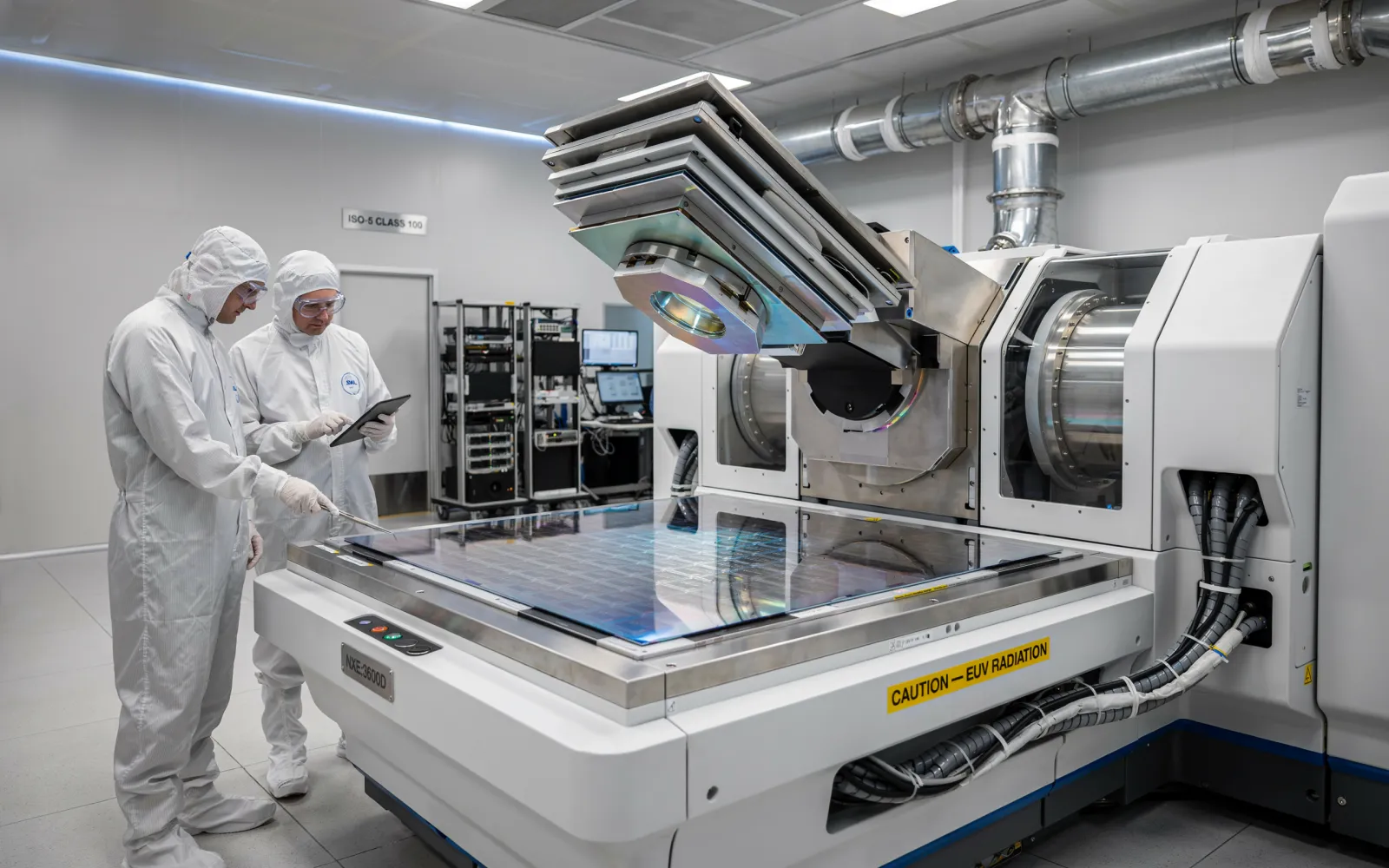
Published on War on the Rocks, the research zeroes in on ASML Holding N.V., the only manufacturer of extreme ultraviolet (EUV) lithography systems that enable the production of 5‑nanometer and 3‑nanometer chips. EUV uses 13.5‑nanometer light generated by a laser‑pulsed tin plasma to pattern silicon wafers, a process indispensable to TSMC’s most advanced fabs and to customers such as Nvidia, Apple and Qualcomm.
The authors introduce a “silicon testudo” model, likening the supply chain to a Roman shield wall in which each participant holds a non‑substitutable choke point. ASML supplies the lithography tool; German firms provide the optics and light sources; U.S. companies deliver electronic design automation software; Japanese manufacturers supply specialty chemicals; and raw materials come from China and Ukraine. The chain is interlocked, so the removal of any node stalls the entire process.
TSMC’s chairman, Mark Liu, has repeatedly stated that “nobody can control TSMC by force.” The company has reportedly built a kill‑switch that could remotely disable an EUV system if a hostile takeover occurs, underscoring the authors’ point that the supply chain itself acts as a deterrent: even a successful Chinese invasion would leave captured foundries unable to produce chips without the EUV machines and other inputs.
China has pursued a suite of strategies to reduce its dependence on these chokepoints. Its 15th Five‑Year Plan prioritizes domestic semiconductor development and massive investment in research and manufacturing. Yet the study notes that China accounts for only about 15 % of global high‑end artificial‑intelligence computing power, while the United States holds roughly 74 %, a gap the authors attribute to long‑term accumulation of know‑how and supplier ecosystems that China has not yet replicated.
U.S. policy has also reshaped the supply‑chain landscape. In October 2022, the United States imposed export controls on advanced computing and semiconductor technologies aimed at limiting China’s access to critical components. The CHIPS and Science Act, signed in August 2022, allocated $52.7 billion for domestic semiconductor manufacturing, including subsidies for U.S. fabs and tax credits for equipment, and it supports research and workforce development.
The study argues that while export controls and reshoring subsidies can offer short‑term advantages, they may also accelerate China’s drive toward self‑sufficiency. By curtailing access to EUV machines and other inputs, the United States may inadvertently lower the opportunity costs of a Chinese invasion, weakening the deterrent effect that the global supply chain currently provides.
Current conditions show that China remains dependent on Western inputs for advanced chip production. The U.S. and its allies maintain coordinated export‑control regimes, and ASML continues to be the sole EUV supplier. However, the authors warn that broad, inconsistent controls could erode the interdependence that underpins deterrence. They recommend targeted, proportionate controls with clear sunset clauses to preserve the deterrent value of the supply chain.
In sum, the study illuminates a complex relationship between technology, trade, and security. The Dutch lithography machine, German optics, U.S. software, and Japanese chemicals together form a network that makes Taiwan’s semiconductor industry a powerful deterrent against Chinese aggression. The U.S. must balance short‑term security gains from export controls with the long‑term stability that the interlocked supply chain provides.
Published on War on the Rocks, the research zeroes in on ASML Holding N.V., the only manufacturer of extreme ultraviolet (EUV) lithography systems that enable the production of 5‑nanometer and 3‑nanometer chips. EUV uses 13.5‑nanometer light generated by a laser‑pulsed tin plasma to pattern silicon wafers, a process indispensable to TSMC’s most advanced fabs and to customers such as Nvidia, Apple and Qualcomm.
The authors introduce a “silicon testudo” model, likening the supply chain to a Roman shield wall in which each participant holds a non‑substitutable choke point. ASML supplies the lithography tool; German firms provide the optics and light sources; U.S. companies deliver electronic design automation software; Japanese manufacturers supply specialty chemicals; and raw materials come from China and Ukraine. The chain is interlocked, so the removal of any node stalls the entire process.
TSMC’s chairman, Mark Liu, has repeatedly stated that “nobody can control TSMC by force.” The company has reportedly built a kill‑switch that could remotely disable an EUV system if a hostile takeover occurs, underscoring the authors’ point that the supply chain itself acts as a deterrent: even a successful Chinese invasion would leave captured foundries unable to produce chips without the EUV machines and other inputs.
China has pursued a suite of strategies to reduce its dependence on these chokepoints. Its 15th Five‑Year Plan prioritizes domestic semiconductor development and massive investment in research and manufacturing. Yet the study notes that China accounts for only about 15 % of global high‑end artificial‑intelligence computing power, while the United States holds roughly 74 %, a gap the authors attribute to long‑term accumulation of know‑how and supplier ecosystems that China has not yet replicated.
U.S. policy has also reshaped the supply‑chain landscape. In October 2022, the United States imposed export controls on advanced computing and semiconductor technologies aimed at limiting China’s access to critical components. The CHIPS and Science Act, signed in August 2022, allocated $52.7 billion for domestic semiconductor manufacturing, including subsidies for U.S. fabs and tax credits for equipment, and it supports research and workforce development.
The study argues that while export controls and reshoring subsidies can offer short‑term advantages, they may also accelerate China’s drive toward self‑sufficiency. By curtailing access to EUV machines and other inputs, the United States may inadvertently lower the opportunity costs of a Chinese invasion, weakening the deterrent effect that the global supply chain currently provides.
Current conditions show that China remains dependent on Western inputs for advanced chip production. The U.S. and its allies maintain coordinated export‑control regimes, and ASML continues to be the sole EUV supplier. However, the authors warn that broad, inconsistent controls could erode the interdependence that underpins deterrence. They recommend targeted, proportionate controls with clear sunset clauses to preserve the deterrent value of the supply chain.
In sum, the study illuminates a complex relationship between technology, trade, and security. The Dutch lithography machine, German optics, U.S. software, and Japanese chemicals together form a network that makes Taiwan’s semiconductor industry a powerful deterrent against Chinese aggression. The U.S. must balance short‑term security gains from export controls with the long‑term stability that the interlocked supply chain provides.