Blab Politics
Tangle News Brings AI Debate to Rural West Virginia, Spotlighting Data-Center Growth
A historic theater in the quiet town of Berkeley Springs is set to become the unlikely epicenter of a national conversation about artificial intelligence.
On Sunday, June 14, 2026, the Star Theater will host a live taping of Tangle News’s podcast “Suspensions of the Rules!” at 2 p.m. The event will feature a panel that dives into the politics of AI’s rapid expansion and its ripple effects across America.
Moderated by Isaac Saul, the founder of Tangle News, the panel will bring together three voices that span journalism, political commentary, and technology. Andy Mills, the co‑creator of The New York Times’ “The Daily” podcast and the AI‑focused series “The Last Invention”; Kat Rosenfield, a columnist for The Free Press; and Kmele Foster, co‑host of The Fifth Column and a regular CNN “NewsNight” commentator.
Saul explained that the invitation from Star Theater owners Paul and Trey Johanson prompted the move away from the usual metro‑centric tapings. He said the show’s purpose is “to branch out and we’re not just doing a rotation of all the biggest cities in America… we get out to some different parts of the country.”
The discussion will focus on how AI is reshaping society, the economy, and especially rural communities that have long struggled with deindustrialization. Saul warned that the technology could erode social cohesion by reducing the need for human workers in places like cashier checkout lines, and he noted that high‑school students in West Virginia might “make friends with artificial intelligence robots instead of friends after school hanging out.” He added that the growing backlash could signal deeper tensions.
Foster, who relies on large‑language‑model tools such as Google Notebook LM for research, offered a mixed view. He cautioned that AI has become a “catch‑all for a variety of concerns,” which could lead to over‑regulation. “The thing that I’m most concerned about in the political realm at the moment is the fact that there seems to be a kind of consensus belief that whether you’re apocalyptic or utopian in your convictions about AI, that AI is everything and all‑important, and as a result, it kind of justifies us doing pretty extraordinary things from a policy standpoint,” he said.
Saul himself takes a more bearish stance. “I’m sort of more bearish… I personally think we’re a little bit further down the timeline… and we might be overestimating what it’s going to be like in 10 years,” he said. “It hasn’t produced the kind of complete overhaul of all these different industries that it was allegedly or reportedly going to disrupt so thoroughly.”
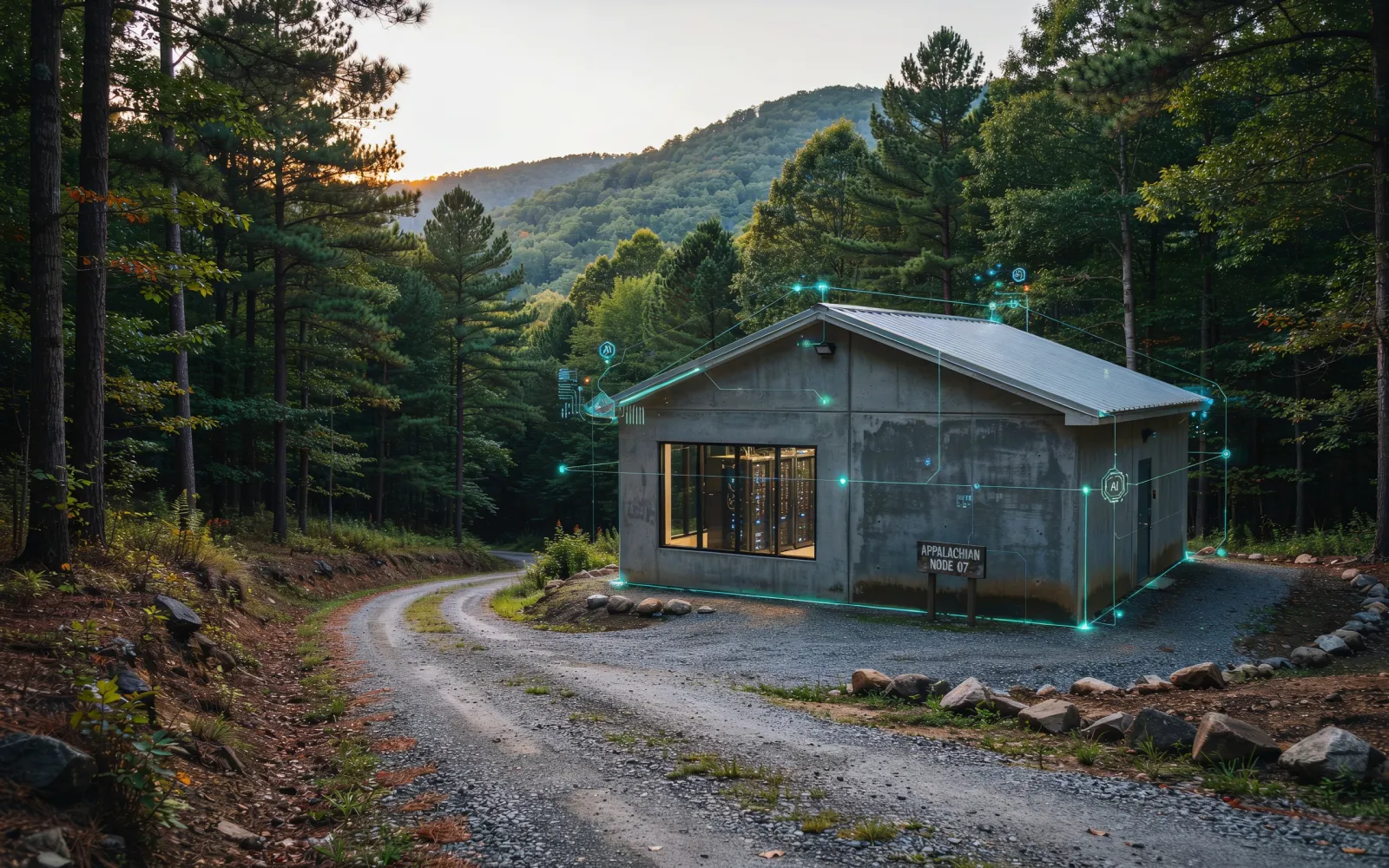
The panel will also turn its attention to West Virginia’s burgeoning data‑center industry, a key driver of AI workloads. According to DataCenterMap.com, the state currently hosts nine active or in‑progress data centers. New projects include the Monarch Compute Campus in Mason County, the Penzance project in Berkeley County, and the Fundamental Data Ridgeline facility in Tucker County. Local residents have voiced concerns about emissions, noise, water use, and the potential impact on school funding.
House Bill 2014, passed by the state legislature last year, created data‑center and microgrid districts, established a new tangible‑personal‑property tax formula for such projects, and exempted the districts from certain local zoning ordinances. The bill also offered tax incentives to data‑center developers.
In a broader national context, Ohio has paused tax breaks for data‑center projects, while New York has imposed a moratorium. Foster argued that the government should allow projects to proceed but not subsidize them. “My perspective is that we shouldn’t ban them, but we probably also shouldn’t be paying for them,” he said. “There should be practical regulations to ensure that they don’t place extraordinary demand on local municipalities for power or water supply.”
Tickets for the event are available through tickettailor.com. The live taping offers West Virginians a rare chance to hear experts discuss how AI and data‑center growth intersect with local politics, economics, and community life.
The panel will close by examining the policy implications of AI and data‑center expansion, weighing potential regulatory approaches and the need for balanced oversight.
As West Virginia continues to attract large‑scale data‑center projects, the conversation remains critical for residents, lawmakers, and industry stakeholders alike, underscoring the growing importance of AI in shaping both national technology policy and everyday rural realities.
On Sunday, June 14, 2026, the Star Theater will host a live taping of Tangle News’s podcast “Suspensions of the Rules!” at 2 p.m. The event will feature a panel that dives into the politics of AI’s rapid expansion and its ripple effects across America.
Moderated by Isaac Saul, the founder of Tangle News, the panel will bring together three voices that span journalism, political commentary, and technology. Andy Mills, the co‑creator of The New York Times’ “The Daily” podcast and the AI‑focused series “The Last Invention”; Kat Rosenfield, a columnist for The Free Press; and Kmele Foster, co‑host of The Fifth Column and a regular CNN “NewsNight” commentator.
Saul explained that the invitation from Star Theater owners Paul and Trey Johanson prompted the move away from the usual metro‑centric tapings. He said the show’s purpose is “to branch out and we’re not just doing a rotation of all the biggest cities in America… we get out to some different parts of the country.”
The discussion will focus on how AI is reshaping society, the economy, and especially rural communities that have long struggled with deindustrialization. Saul warned that the technology could erode social cohesion by reducing the need for human workers in places like cashier checkout lines, and he noted that high‑school students in West Virginia might “make friends with artificial intelligence robots instead of friends after school hanging out.” He added that the growing backlash could signal deeper tensions.
Foster, who relies on large‑language‑model tools such as Google Notebook LM for research, offered a mixed view. He cautioned that AI has become a “catch‑all for a variety of concerns,” which could lead to over‑regulation. “The thing that I’m most concerned about in the political realm at the moment is the fact that there seems to be a kind of consensus belief that whether you’re apocalyptic or utopian in your convictions about AI, that AI is everything and all‑important, and as a result, it kind of justifies us doing pretty extraordinary things from a policy standpoint,” he said.
Saul himself takes a more bearish stance. “I’m sort of more bearish… I personally think we’re a little bit further down the timeline… and we might be overestimating what it’s going to be like in 10 years,” he said. “It hasn’t produced the kind of complete overhaul of all these different industries that it was allegedly or reportedly going to disrupt so thoroughly.”
The panel will also turn its attention to West Virginia’s burgeoning data‑center industry, a key driver of AI workloads. According to DataCenterMap.com, the state currently hosts nine active or in‑progress data centers. New projects include the Monarch Compute Campus in Mason County, the Penzance project in Berkeley County, and the Fundamental Data Ridgeline facility in Tucker County. Local residents have voiced concerns about emissions, noise, water use, and the potential impact on school funding.
House Bill 2014, passed by the state legislature last year, created data‑center and microgrid districts, established a new tangible‑personal‑property tax formula for such projects, and exempted the districts from certain local zoning ordinances. The bill also offered tax incentives to data‑center developers.
In a broader national context, Ohio has paused tax breaks for data‑center projects, while New York has imposed a moratorium. Foster argued that the government should allow projects to proceed but not subsidize them. “My perspective is that we shouldn’t ban them, but we probably also shouldn’t be paying for them,” he said. “There should be practical regulations to ensure that they don’t place extraordinary demand on local municipalities for power or water supply.”
Tickets for the event are available through tickettailor.com. The live taping offers West Virginians a rare chance to hear experts discuss how AI and data‑center growth intersect with local politics, economics, and community life.
The panel will close by examining the policy implications of AI and data‑center expansion, weighing potential regulatory approaches and the need for balanced oversight.
As West Virginia continues to attract large‑scale data‑center projects, the conversation remains critical for residents, lawmakers, and industry stakeholders alike, underscoring the growing importance of AI in shaping both national technology policy and everyday rural realities.