Blab Politics
Congress Introduces Four New Bills on DHS Communications, Space Power, AI Transparency, and Defense AI Oversight
On Tuesday, Representative Shri Thanedar (D‑MI) filed a House bill that would require the Department of Homeland Security (DHS) to develop a comprehensive policy for public‑facing communications and to provide annual social‑media training for all DHS employees. The DHS Communications, Accuracy, Neutrality, Disclosure, Oversight and Review (CANDOR) Act would task the DHS secretary with crafting agency‑wide guidance and would require sub‑agency leaders to add office‑specific components. Updates would be reviewed by the Office of Public Affairs and the Office of the General Counsel. The bill also establishes a requirement for DHS employees to receive annual training on appropriate content for personal and official social‑media accounts, and it designates account managers for official agency profiles.
Thanedar said the measure was prompted by “constantly posting inflammatory rhetoric” from DHS. He added that the bill would bring “commonsense changes” to how DHS operates its social media and would involve oversight by the DHS Office of Inspector General.
In a separate House action on Wednesday, Representative Mike Kennedy (R‑UT) introduced the Powering the Future of American Space Dominance Act. The proposal seeks to create a partnership framework between NASA and private‑sector partners to develop advanced lunar power systems, nuclear reactors, and other infrastructure needed for long‑term Moon‑to‑Mars missions. Kennedy’s press release states that the bill would “establish a blueprint for a partnership between NASA and private sector partners to support the creation of advanced lunar power systems, nuclear reactors and other infrastructure needed to sustain long‑term space expeditions.” The legislation follows recent announcements that NASA plans to launch a nuclear‑powered spacecraft to Mars by 2028.
Senator Ed Markey (D‑MA) and Representative Don Beyer (D‑VA) reintroduced the AI Environmental Impacts Act on Wednesday. The bill would require owners and operators of data centers that handle artificial‑intelligence workloads to report their environmental and energy‑demand impacts to the Environmental Protection Agency (EPA). Non‑compliance would trigger a fine. The proposal also directs the National Institute of Standards and Technology to convene a consortium of experts—including representatives from Native American tribes, local governments, academia, and industry—to develop environmental‑impact measurement standards. The EPA would be tasked with compiling and publishing a comprehensive study of data‑center environmental impacts.
Finally, Senators Chris Coons (D‑DE) and Jack Reed (D‑RI) reintroduced the Responsible Artificial Intelligence Defense Act. The legislation would require that AI‑enabled autonomous systems deployed by the Department of Defense (DoD) be subject to human oversight that allows operators to control, monitor, detect unintended behavior, and manually disengage or deactivate the system if necessary. The bill cites potential use cases in nuclear decision‑making and mass domestic surveillance, referencing a dispute earlier in the year between AI developer Anthropic and the DoD over the use of its systems in autonomous weaponry and domestic surveillance. The act also requires impact assessments for high‑risk AI capabilities to protect civil liberties and mandates rigorous testing before deploying AI‑enabled weaponry in field operations.
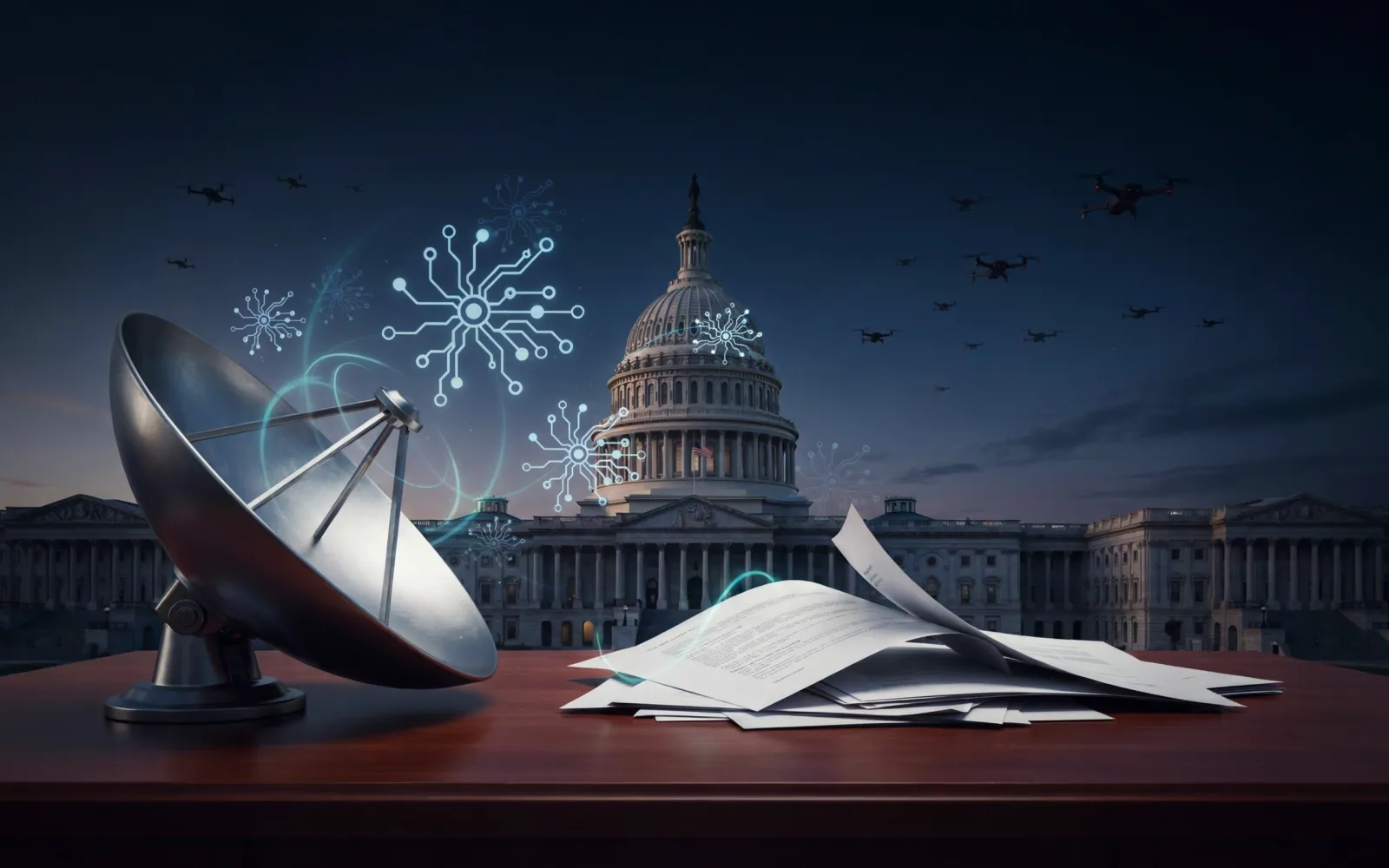
The four bills reflect a broader congressional effort to address emerging challenges in technology, space exploration, and national security. The DHS CANDOR Act responds to concerns about misinformation and the spread of inflammatory content from a federal agency. The space‑power bill aligns with recent executive‑branch initiatives to advance nuclear propulsion and power for deep‑space missions. The AI Environmental Impacts Act seeks to increase transparency and accountability for the rapidly expanding AI infrastructure. And the Responsible AI Defense Act aims to balance innovation with oversight in defense applications.
All four measures are currently in the early stages of the legislative process. They have been introduced in the House or Senate but have not yet been assigned to a committee. The next steps will involve committee referrals, hearings, and potential amendments before any floor action can take place.
The bills illustrate the growing intersection of technology policy and federal oversight. Whether the measures will pass, and how they will be implemented, remains to be seen as Congress weighs the trade‑offs between innovation, security, and accountability.
Thanedar said the measure was prompted by “constantly posting inflammatory rhetoric” from DHS. He added that the bill would bring “commonsense changes” to how DHS operates its social media and would involve oversight by the DHS Office of Inspector General.
In a separate House action on Wednesday, Representative Mike Kennedy (R‑UT) introduced the Powering the Future of American Space Dominance Act. The proposal seeks to create a partnership framework between NASA and private‑sector partners to develop advanced lunar power systems, nuclear reactors, and other infrastructure needed for long‑term Moon‑to‑Mars missions. Kennedy’s press release states that the bill would “establish a blueprint for a partnership between NASA and private sector partners to support the creation of advanced lunar power systems, nuclear reactors and other infrastructure needed to sustain long‑term space expeditions.” The legislation follows recent announcements that NASA plans to launch a nuclear‑powered spacecraft to Mars by 2028.
Senator Ed Markey (D‑MA) and Representative Don Beyer (D‑VA) reintroduced the AI Environmental Impacts Act on Wednesday. The bill would require owners and operators of data centers that handle artificial‑intelligence workloads to report their environmental and energy‑demand impacts to the Environmental Protection Agency (EPA). Non‑compliance would trigger a fine. The proposal also directs the National Institute of Standards and Technology to convene a consortium of experts—including representatives from Native American tribes, local governments, academia, and industry—to develop environmental‑impact measurement standards. The EPA would be tasked with compiling and publishing a comprehensive study of data‑center environmental impacts.
Finally, Senators Chris Coons (D‑DE) and Jack Reed (D‑RI) reintroduced the Responsible Artificial Intelligence Defense Act. The legislation would require that AI‑enabled autonomous systems deployed by the Department of Defense (DoD) be subject to human oversight that allows operators to control, monitor, detect unintended behavior, and manually disengage or deactivate the system if necessary. The bill cites potential use cases in nuclear decision‑making and mass domestic surveillance, referencing a dispute earlier in the year between AI developer Anthropic and the DoD over the use of its systems in autonomous weaponry and domestic surveillance. The act also requires impact assessments for high‑risk AI capabilities to protect civil liberties and mandates rigorous testing before deploying AI‑enabled weaponry in field operations.
The four bills reflect a broader congressional effort to address emerging challenges in technology, space exploration, and national security. The DHS CANDOR Act responds to concerns about misinformation and the spread of inflammatory content from a federal agency. The space‑power bill aligns with recent executive‑branch initiatives to advance nuclear propulsion and power for deep‑space missions. The AI Environmental Impacts Act seeks to increase transparency and accountability for the rapidly expanding AI infrastructure. And the Responsible AI Defense Act aims to balance innovation with oversight in defense applications.
All four measures are currently in the early stages of the legislative process. They have been introduced in the House or Senate but have not yet been assigned to a committee. The next steps will involve committee referrals, hearings, and potential amendments before any floor action can take place.
The bills illustrate the growing intersection of technology policy and federal oversight. Whether the measures will pass, and how they will be implemented, remains to be seen as Congress weighs the trade‑offs between innovation, security, and accountability.