Blab Politics
Supreme Court Reverses Fifth Circuit Decision on Federal Horse-Racing Rules
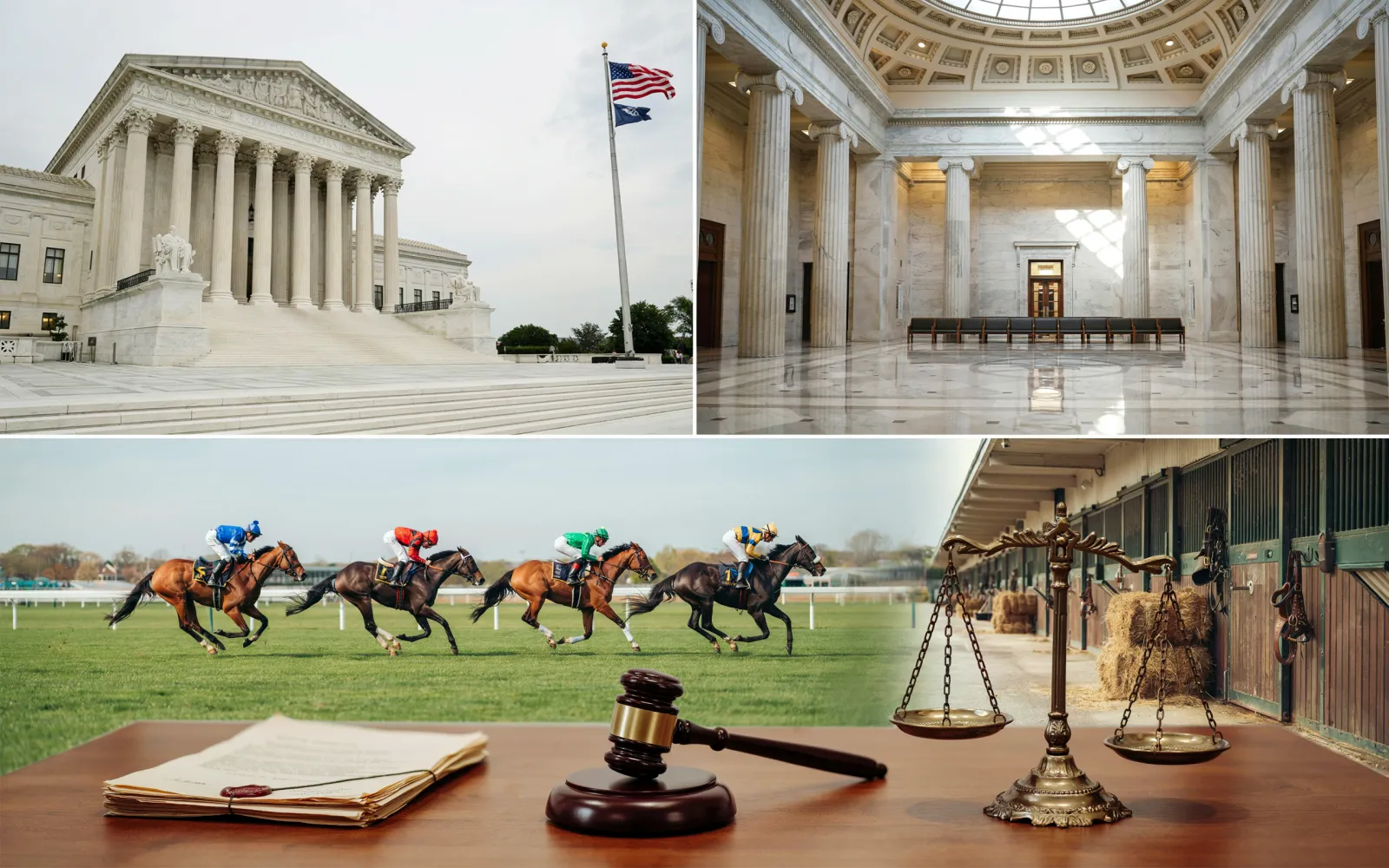
On Thursday, the U.S. Supreme Court overturned a 5th Circuit ruling that had threatened to dismantle federal oversight of the thoroughbred racing industry. The decision restores the Horseracing Integrity and Safety Act (HISA), the 2020 law that created a private nonprofit authority to set safety, anti‑doping, and medication rules under the watchful eye of the Federal Trade Commission (FTC).
The 5th Circuit’s July 5, 2024 opinion struck down HISA for violating the private‑nondelegation doctrine. The court argued that the legislation granted the privately organized Horseracing Integrity and Safety Authority too much enforcement power without sufficient oversight by a federal agency. That ruling followed a similar 2022 decision in which the same court invalidated the original 2020 statute.
Congress drafted HISA to replace a patchwork of state regulations that had failed to curb equine fatalities and corruption. By creating a private nonprofit body, lawmakers hoped to standardize safety protocols while allowing the FTC to supervise, approve, and reverse the Authority’s rules and investigations. The FTC’s broad supervisory authority was intended to satisfy the constitutional requirement that any delegated power remain subordinate to a federal agency.
After the 5th Circuit’s ruling, the federal government petitioned the Supreme Court for emergency relief. The justices granted the request, preventing the appellate court from effectively nullifying the federal program.
In its formal opinion, the Supreme Court overruled the 5th Circuit’s reasoning, citing its 2025 ruling in FCC v. Consumers’ Research. That case held that Congress may delegate regulatory authority to a private entity so long as the entity remains subordinate to a federal agency that retains ultimate decision‑making power. The justices also noted that the HISA framework had been operational for six years, providing a stable regulatory environment.
The Court emphasized that the FTC keeps “ultimate discretion over the content of the rules that govern the horseracing industry.” It noted that the FTC can review any safety rule the HISA proposes, can reverse investigations, and can decide which violations the Authority should pursue. Because the FTC can micromanage the Authority’s decisions, the Court concluded that the delegation is constitutional.
Judge Stuart Kyle Duncan, a Trump appointee, authored the 5th Circuit’s opinion. He reiterated his earlier conclusion that HISA’s enforcement powers were excessive, arguing that the Authority’s structure differed from other private boards that are accountable to federal agencies. Duncan pointed to differences in how board members could be removed and dismissed the Consumers’ Research precedent, claiming it did not alter the private‑nondelegation doctrine.
The 6th and 8th Circuits have upheld HISA’s constitutionality. Chief Judge Jeffrey Sutton of the 6th Circuit, in a 2024 opinion, applied the Consumers’ Research reasoning and found that the FTC’s oversight satisfied the nondelegation requirement. The 8th Circuit reached the same conclusion, noting that the FTC’s supervisory role resolves any constitutional concerns.
The Supreme Court’s reversal restores the federal regulatory scheme that Congress has pursued for six years. It also highlights the 5th Circuit’s high reversal rate; the Court reversed the court’s decisions in 10 of 13 cases it reviewed last term and has reversed several more this term.
For the horse‑racing industry, the ruling means that the FTC can continue to enforce safety, anti‑doping, and medication rules through the HISA. The industry had faced uncertainty after the 5th Circuit’s 2024 decision, which threatened to dismantle the federal oversight structure. With the Supreme Court’s reversal, the Authority’s enforcement powers are back on track, and the FTC can resume its supervisory duties.
The case may be remanded to the 5th Circuit for further proceedings, but the Supreme Court’s ruling effectively nullifies the 5th Circuit’s opinion. The court’s precedent in Consumers’ Research provides a strong legal foundation for the federal program, making another appeal unlikely.
In sum, the Supreme Court’s decision confirms that Congress can delegate regulatory authority to a private entity when a federal agency retains ultimate control. The ruling restores HISA’s enforcement powers and underscores the Court’s willingness to correct appellate courts that it views as overstepping constitutional limits.
The 5th Circuit’s July 5, 2024 opinion struck down HISA for violating the private‑nondelegation doctrine. The court argued that the legislation granted the privately organized Horseracing Integrity and Safety Authority too much enforcement power without sufficient oversight by a federal agency. That ruling followed a similar 2022 decision in which the same court invalidated the original 2020 statute.
Congress drafted HISA to replace a patchwork of state regulations that had failed to curb equine fatalities and corruption. By creating a private nonprofit body, lawmakers hoped to standardize safety protocols while allowing the FTC to supervise, approve, and reverse the Authority’s rules and investigations. The FTC’s broad supervisory authority was intended to satisfy the constitutional requirement that any delegated power remain subordinate to a federal agency.
After the 5th Circuit’s ruling, the federal government petitioned the Supreme Court for emergency relief. The justices granted the request, preventing the appellate court from effectively nullifying the federal program.
In its formal opinion, the Supreme Court overruled the 5th Circuit’s reasoning, citing its 2025 ruling in FCC v. Consumers’ Research. That case held that Congress may delegate regulatory authority to a private entity so long as the entity remains subordinate to a federal agency that retains ultimate decision‑making power. The justices also noted that the HISA framework had been operational for six years, providing a stable regulatory environment.
The Court emphasized that the FTC keeps “ultimate discretion over the content of the rules that govern the horseracing industry.” It noted that the FTC can review any safety rule the HISA proposes, can reverse investigations, and can decide which violations the Authority should pursue. Because the FTC can micromanage the Authority’s decisions, the Court concluded that the delegation is constitutional.
Judge Stuart Kyle Duncan, a Trump appointee, authored the 5th Circuit’s opinion. He reiterated his earlier conclusion that HISA’s enforcement powers were excessive, arguing that the Authority’s structure differed from other private boards that are accountable to federal agencies. Duncan pointed to differences in how board members could be removed and dismissed the Consumers’ Research precedent, claiming it did not alter the private‑nondelegation doctrine.
The 6th and 8th Circuits have upheld HISA’s constitutionality. Chief Judge Jeffrey Sutton of the 6th Circuit, in a 2024 opinion, applied the Consumers’ Research reasoning and found that the FTC’s oversight satisfied the nondelegation requirement. The 8th Circuit reached the same conclusion, noting that the FTC’s supervisory role resolves any constitutional concerns.
The Supreme Court’s reversal restores the federal regulatory scheme that Congress has pursued for six years. It also highlights the 5th Circuit’s high reversal rate; the Court reversed the court’s decisions in 10 of 13 cases it reviewed last term and has reversed several more this term.
For the horse‑racing industry, the ruling means that the FTC can continue to enforce safety, anti‑doping, and medication rules through the HISA. The industry had faced uncertainty after the 5th Circuit’s 2024 decision, which threatened to dismantle the federal oversight structure. With the Supreme Court’s reversal, the Authority’s enforcement powers are back on track, and the FTC can resume its supervisory duties.
The case may be remanded to the 5th Circuit for further proceedings, but the Supreme Court’s ruling effectively nullifies the 5th Circuit’s opinion. The court’s precedent in Consumers’ Research provides a strong legal foundation for the federal program, making another appeal unlikely.
In sum, the Supreme Court’s decision confirms that Congress can delegate regulatory authority to a private entity when a federal agency retains ultimate control. The ruling restores HISA’s enforcement powers and underscores the Court’s willingness to correct appellate courts that it views as overstepping constitutional limits.