Blab Politics
Tulsi Gabbard Releases Declassified Documents on U.S.-Funded Foreign Biolabs, Criticizes Biden Administration
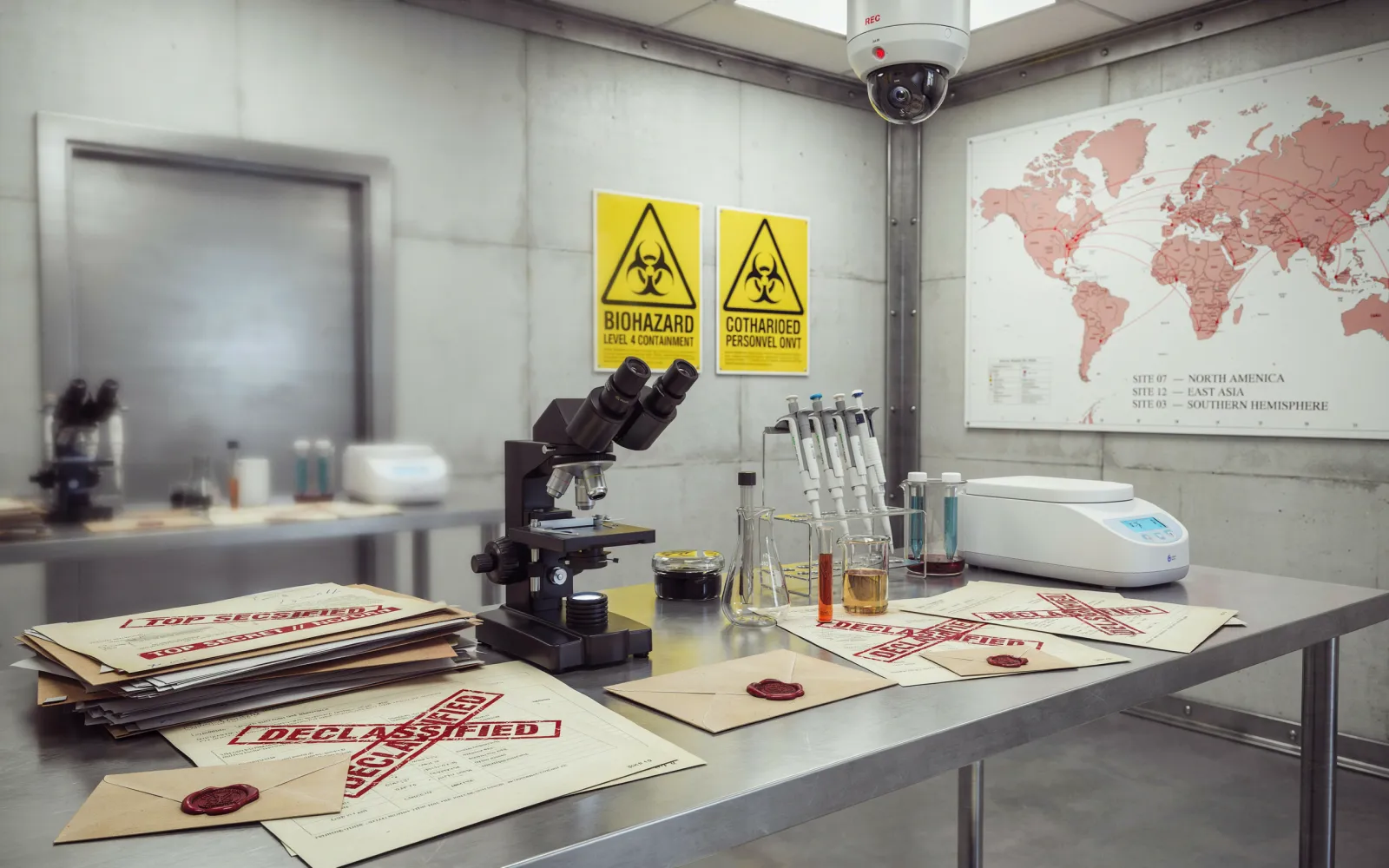
On Friday, Director of National Intelligence Tulsi Gabbard released a trove of declassified documents that reveal how U.S. taxpayers have financed more than 120 biological laboratories in more than 30 foreign countries. The files, published by the Office of the Director of National Intelligence (ODNI), list laboratories that have received federal money for decades and, according to the documents, have conducted research on a range of dangerous pathogens.
The declassified material singles out 40 laboratories in Ukraine, a country that has been a key partner under the Nunn‑Lugar Cooperative Threat Reduction (CTR) program. Established in 1991 to secure and dismantle weapons of mass destruction in former Soviet states, the CTR program has also funded research on pathogens such as anthrax, tularemia, tuberculosis, swine fever, MERS, SARS, Marburg, Ebola, Lassa, and the plague. The documents note that four of the labs cost U.S. taxpayers more than $9 million.
Gabbard’s release follows a May 2025 executive order signed by President Donald Trump that barred federal funding for gain‑of‑function research in China, Iran, and other countries lacking adequate oversight. In her statement, Gabbard said, “Despite the obvious potential for catastrophic global impact research on dangerous pathogens in biolabs can have, politicians, so‑called health professionals like Dr. Fauci, and entities within the Biden administration’s national security team lied to the American people about the existence of U.S.-funded and supported biolabs, and threatened those who attempted to expose the truth.” She added that ODNI would work with partners across the government to identify the labs, the pathogens they contain, and to end dangerous gain‑of‑function research.
The files also reference Russian accusations that some Ukrainian research conducted with U.S. partners had reached the level of biological weapons work. According to the documents, the U.S. has worked with Ukrainian scientists to contain risks associated with pathogens that have been stored in the labs since the Soviet era.
Experts have offered differing interpretations of the information. Josh Segal, a former arms‑control delegate, said the labs “are not now and were never secret, and do zero questionable work.” Segal noted that the U.S. conversion program had begun as a public effort to repurpose former Soviet research facilities and that it had involved Russian participation until the early 2000s. The release has prompted a response from the Biden administration. In March 2022, Undersecretary of State Victoria Nuland testified that Ukrainian bioresearch facilities were a concern for Russian forces, but other administration officials dismissed the claim the following day. ODNI officials have said the shift in narrative was part of an “Information Resilience” strategy aimed at shaping public perception and countering foreign malign influence.
Gabbard, who was confirmed as DNI in February 2025, announced that she will step down on June 19, 2026, to care for her husband’s rare bone cancer. Her resignation follows the release of the documents and the launch of a review of the foreign labs. The ODNI has said it will continue to investigate the laboratories identified in the declassified files. No new legislation or congressional action has yet been announced to address the findings. The U.S. government has not yet released a public plan for how it will respond to the potential risks identified in the documents.
At present, the status of the laboratories, the specific pathogens they hold, and the extent of gain‑of‑function research remain under investigation. The next steps will likely involve coordination with the Department of Defense, the Centers for Disease Control and Prevention, and international partners to assess oversight and security measures. The U.S. public and lawmakers will be watching closely to see whether the findings lead to policy changes or further scrutiny of foreign research collaborations.
The declassified material singles out 40 laboratories in Ukraine, a country that has been a key partner under the Nunn‑Lugar Cooperative Threat Reduction (CTR) program. Established in 1991 to secure and dismantle weapons of mass destruction in former Soviet states, the CTR program has also funded research on pathogens such as anthrax, tularemia, tuberculosis, swine fever, MERS, SARS, Marburg, Ebola, Lassa, and the plague. The documents note that four of the labs cost U.S. taxpayers more than $9 million.
Gabbard’s release follows a May 2025 executive order signed by President Donald Trump that barred federal funding for gain‑of‑function research in China, Iran, and other countries lacking adequate oversight. In her statement, Gabbard said, “Despite the obvious potential for catastrophic global impact research on dangerous pathogens in biolabs can have, politicians, so‑called health professionals like Dr. Fauci, and entities within the Biden administration’s national security team lied to the American people about the existence of U.S.-funded and supported biolabs, and threatened those who attempted to expose the truth.” She added that ODNI would work with partners across the government to identify the labs, the pathogens they contain, and to end dangerous gain‑of‑function research.
The files also reference Russian accusations that some Ukrainian research conducted with U.S. partners had reached the level of biological weapons work. According to the documents, the U.S. has worked with Ukrainian scientists to contain risks associated with pathogens that have been stored in the labs since the Soviet era.
Experts have offered differing interpretations of the information. Josh Segal, a former arms‑control delegate, said the labs “are not now and were never secret, and do zero questionable work.” Segal noted that the U.S. conversion program had begun as a public effort to repurpose former Soviet research facilities and that it had involved Russian participation until the early 2000s. The release has prompted a response from the Biden administration. In March 2022, Undersecretary of State Victoria Nuland testified that Ukrainian bioresearch facilities were a concern for Russian forces, but other administration officials dismissed the claim the following day. ODNI officials have said the shift in narrative was part of an “Information Resilience” strategy aimed at shaping public perception and countering foreign malign influence.
Gabbard, who was confirmed as DNI in February 2025, announced that she will step down on June 19, 2026, to care for her husband’s rare bone cancer. Her resignation follows the release of the documents and the launch of a review of the foreign labs. The ODNI has said it will continue to investigate the laboratories identified in the declassified files. No new legislation or congressional action has yet been announced to address the findings. The U.S. government has not yet released a public plan for how it will respond to the potential risks identified in the documents.
At present, the status of the laboratories, the specific pathogens they hold, and the extent of gain‑of‑function research remain under investigation. The next steps will likely involve coordination with the Department of Defense, the Centers for Disease Control and Prevention, and international partners to assess oversight and security measures. The U.S. public and lawmakers will be watching closely to see whether the findings lead to policy changes or further scrutiny of foreign research collaborations.