Blab Politics
US Postal Service Proposes Rule That Could Block Mail-In Ballots From States Refusing to Share Voter Rolls
On June 2, the United States Postal Service (USPS) released a proposed rule that could prevent it from handling mail‑in ballots originating in states that do not supply detailed lists of voters who cast ballots by mail. The rule, currently in a 30‑day comment period that closes on July 2, would not affect primary elections, nor would it touch ballots from military or overseas voters.
The proposal follows a March 2026 executive order from President Donald Trump that tasked the USPS with overseeing mail‑in voting procedures. Under that order, states were required to submit voter rolls and unique ballot‑barcode data to the agency. The new rule codifies those obligations and adds envelope‑design and tracking standards, while also mandating that each state’s chief election official provide a “Mail‑In and Absentee Participation List” to the USPS.
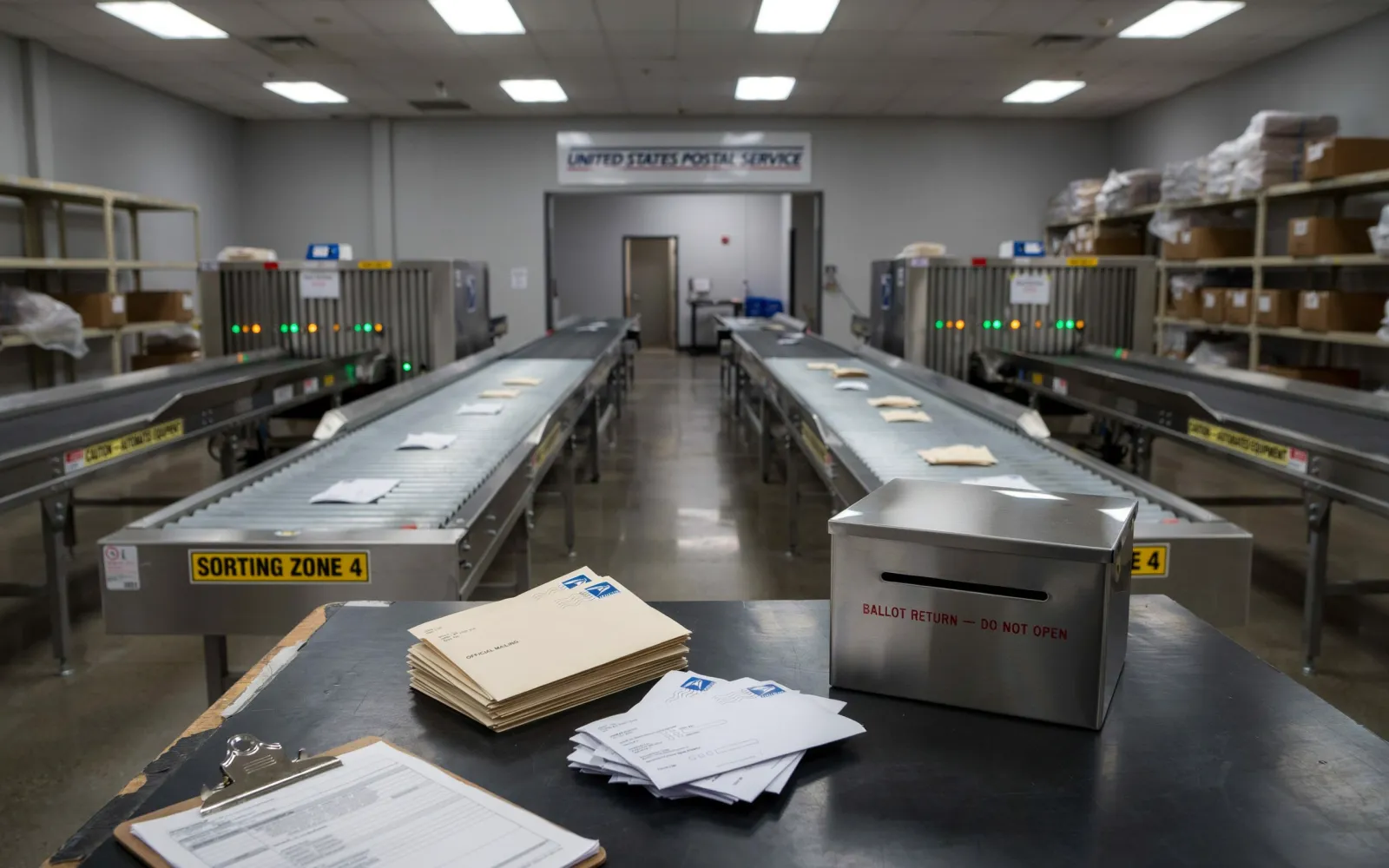
Key requirements of the rule include mandatory envelope markings: the Election Mail – Official Ballots checkbox, the Official Election Mail logo, serialized IMb, Ballot Mail STIDs, green Tag 191, and labels indicating whether the ballot is domestic or international. The USPS would also gain the authority to reject ballots that do not match the federal list. Primary elections remain exempt, and ballots for military and overseas voters are unaffected.
Democratic state officials, voting‑rights advocates, and the American Civil Liberties Union (ACLU) have criticized the proposal as an unconstitutional federal intrusion into state‑run elections and a threat to the USPS’s independence. The ACLU argues that the rule would transform the postal carrier from a neutral conduit into an arbiter of who may vote by mail. The American Postal Workers Union (APWU) has voiced deep concern, noting that the rule follows the Trump executive order and could disrupt election operations and raise costs.
Justice Department attorneys have indicated that many implementation details remain unsettled and that court challenges are premature. The rule’s 30‑day comment period ends July 2, after which a final rule is expected by the end of July. Critics warn that the rule could create chaos and high costs with less than 150 days until the 2026 midterm elections. An attorney representing California said the disruption would be difficult to overstate.
Historically, the USPS has operated under a universal service obligation and a monopoly on letter delivery. The proposed rule would shift key responsibilities from state and local election officials toward a centralized process administered by the USPS. It would also require states to submit voter and ballot‑barcode data to the agency, potentially affecting how states manage voter rolls and ballot distribution.
The rule remains in the comment period. States and election officials have until July 2 to submit comments. The USPS has not yet finalized the rule, and its final version will be published in the Federal Register. The rule could be challenged in court, and its impact on the 2026 midterm elections remains uncertain.
The USPS proposal marks a significant shift in how mail‑in ballots are processed. It could restrict ballot delivery for states that do not share voter rolls, impose new envelope standards, and grant the agency the power to reject ballots. The rule’s final form and its legal and practical effects will become clearer after the comment period and any subsequent legal challenges.
The proposal follows a March 2026 executive order from President Donald Trump that tasked the USPS with overseeing mail‑in voting procedures. Under that order, states were required to submit voter rolls and unique ballot‑barcode data to the agency. The new rule codifies those obligations and adds envelope‑design and tracking standards, while also mandating that each state’s chief election official provide a “Mail‑In and Absentee Participation List” to the USPS.
Key requirements of the rule include mandatory envelope markings: the Election Mail – Official Ballots checkbox, the Official Election Mail logo, serialized IMb, Ballot Mail STIDs, green Tag 191, and labels indicating whether the ballot is domestic or international. The USPS would also gain the authority to reject ballots that do not match the federal list. Primary elections remain exempt, and ballots for military and overseas voters are unaffected.
Democratic state officials, voting‑rights advocates, and the American Civil Liberties Union (ACLU) have criticized the proposal as an unconstitutional federal intrusion into state‑run elections and a threat to the USPS’s independence. The ACLU argues that the rule would transform the postal carrier from a neutral conduit into an arbiter of who may vote by mail. The American Postal Workers Union (APWU) has voiced deep concern, noting that the rule follows the Trump executive order and could disrupt election operations and raise costs.
Justice Department attorneys have indicated that many implementation details remain unsettled and that court challenges are premature. The rule’s 30‑day comment period ends July 2, after which a final rule is expected by the end of July. Critics warn that the rule could create chaos and high costs with less than 150 days until the 2026 midterm elections. An attorney representing California said the disruption would be difficult to overstate.
Historically, the USPS has operated under a universal service obligation and a monopoly on letter delivery. The proposed rule would shift key responsibilities from state and local election officials toward a centralized process administered by the USPS. It would also require states to submit voter and ballot‑barcode data to the agency, potentially affecting how states manage voter rolls and ballot distribution.
The rule remains in the comment period. States and election officials have until July 2 to submit comments. The USPS has not yet finalized the rule, and its final version will be published in the Federal Register. The rule could be challenged in court, and its impact on the 2026 midterm elections remains uncertain.
The USPS proposal marks a significant shift in how mail‑in ballots are processed. It could restrict ballot delivery for states that do not share voter rolls, impose new envelope standards, and grant the agency the power to reject ballots. The rule’s final form and its legal and practical effects will become clearer after the comment period and any subsequent legal challenges.