Blab Politics
Congress Passes Landmark Housing Bill, President Halts Signing; New York Primaries Shift Left, Canada Faces Housing Strain
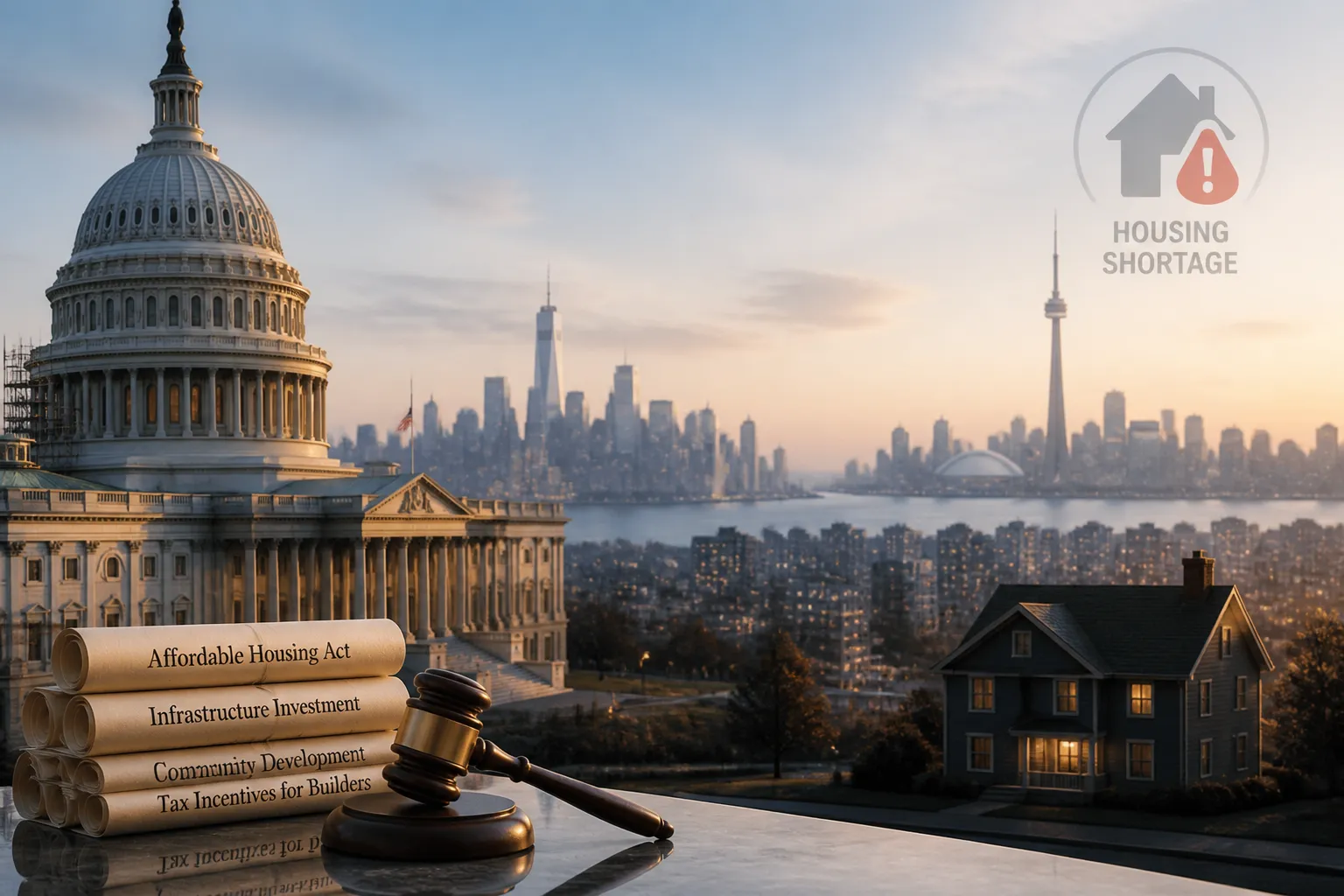
On Wednesday, a split Congress passed the largest housing package in decades, but President Donald Trump canceled the signing ceremony just two hours before it was slated to occur. The House approved the bill 358‑32, while the Senate ratified it 85‑5, Reuters reports. The measure, dubbed the SAVE America Act, would boost new home construction and curb large investors from buying up residential properties.
Trump took to social media to announce that he would withhold his signature until Congress first passed his own controversial voter‑identification proposal, also called the SAVE America Act. The White House called the housing legislation a “minor importance” compared to the voter‑identification bill, a view echoed by House Republican leaders who lauded the passage as a major win. The surprise pause drew rebuke from bipartisan lawmakers who had backed the housing package.
The same day, New York’s congressional primaries delivered a left‑wing wave that ousted two incumbents. The New York Times reports that candidates backed by Mayor Eric Adams and the Democratic Socialists of America captured several districts, including seats that had long been held by moderate Democrats. The results signal mounting pressure on the party’s establishment to move further left ahead of the 2026 general election.
Across the border, Ottawa and British Columbia announced a plan to buy unsold condominium units in Vancouver in an effort to ease the province’s housing affordability crisis. The Canadian government said it would purchase the units and then resell them at lower prices to eligible buyers. Critics, including local developers, warned that the scheme would favor developers rather than families. The government described the initiative as a “careful, anxious hand” approach to a market that analysts have called a bubble.
In Washington, the Justice Department issued subpoenas to reporters from two major newspapers, demanding their testimony before a grand jury in a leak investigation. Press groups labeled the subpoenas a “rare and dangerous intrusion” into the press’s work. The subpoenas were withdrawn without explanation later that month, and no reporters testified. The Department of Justice said the subpoenas were not aimed at journalists.
A federal safety agency opened a special investigation into an automated Tesla vehicle that crashed near Houston, killing a woman in her home. The probe follows a series of inquiries into Tesla’s autonomous driving technology, which the company markets as the future of transportation. The agency’s move was reported by the Associated Press.
The U.S. Department of Energy approved more than $17.5 billion in loans for five nuclear power projects, according to a department statement. The funding is intended to support the construction of new plants and to develop a domestic supply chain for nuclear components.
Meanwhile, federal prosecutors charged 455 individuals in health‑care fraud schemes that allegedly totaled $6.5 billion, the Department of Justice said. The charges represent one of the largest coordinated efforts of its kind in U.S. history.
The week’s events illustrate a contrast between the United States’ restless political energy and Canada’s cautious approach to policy. In Washington, a gridlocked Congress achieved a historic housing win that was immediately stalled by the President’s decision to prioritize a different legislative agenda. In New York, a left‑wing surge reshaped the congressional delegation. In Canada, the government pursued a measured strategy to address housing strain while quietly filling a vacancy on the Supreme Court.
The current situation remains in flux. The housing bill has not yet become law, pending the President’s approval. New York’s primary results have prompted calls for a broader strategy on the left, while the condo purchase plan faces ongoing debate. The federal investigations into the press, Tesla, and health‑care fraud are still in progress, and the nuclear loan program awaits further development.
As the United States and Canada move toward the fall elections, the outcomes of these policy decisions will likely influence voter sentiment and legislative priorities in the coming months.
Trump took to social media to announce that he would withhold his signature until Congress first passed his own controversial voter‑identification proposal, also called the SAVE America Act. The White House called the housing legislation a “minor importance” compared to the voter‑identification bill, a view echoed by House Republican leaders who lauded the passage as a major win. The surprise pause drew rebuke from bipartisan lawmakers who had backed the housing package.
The same day, New York’s congressional primaries delivered a left‑wing wave that ousted two incumbents. The New York Times reports that candidates backed by Mayor Eric Adams and the Democratic Socialists of America captured several districts, including seats that had long been held by moderate Democrats. The results signal mounting pressure on the party’s establishment to move further left ahead of the 2026 general election.
Across the border, Ottawa and British Columbia announced a plan to buy unsold condominium units in Vancouver in an effort to ease the province’s housing affordability crisis. The Canadian government said it would purchase the units and then resell them at lower prices to eligible buyers. Critics, including local developers, warned that the scheme would favor developers rather than families. The government described the initiative as a “careful, anxious hand” approach to a market that analysts have called a bubble.
In Washington, the Justice Department issued subpoenas to reporters from two major newspapers, demanding their testimony before a grand jury in a leak investigation. Press groups labeled the subpoenas a “rare and dangerous intrusion” into the press’s work. The subpoenas were withdrawn without explanation later that month, and no reporters testified. The Department of Justice said the subpoenas were not aimed at journalists.
A federal safety agency opened a special investigation into an automated Tesla vehicle that crashed near Houston, killing a woman in her home. The probe follows a series of inquiries into Tesla’s autonomous driving technology, which the company markets as the future of transportation. The agency’s move was reported by the Associated Press.
The U.S. Department of Energy approved more than $17.5 billion in loans for five nuclear power projects, according to a department statement. The funding is intended to support the construction of new plants and to develop a domestic supply chain for nuclear components.
Meanwhile, federal prosecutors charged 455 individuals in health‑care fraud schemes that allegedly totaled $6.5 billion, the Department of Justice said. The charges represent one of the largest coordinated efforts of its kind in U.S. history.
The week’s events illustrate a contrast between the United States’ restless political energy and Canada’s cautious approach to policy. In Washington, a gridlocked Congress achieved a historic housing win that was immediately stalled by the President’s decision to prioritize a different legislative agenda. In New York, a left‑wing surge reshaped the congressional delegation. In Canada, the government pursued a measured strategy to address housing strain while quietly filling a vacancy on the Supreme Court.
The current situation remains in flux. The housing bill has not yet become law, pending the President’s approval. New York’s primary results have prompted calls for a broader strategy on the left, while the condo purchase plan faces ongoing debate. The federal investigations into the press, Tesla, and health‑care fraud are still in progress, and the nuclear loan program awaits further development.
As the United States and Canada move toward the fall elections, the outcomes of these policy decisions will likely influence voter sentiment and legislative priorities in the coming months.